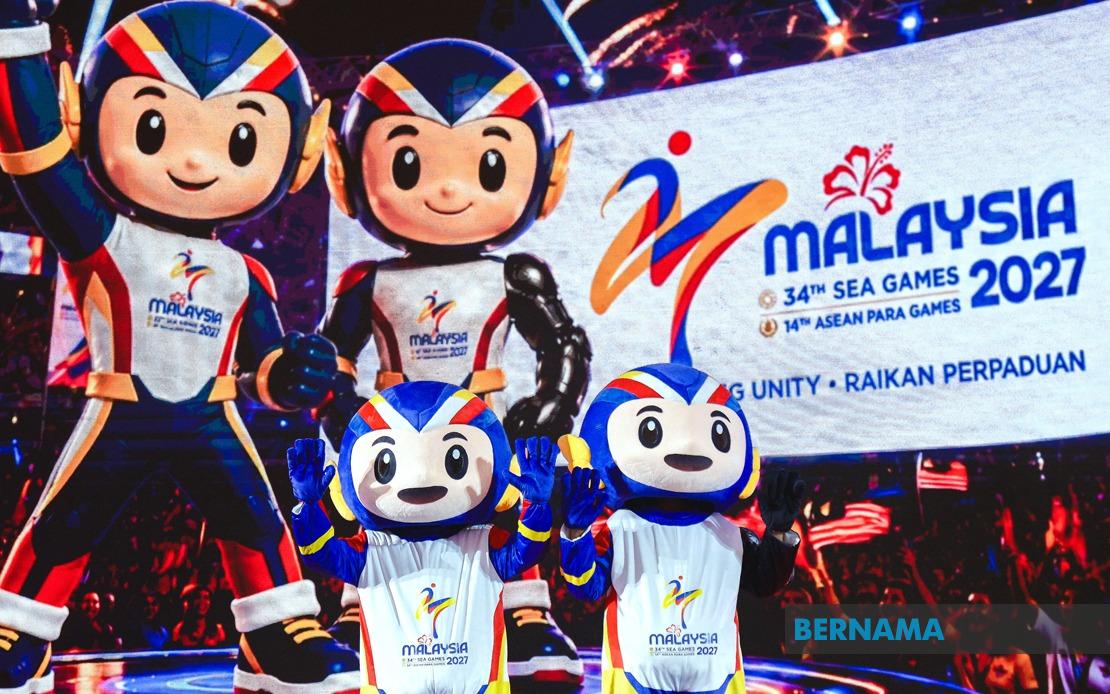
Malaysia has formally unveiled its vision for hosting the 2027 Southeast Asian Games and ASEAN Para Games, selecting 'Celebrating Unity' as the central theme that will guide the region's premier multi-sport event. Youth and Sports Minister Dr Mohammed Taufiq Johari announced the theme during a ceremony in Putrajaya on July 13, positioning it as an emblem of enduring regional solidarity and a catalyst for advancing sports development across Southeast Asia in the coming years.
The chosen theme carries symbolic weight beyond mere branding, functioning as an aspirational framework that organizers believe will resonate with competing athletes, supporting nations, and the broader Malaysian public as the country prepares for one of its most significant international sporting responsibilities. Dr Mohammed Taufiq explained that the theme is intended to transcend the typical scope of a games slogan, instead serving as a philosophical anchor that binds together the diverse sporting programs and the shared values of participating nations under a common purpose.
Complementing the thematic direction, Malaysia introduced Tuah as its official mascot, marking a deliberate departure from the tradition of animal-based mascot designs that have characterized previous editions of the SEA Games. Rather than an anthropomorphic creature, Tuah represents a dynamic, assured, and accessible contemporary hero—a human figure that organizers hope will forge stronger emotional connections with modern audiences and younger demographics who may find traditional animal mascots less compelling or relatable.
The mascot's visual identity deliberately incorporates the colors of the Jalur Gemilang, Malaysia's national flag, thereby weaving patriotic symbolism into the mascot's appearance and reinforcing the games' role as a national showcase. This design choice serves multiple strategic purposes: it cultivates a palpable sense of national pride among Malaysian athletes and the general population, visibly links the games to Malaysian sovereignty and heritage, and creates a distinctive visual brand that distinguishes these games from previous iterations held in other Southeast Asian nations.
Dr Mohammed Taufiq articulated the government's ambitious aspirations for Malaysia's athletic performance, expressing hope that Tuah would function as a fortunate talisman guiding the nation toward the overall championship title on home soil. This sentiment reflects the traditional competitive motivations underlying games hosting, where nations view the opportunity to compete before home audiences as a significant advantage in medal accumulation. The minister's framing suggests that both the thematic and mascot elements are designed to psychologically bolster Malaysian athletes and create an intangible home-field advantage.
Beyond symbolic considerations, the minister provided reassuring updates on the tangible infrastructure underpinning the games' delivery. Malaysia's hosting arrangement spans four geographically dispersed clusters—Sarawak, Penang, Johor, and Kuala Lumpur—a logistically complex distribution that requires meticulous coordination across multiple venues. Dr Mohammed Taufiq confirmed that facility development has proceeded without significant complications, suggesting that the foundational infrastructure required to host international competition is progressing on schedule.
The focus has now shifted toward technical preparation and operational fine-tuning, reflecting the natural progression of major events from construction and development toward detailed planning for athlete accommodation, competition protocols, broadcast arrangements, and ceremonial elements. This phase typically involves extensive coordination between venue operators, international sports federations, and government agencies to ensure seamless execution across all sporting disciplines. The minister's emphasis on technical aspects indicates that organizers are moving beyond infrastructure questions toward the intricate logistics that determine whether a games delivers world-class competitor and spectator experiences.
Underlying Malaysia's hosting efforts is an ambitious performance target established by the National Sports Council to position Malaysia as the overall championship winner across the medal table. This objective has prompted the NSC to establish an intermediate benchmark: achieving a 70 percent podium finish rate for Malaysian athletes competing in Asian-level competitions by year's end. This measurable target allows organizers to assess whether current training programs, athlete development initiatives, and competitive schedules are producing the caliber of performance necessary to achieve the overarching championship goal.
The 2027 games will span two distinct competitions held sequentially, with the main SEA Games scheduled for September 18 to 29, followed immediately by the ASEAN Para Games from October 17 to 23. This back-to-back scheduling maximizes venue utilization efficiency and concentrates international attention and media coverage onto a single hosting period, reducing logistical complexity compared to widely separated competition windows. However, it also demands sustained operational excellence from organizing committees across consecutive weeks, with minimal downtime between transitioning from one competition format to another.
For Malaysian sports development more broadly, the hosting opportunity represents a critical inflection point where investments in athlete training infrastructure, coaching expertise, and sports science support can be measured against international competition. The targeting of overall championship status indicates that the government views the games not merely as a ceremonial or cultural event, but as a concrete opportunity to demonstrate the effectiveness of its sports development strategy and the competitive trajectory of Malaysian athletics across multiple disciplines.
The announcement of the theme and mascot provides clarity for sponsors, broadcasters, and media organizations who have been anticipating the games' branding direction. Commercial partners can now integrate 'Celebrating Unity' messaging and Tuah imagery into their marketing campaigns and products, creating a unified promotional ecosystem surrounding the event. This clarity also allows government agencies and civil society organizations to align their engagement strategies with the officially sanctioned thematic framework, ensuring coherent public communication as the games draw nearer.
As Malaysia progresses through the remaining preparation phases, the success of these symbolic and structural elements will ultimately be measured by whether the games deliver competitive excellence, memorable experiences for athletes and spectators, and a lasting positive impression of Malaysia's capacity as an international events host. The combination of aspirational theming with concrete infrastructure development and performance benchmarking suggests a comprehensive approach to games preparation that extends beyond ceremonial considerations into substantive competitive and organizational outcomes.

