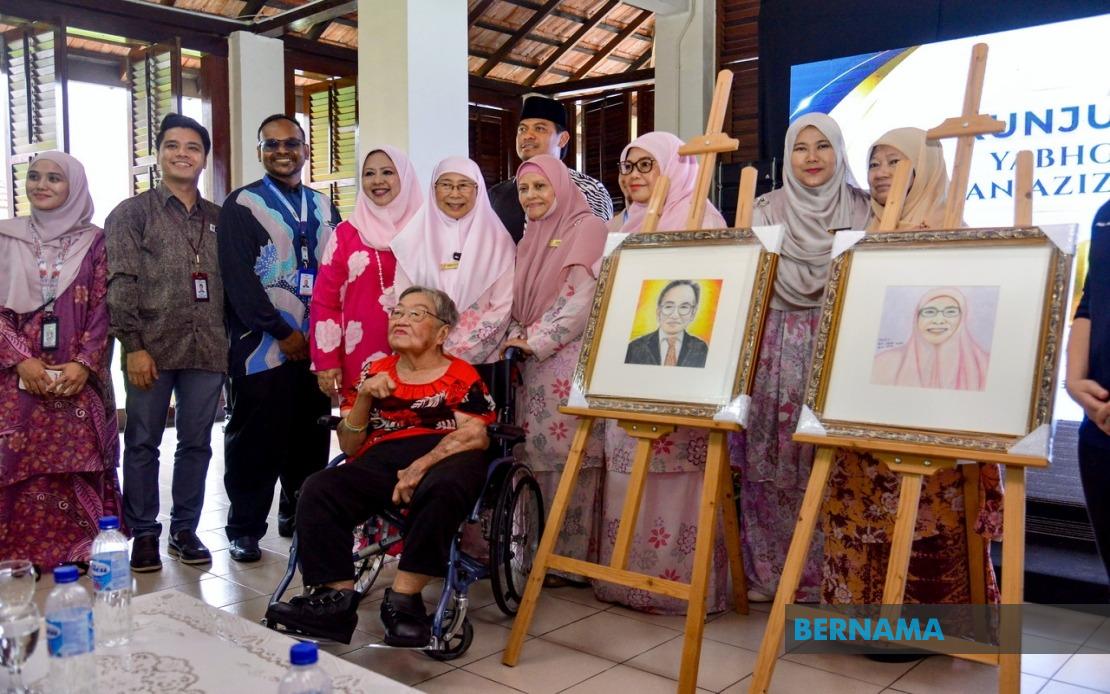
The National Leprosy Control Centre in Sungai Buloh deserves to be safeguarded as a cherished symbol of Malaysia's medical achievement, according to Datuk Seri Dr Wan Azizah Wan Ismail, wife of the Prime Minister. During a commemorative visit marking the institution's 100th anniversary, she stressed the importance of maintaining both the physical structures and the legacy of this pioneering healthcare facility, which has played a crucial role in the country's fight against infectious disease since its establishment in 1926.
The centre's historical significance extends far beyond its original purpose. For nearly a century, PKKN served as more than just a treatment facility—it represented Malaysia's medical ingenuity and public health commitment during a period when leprosy was widely feared and poorly understood. The building itself carries architectural and cultural value, standing as a tangible reminder of how healthcare infrastructure evolved in the country. Dr Wan Azizah's emphasis on preservation reflects a growing recognition among policymakers that medical institutions can function as repositories of national history, worthy of the same protection afforded to other heritage sites.
During her visit, Dr Wan Azizah, who also chairs KASIH Malaysia, toured the facility's operational areas and received comprehensive briefings on its role in combating leprosy throughout Malaysia's modern era. She engaged directly with staff members and residents, an interaction that underscored the human dimension of the centre's work. The gesture of presenting daily necessities and receiving a portrait created by a resident highlighted the centre's continued social function, demonstrating that beyond its medical role, PKKN remains an active community where individuals receive comprehensive care and support.
The transformation of public understanding about leprosy represents one of the centre's quiet victories. Dr Wan Azizah noted that contemporary attitudes towards the disease have shifted markedly from the stigma and misunderstanding that once characterised it. The misconception that leprosy spreads easily has been thoroughly debunked by modern medicine, yet the centre's existence serves as an educational resource for combating lingering prejudices. This educational value—demonstrating how Malaysia successfully addressed a once-dreaded disease through systematic treatment and public health measures—remains relevant for contemporary discourse around infectious disease management and social integration of affected populations.
Malaysia's achievement in controlling leprosy stands as a substantial public health accomplishment that deserves international recognition. The country attained leprosy elimination status in 1994, a milestone that reflected decades of dedicated work by healthcare professionals and health administrators. The current prevalence rate of 0.15 cases per 10,000 population sits comfortably below the World Health Organisation's targets, indicating that the disease has been effectively brought under control. This success did not occur by accident—it resulted from sustained commitment, proper infrastructure, trained personnel, and community cooperation, all exemplified by PKKN's operations.
Historically, the centre occupied a distinctive position in global leprosy treatment. At its peak, PKKN ranked as the world's second-largest isolation facility dedicated to leprosy patients, a status that reflected both the scale of the disease's challenge and Malaysia's response capacity. This prominence in international leprosy circles adds another dimension to the case for preservation. The centre represents not merely a local achievement but part of the global narrative of how leprosy control progressed during the twentieth century, making it potentially valuable for international medical historians and researchers studying public health evolution.
Dr Wan Azizah's proposal encompasses both conservation and modernisation—a balanced approach that acknowledges heritage structures must be maintained while healthcare services require continuous improvement. This dual mandate reflects contemporary thinking about heritage preservation, which rejects the notion that historic buildings must be frozen in time. Instead, heritage sites can remain functional, evolving institutions that serve contemporary needs while maintaining their historical character. Applied to PKKN, this means upgrading medical capabilities, improving patient amenities, and enhancing facilities while respecting the architectural and cultural identity that makes the centre distinctive.
The COVID-19 pandemic provided an unexpected reminder of PKKN's continuing utility and adaptability. During 2020, the centre was repurposed to accommodate COVID-19 patients, demonstrating that healthcare infrastructure built for one disease can be mobilised for emerging health threats. This flexibility suggests that preserving PKKN is not merely sentimental—it represents maintaining a valuable asset that can be deployed when needed for public health emergencies. The experience also illustrates why healthcare infrastructure should be planned with redundancy and flexibility in mind, lessons relevant for Malaysia's broader health system planning.
The preservation question also touches on Malaysia's broader approach to medical heritage. Unlike some nations with extensive museums dedicated to medical history, Malaysia has relatively few publicly acknowledged sites celebrating its healthcare achievements. PKKN could serve as an anchor institution for medical heritage tourism and education, potentially incorporating exhibition spaces, research facilities, or teaching areas alongside continued clinical operations. Such development would align with international trends toward medical tourism and heritage education, potentially generating economic benefits while promoting public health literacy.
For Southeast Asian policymakers, PKKN's situation offers instructive lessons about managing aging healthcare infrastructure. Many regional nations operate facilities built during colonial and early post-independence periods that face similar pressures regarding preservation, modernisation, and operational efficiency. Malaysia's decision regarding PKKN could influence how neighbouring countries approach comparable institutions, potentially establishing regional standards for balancing heritage conservation with contemporary healthcare needs. The centre's potential as a regional reference point for leprosy management and infectious disease control adds institutional value beyond its national significance.
Dr Wan Azizah's advocacy aligns with evolving international perspectives on how healthcare institutions should be valued. The WHO and various heritage organisations increasingly recognise that medical sites deserve protection and interpretation, similar to cultural monuments. This recognition reflects understanding that healthcare history shapes public health literacy and that preserved institutions can serve educational functions that benefit current and future populations. By championing PKKN's preservation, Malaysia positions itself within this progressive movement while honouring its own medical achievements.
The practical implementation of preservation will require coordination among multiple stakeholders—the Ministry of Health, heritage authorities, hospital administration, and potentially conservation specialists. Developing a comprehensive preservation and development plan for PKKN would involve documenting its architectural features, establishing conservation standards, identifying necessary upgrades, and creating interpretive materials that convey its historical significance. Such systematic planning would ensure that preservation efforts proceed thoughtfully rather than ad hoc, maximising the centre's value as both a functioning healthcare facility and heritage resource.

