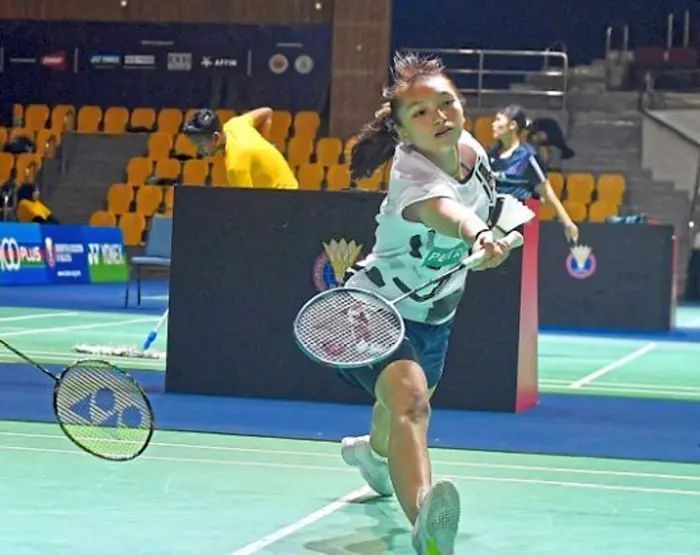
The Malaysian badminton coaching establishment is signalling a measured approach to nurturing one of the country's most promising young talents. Mixed doubles coach Nova Widianto has offered a candid assessment of 19-year-old Noraqilah Maisarah Ramdan's prospects, suggesting that while her technical abilities are beyond question, her psychological maturity and character will ultimately determine whether she reaches the sport's highest echelons.
Noraqilah has demonstrated remarkable range across badminton's doubles disciplines in recent months, competing effectively in both women's doubles and mixed doubles formats. This versatility marks her as a player of genuine promise at an age when most peers remain specialists in a single event. Yet Nova's perspective reveals the complexity of talent management in elite sport, particularly within the Malaysian context where raw ability alone has proven insufficient for sustained success at the international level.
Nova, who has observed Noraqilah's development over several years, attributes much of his confidence to her intrinsic abilities. He recognises her technical foundation as exceptionally solid, suggesting that her future trajectory will not hinge on further refinement of basic badminton skills. The coaching staff are evidently satisfied that the foundational work has been completed to a high standard. Instead, his concern centres on the less tangible but arguably more critical dimension of mental fortitude and emotional regulation.
The dynamics Nova describes reflect a common pattern in competitive sport, where early success can paradoxically become destabilising for young athletes. As recognition accumulates and supporters voice their confidence, the pressure intensifies in ways that are difficult to quantify but readily observable in performance volatility. The coach is essentially warning against the psychological pitfalls that accompany emerging talent, suggesting that Noraqilah's immediate environment must actively counterbalance external hype with perspective and humility.
Recent competitive results underscore Noraqilah's upward trajectory. Her partnership with Low Zi Yu reached the quarter-finals of the Australian Open, a significant achievement that propelled their women's doubles ranking to a career-high world No. 70. This result represents a genuine breakthrough, validating the investment in her development and suggesting that the technical foundation Nova references is indeed solid. Meanwhile, her ability to partner with different players—such as Ong Xin Yee at the Under-21 National Championship in Kuantan, where they captured the women's doubles title—indicates adaptability that could prove valuable throughout her career.
In mixed doubles, Noraqilah has been competing alongside Loo Bing Kun, a partnership that progressed to the second round in Sydney before their ranking settled at world No. 115. This dual involvement across different doubles formats creates both opportunity and challenge. On one hand, competing in multiple disciplines accelerates tactical learning and maintains engagement with varied playing styles. On the other, the demands of competing seriously in two separate events can fragment focus and limit the depth of partnership development that elite doubles badminton demands.
Nova's perspective on this balancing act deserves particular attention from Malaysian badminton observers. Rather than advocating for immediate specialisation—a path some coaches might pursue with a talented young player—he acknowledges the developmental value of remaining flexible while youth permits. The coaching team's apparent strategy is to allow Noraqilah to continue exploring both disciplines while she remains early in her career, treating this period as an extended learning phase rather than a route to immediate medal contention.
However, Nova explicitly signals that this flexibility has boundaries and timelines. Should Noraqilah harbour ambitions of Olympic participation and medal success at that level, a narrowing of focus will become essential. The Olympics demands the kind of partnership consistency, tactical refinement, and specialised training that dual participation makes impossible to achieve at the required standard. This represents a critical juncture that Noraqilah will need to navigate, likely within the next few years as she matures and moves into her early twenties.
The broader implication of Nova's remarks is that Malaysian badminton's coaching apparatus is becoming more sophisticated in its approach to talent management. Rather than pushing promising players relentlessly toward immediate results, the system now appears to emphasise sustainable development and psychological resilience. This philosophy aligns with international best practice, where the most successful federations invest in both technical excellence and mental preparation.
For Noraqilah specifically, the next phase of her development will test whether she can convert her obvious technical talents into consistent, medal-winning performances on the international stage. The character dimensions Nova emphasises—maintaining groundedness amid recognition, resisting complacency following early success, sustaining effort through inevitable plateaus—may ultimately prove more decisive than her already-refined badminton skills. In a sport where Malaysia has traditionally produced world-class doubles players, these less visible attributes could determine whether Noraqilah becomes another forgotten prospect or a genuine force in global badminton.

