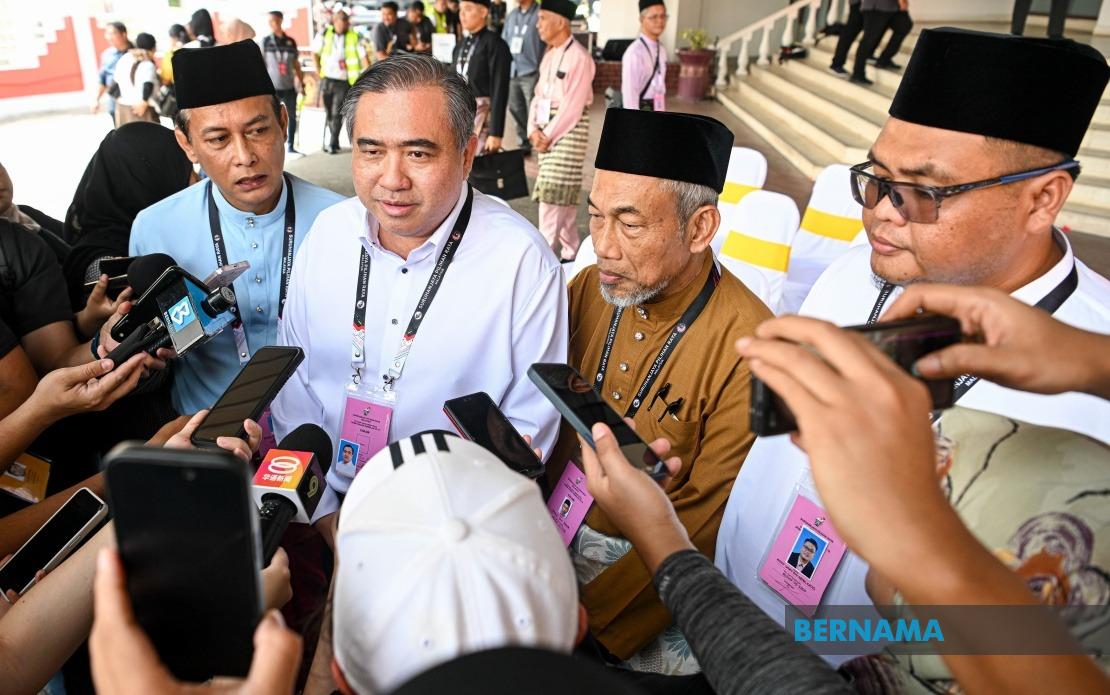
Transport Minister Anthony Loke has identified the Chennah state seat as one of the four most strategically vital constituencies within the Jelebu parliamentary district as Pakatan Harapan seeks to retain control of the Negeri Sembilan state government in the forthcoming state election. Loke, who serves as the incumbent for the seat, made the declaration during a press conference held at Dewan Besar Kuala Klawang following the completion of nomination procedures, underscoring the seat's significance to the coalition's broader electoral strategy.
The Chennah constituency carries considerable symbolic and practical weight in PH's calculations for the state. Loke pointed to the coalition's historical performance, noting that two state seats from the Jelebu parliamentary area—Chennah and Kelawang—played instrumental roles in the formation of the Negeri Sembilan government following the 2018 general election. This precedent suggests that the Jelebu area, despite encompassing only a handful of state seats, has disproportionately influenced the composition of the state legislature and the viability of government coalitions in recent electoral cycles.
The electoral contest for Chennah is shaping up as a direct bilateral confrontation. The Jelebu Parliamentary returning officer Abdul Rahim A Aziz confirmed that the seat would be contested in a straight fight between Loke and Siow Kong Choon, the Barisan Nasional candidate. This two-way battle format contrasts with more fragmented contest formats elsewhere and may amplify the strategic importance of the individual seat, as voters will face a clearer binary choice without third-party alternatives complicating the outcome.
PH's confidence in retaining the seat rests substantially on its record of governance across two consecutive terms since assuming power in 2018. Loke articulated the coalition's argument that its tenure has demonstrated consistent delivery of developmental projects and maintenance of political stability throughout Negeri Sembilan. This performance-based pitch targets voters who prioritize tangible improvements in infrastructure, services, and economic activity over ideological positioning or alternative visions offered by competing coalitions.
The upcoming state election represents a critical juncture for PH's control of Negeri Sembilan, a state that has served as a meaningful political battleground during the post-2018 period. Maintaining the state government is essential for PH's broader narrative of competent and stable governance at the sub-federal level. A loss in Negeri Sembilan would constitute a significant symbolic and practical setback, potentially undermining the coalition's claims to effective administration and diminishing its political standing heading into subsequent national elections.
The BN's competitive positioning in the state reflects broader realignment within Malaysian politics. Siow Kong Choon's nomination as the BN candidate signals BN's determination to challenge PH's incumbency advantage and appeals to voters for change. The ideological and programmatic differences between the two coalitions will likely structure campaign messaging, though local developmental issues and the personal political standing of individual candidates frequently prove decisive in state-level contests, particularly in smaller constituencies.
Jelebu's internal dynamics deserve attention from those tracking Negeri Sembilan's political trajectory. The parliamentary constituency encompasses multiple state seats, and the performance across these seats will materially influence whether any coalition achieves or maintains the majority required to form the state government. The concentration of strategic importance on specific seats like Chennah highlights how state election outcomes often hinge on the performance of a relatively small number of marginal or swing constituencies, amplifying their significance far beyond their individual population sizes.
For Malaysian voters, the Negeri Sembilan election offers a substantive referendum on PH's stewardship during its tenure holding state office. The electorate will assess whether the coalition has effectively translated its national political messaging and policy commitments into concrete improvements at the state level. Conversely, they will evaluate whether BN offers a credible alternative capable of delivering superior governance and development outcomes. These assessments will influence voting behaviour not only in Negeri Sembilan but also shape perceptions of coalition competence that ripple across the broader Malaysian political landscape.
The nomination process completion marks the transition from pre-election positioning to the active campaign period. Loke and other candidates will intensify their outreach to voters, articulating their respective visions and mobilizing party machinery across their constituencies. The intensity of competition in seats like Chennah will likely increase, with both PH and BN directing significant resources toward securing victory in these strategically identified constituencies. The outcome of these marginal contests will ultimately determine the composition of the Negeri Sembilan state government and the direction of state policy for the ensuing term.

