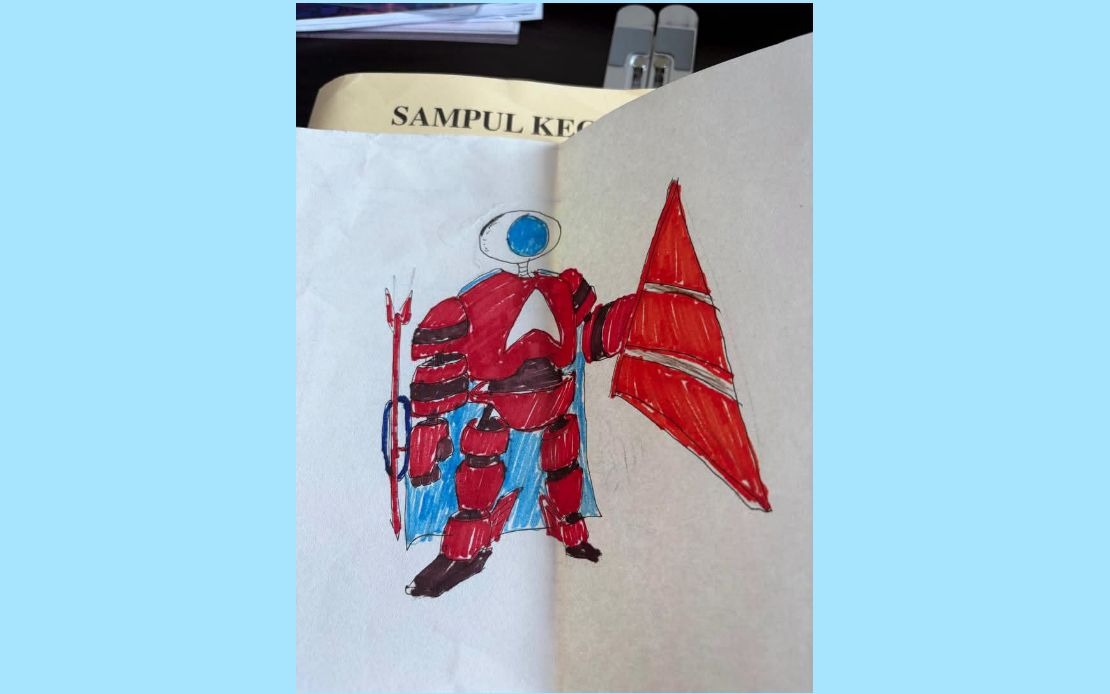
Prime Minister Datuk Seri Anwar Ibrahim has treasured a hand-drawn artwork presented to him by a child with special needs during a recent community engagement session, underscoring the personal connections forged through direct dialogue initiatives with ordinary Malaysians. The incident took place at a Temu Anwar programme held in Negeri Sembilan, where the child, accompanied by his father, approached the Prime Minister to hand over the artwork as a token of appreciation. Through a Facebook post, Anwar reflected on the encounter, emphasising how the moment remains etched in his memory despite the countless engagements he undertakes as the nation's leader.
The drawing itself depicts a robot character clad in red and blue armour, clutching what appears to be a staff-like implement in its left hand. While seemingly simple in its execution, the artwork carries profound significance beyond its artistic merit. For Anwar, the gift represents the trust and connection fostered between government leadership and citizens through accessible communication channels, regardless of background or circumstances. The choice to publicly acknowledge and appreciate the gift through social media demonstrates the Prime Minister's commitment to elevating voices from marginalised communities and recognising their contributions to the national dialogue.
Temu Anwar has emerged as a cornerstone of Anwar's governance philosophy, functioning as a direct engagement platform that transcends the formality traditionally associated with political leadership. The initiative brings together the Prime Minister with young people, community members, and citizens from diverse socioeconomic and demographic backgrounds. These sessions create spaces where ordinary Malaysians, including those with special needs and their families, can interact with the nation's highest elected official in relatively informal settings. The programme reflects a broader trend in contemporary Malaysian politics toward personalised leadership that emphasises accessibility and responsiveness to constituent concerns.
The presence of the child and his father at the Negeri Sembilan event highlights an important dimension of inclusive governance. Families supporting individuals with special needs often navigate complex bureaucratic systems and require government support across multiple sectors including healthcare, education, and social services. By participating in such events, parents and guardians gain direct exposure to policymakers and can articulate specific challenges faced by their children. For the child in this instance, the opportunity to present a personally created artwork to the nation's leader provides validation and recognition that extends beyond the immediate family unit into the public sphere.
The symbolic weight of the gift deserves deeper consideration. Children with special needs frequently face societal barriers and stigma that limit their opportunities for public participation and recognition. When such a child is given a platform to present their creation to the Prime Minister, it sends a powerful message about inclusivity and the value attributed to contributions from all segments of society. The artwork, though unconventional, becomes a form of communication that transcends verbal language and demonstrates the child's agency and creativity. Anwar's explicit appreciation acknowledges this significance.
From a governance perspective, the incident illustrates how high-level political leaders can utilise social media platforms to reinforce messages about inclusive policymaking. By publicly sharing the moment and expressing gratitude, Anwar signals to government officials throughout the bureaucracy that issues affecting children with special needs warrant attention and respect. This creates informal pressure on institutional structures to prioritise accessibility and accommodation in their service delivery. The visibility of such gestures influences broader cultural attitudes within government circles regarding disability and special needs.
Malaysia's approach to citizens with special needs has evolved considerably over recent decades, yet significant gaps remain between policy frameworks and ground-level implementation. Families often struggle with access to appropriate educational facilities, therapeutic services, and employment opportunities for their children. Public gestures of recognition and appreciation, while symbolic, contribute to ongoing conversations about the necessity for comprehensive, rights-based approaches to disability. The Temu Anwar platform provides an avenue through which such families can establish direct contact with decision-makers and advocate for improvements in service delivery and policy design.
The father's decision to bring his child to the Negeri Sembilan Temu Anwar session reflects confidence in the accessibility and welcoming nature of such events. Creating environments where families with special needs children feel comfortable attending public functions requires intentional planning, from physical accessibility considerations to sensory accommodations. The successful participation of this child suggests that organisers have implemented inclusive practices. Replicating such approaches across government-sponsored public events would represent meaningful progress toward comprehensive inclusivity in national civic life.
Moving forward, this encounter offers insights into how leadership engagement can be calibrated to recognise and celebrate diverse forms of participation and contribution. The drawing presented by the child, now a cherished possession of the Prime Minister, represents far more than a simple artwork—it embodies recognition of human dignity, the value of inclusion, and the capacity of dialogue platforms to generate authentic connections across societal divides. For families supporting individuals with special needs across Malaysia, such moments of visibility and appreciation reinforce the importance of their continued participation in democratic processes and public life.

