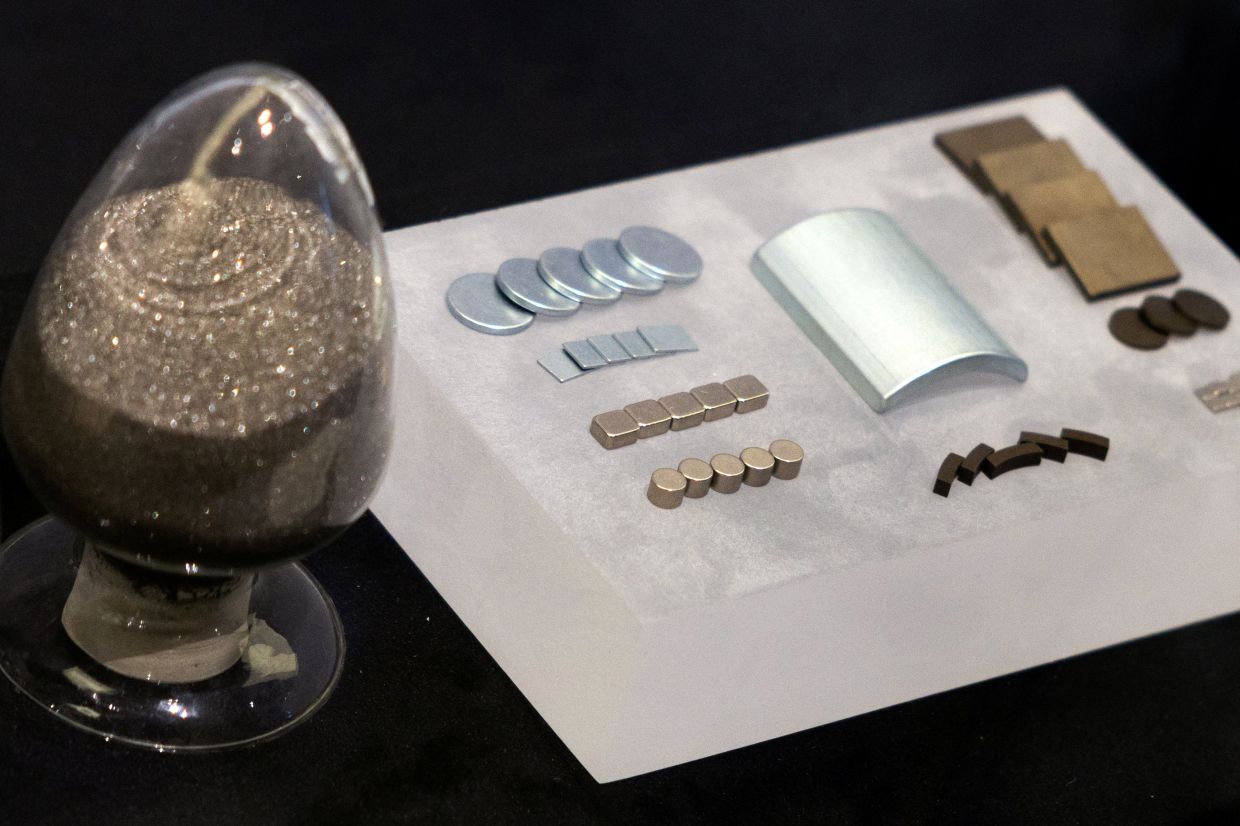
China is significantly expanding its scientific cooperation with Iran to include the strategically sensitive arena of rare earth exploration and processing, according to announcements from the Chinese National Natural Science Foundation (NSFC). The move represents a deliberate deepening of research ties between Beijing and Tehran at a moment of considerable geopolitical friction, particularly as Washington seeks to reduce its dependence on Chinese supplies of critical minerals essential for advanced weaponry and modern electronics.
The NSFC will contribute 30,000 yuan—approximately US$4,200—per workshop to cover direct expenses including seminar organisation, accommodation and domestic travel arrangements. In reciprocal fashion, Iran's National Science Foundation will manage international travel logistics for Iranian participants and provide lodging for Chinese researchers visiting Iranian facilities. This carefully structured funding mechanism underscores the deliberate, institutionalised nature of the partnership, moving beyond ad-hoc collaboration into a sustained framework for knowledge and technology exchange.
Rare earth elements comprise a group of 17 metals possessing distinctive magnetic and electronic characteristics that make them indispensable to contemporary military systems. Precision-guided missiles, advanced fighter aircraft, sophisticated radar installations and electronic warfare systems all depend fundamentally on rare earth materials. The strategic importance of securing reliable supplies has become acute following recent geopolitical disruptions. The Trump administration revealed earlier this month that the United States had employed rare earth elements sourced from China in weapons supplied to Ukraine, inadvertently demonstrating American vulnerability to supply chain interruption.
Recognising this vulnerability, Washington announced US$3 billion in targeted investments aimed at domestic critical-mineral and battery production projects. These initiatives explicitly target two objectives: replenishing depleted military stockpiles and reducing American reliance on Chinese supply chains that have proven susceptible to political leverage. The announcement signals Washington's determination to reconstruct domestic capability in a sector where China currently dominates overwhelmingly.
China's strategic advantage in rare earths remains formidable. The country possesses the world's largest known reserves of rare earth minerals and controls an even more disproportionate share of global processing capacity. Beyond these material advantages, Beijing has increasingly restricted technology transfer overseas, effectively converting its resource endowment into leverageable geopolitical power. When the Trump administration initiated trade hostilities with China last year, Beijing responded by tightening rare earth export controls, creating immediate supply disruptions for American manufacturers and starkly demonstrating Washington's structural dependence on Chinese processing infrastructure.
Iran's rare earth endowment remains comparatively poorly documented but potentially substantial. The country's geological formations—particularly iron ore and phosphate deposits in central regions—display characteristics typically associated with rare earth mineral accumulation. Exploration activities have identified rare earth anomalies distributed across approximately 7,000 square kilometres of central Iran according to analysis from the Netherlands-based Hague Research Institute released in February. These discoveries suggest Iran possesses material resources worthy of systematic development. However, Iran currently lacks the industrial infrastructure for meaningful extraction and processing at commercial scale, placing it in the early stages of capability development.
The scientific partnership between China and Iran extends beyond rare earths into a comprehensive research collaboration framework. The two national science foundations established their foundational memorandum of understanding in Beijing during 2017, initiating a structured approach to bilateral cooperation. The NSFC characterised this relationship by emphasising Iran's centrality to China's Belt and Road Initiative, framing scientific collaboration as a mechanism for generating mutual technological advancement and population-wide benefits. This rhetorical framing mirrors Beijing's broader approach to expanding influence throughout the Middle East and Central Asia via interconnected infrastructure, economic and knowledge-sharing initiatives.
Since 2017, the collaboration has encompassed an expanding range of research domains. Joint projects span mathematics, biological sciences, medical research, renewable energy systems, advanced materials development, climate science and artificial intelligence. This breadth reflects both genuine research complementarity and strategic intent to develop comprehensive technological interdependence. The partnership demonstrates that China views Iran not merely as a source of raw materials, but as a potential collaborator in developing processing technologies and advanced applications.
The joint workshop programme itself originated in 2024, initially focusing on climate change, artificial intelligence, advanced materials and manufacturing. Each workshop received 150,000 yuan in funding support. This year's expanded call for proposals broadened the scope to include specialised fields directly relevant to rare earth applications and advanced manufacturing: nano materials for medical diagnostics, environmental contamination monitoring, earthquake-resistant construction techniques and cleaner manufacturing processes. The inclusion of these diverse but complementary fields suggests a systematic effort to build comprehensive technological capacity rather than pursuing isolated research projects.
The timing of this intensified cooperation carries particular significance. As the United States increasingly mobilises resources to break Chinese dominance in critical mineral supply chains, Beijing appears to be simultaneously securing alternative partnerships that could reduce its own vulnerability to potential Western countermeasures. By developing rare earth expertise alongside Iranian counterparts, China may be establishing redundant processing capacity and diversified supply relationships insulated from American pressure. For Iran, access to Chinese technological expertise and investment represents an opportunity to monetise mineral resources and develop industrial capabilities that could generate substantial revenue and strategic autonomy.
For Southeast Asian nations, this deepening China-Iran partnership illustrates the broader pattern of Beijing consolidating technical and economic relationships throughout Asia and the Middle East. Malaysia and other regional producers of rare earth materials may find themselves navigating an increasingly complex landscape where Chinese technological dominance extends beyond production into processing and application development. The trajectory suggests that control over rare earth technology—not merely mineral extraction—will become the decisive competitive advantage in coming decades, with implications extending far beyond the bilateral relationship between Beijing and Tehran.
The scientific framing of this collaboration provides diplomatic cover for activities that are fundamentally strategic in nature. By channelling rare earth cooperation through established research institutions rather than commercial arrangements, Beijing maintains plausible deniability regarding technology transfer while simultaneously advancing its long-term objective of reducing global dependence on American technical standards and supply networks. For Washington and its allies, the challenge lies in accelerating domestic capability development before China-Iranian cooperation yields processing breakthroughs that further entrench Beijing's competitive advantages.

