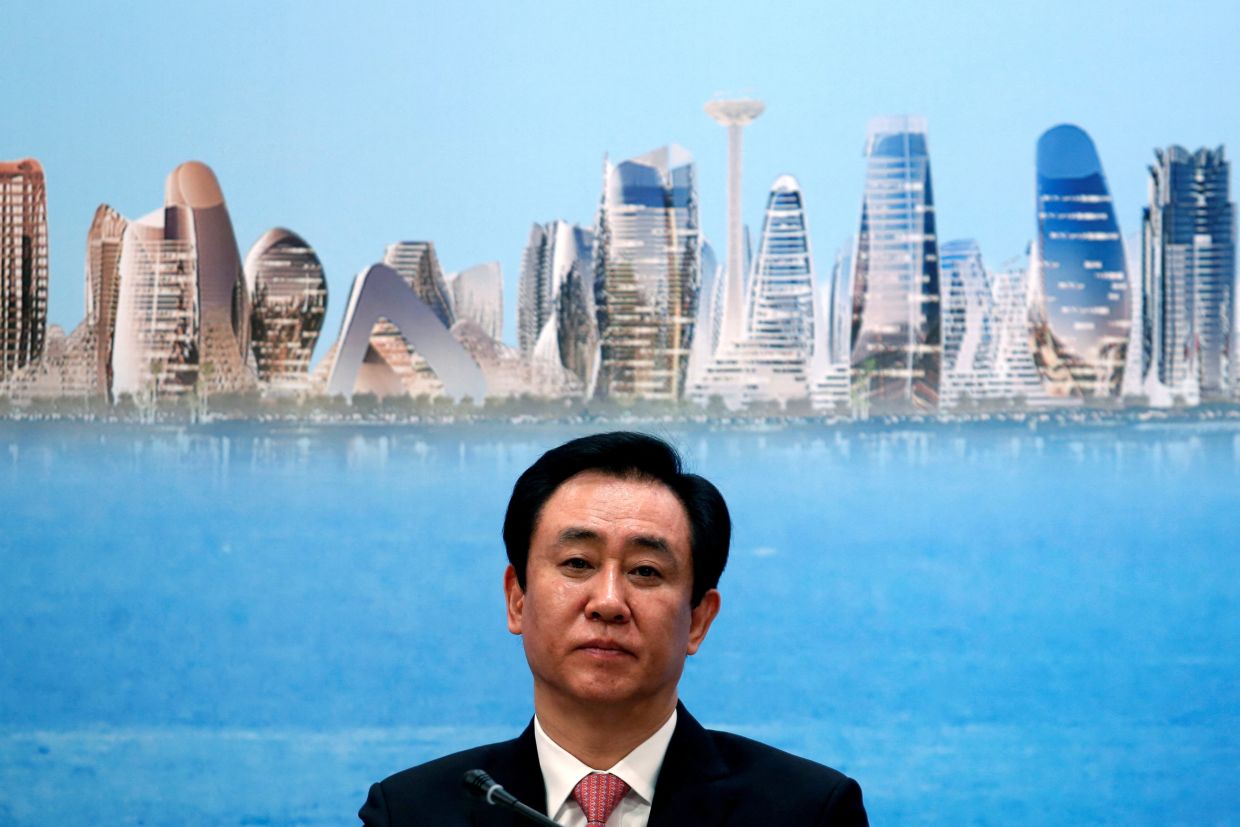
In a landmark moment for China's ongoing effort to hold corporate executives accountable for the property sector's systemic collapse, Hui Ka Yan, the founder of China Evergrande Group, was sentenced to life imprisonment on Thursday by a court in Shenzhen. The 67-year-old, who once ranked as Asia's wealthiest individual with a net worth exceeding $45 billion in 2017, pleaded guilty to eight serious charges including fraudulent fundraising, misappropriation of capital, illegal deposit-taking, unauthorized lending, securities fraud and bribery. His conviction and sentencing represent the most high-profile outcome of criminal proceedings stemming from Evergrande's historic financial unravelling, which has reverberated across global markets and continues to weigh on China's second-largest economy.
Evergrande's trajectory from market dominance to insolvency remains one of the most dramatic corporate collapses in contemporary business history. At its zenith, the developer had become China's largest by contracted sales volume, achieved through an aggressive expansion strategy fuelled by enormous debt accumulation. The company's subsequent default on approximately $300 billion in liabilities sent shockwaves through China's financial system and international markets. The consequences extended far beyond institutional investors and financial institutions, as millions of ordinary Chinese citizens holding Evergrande wealth-management products faced devastating losses. Many of these individuals were middle-class savers operating on modest incomes who had regarded the investments as relatively secure wealth preservation vehicles, making the defaults particularly damaging to consumer confidence and social stability.
Hui's conviction follows a five-year period marked by the gradual exposure of fraudulent practices at Evergrande and its subsidiaries. The court's pronouncement that the criminal conduct involved "particularly huge amounts" and "egregious circumstances" underscored the severity of violations spanning multiple dimensions of corporate wrongdoing. Beyond the life sentence imposed on Hui, the judicial process has extended to broader institutional accountability. The court simultaneously fined Evergrande itself 8.82 billion yuan (approximately $1.31 billion) and its principal operating subsidiary Hengda Real Estate 7 billion yuan. Additionally, five other senior executives received sentences ranging from six to eighteen years imprisonment, while 56 individuals connected to Evergrande received various criminal penalties, according to state broadcaster CCTV.
The sentencing order also included confiscation of all Hui's personal assets, a measure designed to redirect resources toward compensating aggrieved creditors and investors. However, this punitive action is unlikely to provide meaningful relief to the vast network of domestic and international creditors holding claims against the group. The Evergrande liquidation process, initiated after a Hong Kong court ordered the company's dissolution in 2024, has proceeded at a frustratingly slow pace that underscores the complexity of untangling a corporate structure of extraordinary scale and geographical diversity. As of August of last year, liquidators had managed to realise only approximately $255 million in asset sales, a figure dwarfed by the $45 billion in total creditor claims pending resolution.
The liquidation challenge confronting Evergrande's appointed administrators extends well beyond the geographical boundaries of China. Liquidators are engaged in protracted legal proceedings across multiple jurisdictions seeking to freeze offshore assets held by Hui and his former spouse, assets accumulated through dividends and executive remuneration distributed during the company's profitable years. Liquidators have identified approximately $6 billion in such distributions and are pursuing recovery actions through various legal channels. This international dimension of the recovery effort highlights how Hui and other executives had shifted wealth outside China during periods when the underlying business was generating nominal returns but increasingly masking underlying insolvency through accounting and reporting irregularities.
Hui's personal history adds a compelling human dimension to the larger narrative of corporate excess and systemic dysfunction. Rising from humble origins as a rural technician raised by his grandmother in Henan province, he founded Evergrande in 1996 and methodically constructed a real estate empire that temporarily crowned him as Asia's pre-eminent wealth accumulator. His achievement represented a genuine rags-to-riches narrative, yet it was ultimately constructed on foundations of fraudulent accounting and unsustainable leverage. The contrast between his early biography and his eventual criminal conviction illustrates how unchecked ambition combined with weak oversight mechanisms and perverse incentive structures can produce spectacular failures affecting millions of stakeholders.
The broader significance of Hui's conviction extends beyond individual accountability to encompass fundamental questions about China's property market dynamics and financial regulation. Evergrande's collapse was not an isolated corporate failure but rather a manifestation of systemic vulnerabilities in a sector that had become integral to China's economic growth model. For years, Chinese authorities tolerated increasingly aggressive leverage and accounting practices by major developers, viewing rapid urbanisation and construction activity as essential to meeting growth targets and employment objectives. The eventual reckoning with Evergrande and other troubled developers has forced a recalibration of regulatory priorities and enforcement mechanisms, though structural vulnerabilities remain embedded in the sector.
Chinese authorities moved to strip Hui of additional professional privileges during 2024, with the nation's securities regulator imposing a lifetime ban from securities market participation and levying a fine of 6.6 million yuan after establishing that Evergrande's flagship listed unit had systematically inflated financial results. This multi-pronged regulatory response has sought to establish that consequences extend across criminal, administrative and professional dimensions. The Hong Kong Stock Exchange delisted Evergrande last year, formally terminating the company's access to international capital markets and concluding a tumultuous period during which the stock had experienced sequential dramatic reversals. The delisting itself represented acknowledgment that the corporate entity could no longer function as an ongoing operational concern.
Reactions from Evergrande homeowners reveal the profound personal impact of the company's collapse on millions of Chinese consumers. Social media commentary captured widespread frustration with outcomes perceived as inadequate recompense for extraordinary financial losses. Homeowners expressed scepticism that Hui's imprisonment represented genuine accountability, with some suggesting that incarceration might ironically provide Hui with protection from potentially more severe consequences should he regain freedom. Other commentators emphasised that ordinary citizens, particularly those with limited financial resources and minimal influence over corporate governance, had borne the primary burden of massive losses while executives enriched themselves. These sentiments underscore the persistent tension between formal legal accountability mechanisms and popular conceptions of justice in contexts where vast wealth disparities and power imbalances characterise creditor-debtor relationships.
For Southeast Asian observers and participants in regional capital markets, the Evergrande saga and Hui's conviction carry instructive lessons regarding corporate governance, leverage management and financial regulation. Several major Southeast Asian property developers have undertaken ambitious regional expansion strategies, and the Chinese experience demonstrates the catastrophic consequences that materialise when market discipline erodes and regulatory oversight becomes inadequate. Malaysian investors and financial institutions, which maintain significant exposure to Chinese asset markets and cross-border real estate investments, must evaluate their own risk management frameworks in light of Evergrande's trajectory. The incident reinforces the principle that spectacular valuations and rapid expansion often mask underlying structural weaknesses that ultimately produce severe corrections.
Looking forward, Hui's life sentence may represent a symbolic inflection point in China's regulatory approach to corporate crime, yet the practical implications for creditor recovery remain uncertain. The liquidation process is expected to continue for years, consuming substantial administrative resources while delivering only marginal returns relative to outstanding obligations. International creditors holding Evergrande debt securities face multi-year uncertainty regarding recovery timelines and ultimate payment amounts. The case has become a cautionary exemplar for investors worldwide regarding concentration risk, leverage dynamics, and the importance of independent financial transparency in assessing corporate creditworthiness. For China's policymakers, the challenge remains how to facilitate orderly resolution of the property sector's ongoing structural problems while maintaining financial stability and social cohesion across a population deeply affected by the fallout from years of unconstrained developer expansion.

