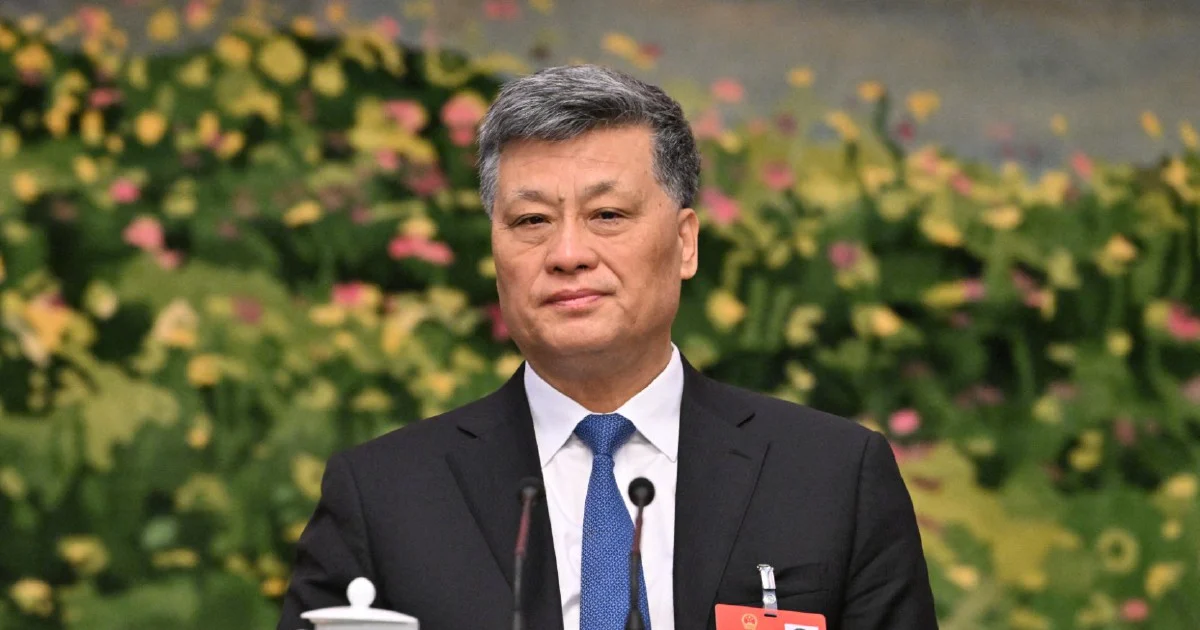
Beijing's disciplinary authorities have concluded a sweeping corruption investigation into a once-powerful Xinjiang administrator, resulting in his expulsion from the Communist Party and termination from all government positions. The action reflects Beijing's ongoing anti-corruption campaign that continues to target officials at various levels of the administrative hierarchy, particularly those who previously held influential regional posts.
The expelled official faced substantive accusations encompassing multiple forms of misconduct that extended beyond standard embezzlement concerns. Allegations included abuses of authority to benefit family members, accepting bribes from individuals seeking official favours, and engaging in sexual exploitation through transactional arrangements. Such charges represent violations not merely of party discipline codes but also of the ethical standards that Beijing insists its cadre must maintain as stewards of public trust.
Xinjiang, as China's northwestern frontier region spanning over 1.6 million square kilometers, represents strategically important territory for Beijing. Officials governing this vast area—which is home to around 25 million people across multiple ethnic groups—traditionally held considerable discretionary power over resource allocation, development projects, and administrative appointments. The removal of senior figures for corruption underscores how even officials managing sensitive geopolitical zones remain subject to central party oversight and accountability mechanisms.
For Malaysian and Southeast Asian observers, the significance of this disciplinary action extends beyond routine anti-corruption enforcement. It demonstrates that China's party leadership maintains mechanisms to police its own cadre, irrespective of regional importance or prior seniority. This pattern of high-profile removals serves multiple purposes within China's political ecosystem: it projects commitment to clean governance, reasserts central authority over regional administrators, and occasionally removes officials whose policy approaches may have shifted or who have lost political patronage at higher levels.
The specific allegations—nepotism, bribery, and sexual misconduct—constitute a comprehensive catalogue of abuse of power. Nepotism particularly signifies the tilting of administrative processes towards personal networks rather than merit or public interest, a concern that resonates across developing administrative systems in Asia. Bribery allegations indicate the official may have monetised his position through transactions with businesspeople or applicants seeking permits and contracts. The inclusion of sexual misconduct charges reflects evolving standards within Chinese governance regarding official conduct in private spheres.
Xinjiang's administrative history has been marked by significant turnover among top officials in recent years. The region's economic development strategy, demographic composition, and security considerations have frequently prompted personnel changes as Beijing recalibrates its governance approach. Corruption investigations often intersect with broader policy shifts, creating uncertainty for officials whose positions depend on maintaining favour with patrons in the central apparatus. This particular expulsion therefore signals both anti-corruption resolve and potential adjustment of governance priorities in the region.
The expulsion process itself illustrates how China's party discipline system operates independently of criminal courts. Removal from the party precedes or occurs parallel to potential criminal prosecution, establishing a two-track process where political expulsion strips officials of cadre status and pension entitlements immediately, while judicial proceedings may follow at a separate pace. This mechanism allows the party to act decisively on misconduct findings without awaiting lengthy criminal procedures.
For foreign observers and businesses operating in or trading with Xinjiang, such disciplinary actions offer limited immediate clarity regarding policy continuity. However, they do underscore that corruption involving regional officials can result in severe consequences, potentially making successor administrators more cautious about engaging in similar misconduct or at least more careful about concealing it. This may incrementally influence the regulatory environment, though the effects remain difficult to predict without knowing the replacement official's orientation.
The timing and manner of such announcements—typically reported through state media rather than official party publications—indicate the party wishes to publicise its disciplinary reach to both internal cadre and external audiences. The message functions as deterrent for officials tempted toward misconduct while reassuring the public that oversight mechanisms exist and function. In the context of Xinjiang specifically, demonstrating administrative accountability may also serve political purposes regarding perceptions of governance quality.
The expulsion raises questions about systemic factors enabling such misconduct to persist until investigation concluded. Whether the official operated with implicit tolerance from superiors, whether oversight mechanisms failed to detect violations earlier, or whether investigation was triggered by factional disputes within the administration remains unclear from public statements. Understanding how such cases are identified and investigated offers insight into the strengths and limitations of China's internal accountability systems.
Looking forward, the implications for Xinjiang's administrative trajectory depend on who assumes leadership roles and whether policy directions shift accordingly. The removal itself demonstrates that even officials managing strategically crucial regions cannot assume immunity from disciplinary action, reinforcing central authority while potentially creating incentives for successor administrators to navigate their duties with heightened caution regarding personal conduct and administrative transparency.

