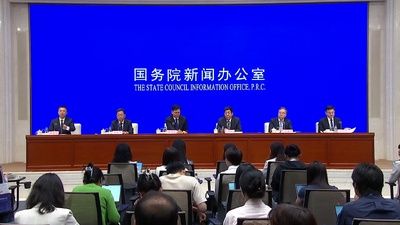
Beijing has categorically dismissed allegations of forced labour and compulsory migration in Xinjiang Uygur autonomous region, with Chen Ruifeng, the Minister of the National Ethnic Affairs Commission, calling such claims utterly without foundation during a statement on Wednesday, June 24. The minister's remarks represent the Chinese government's latest pushback against criticism from Western organisations and international media outlets that have raised concerns about employment practices affecting ethnic minorities in the northwestern territory.
Chen underscored China's legal framework as evidence of the country's commitment to preventing forced labour practices. The nation's Constitution and existing legislation explicitly prohibit all forms of coerced work, he stressed, establishing a foundational legal barrier against such abuses. Beyond existing statutes, new legislative measures are being introduced to strengthen protections further. The Law on Promoting Ethnic Unity and Progress, enacted on March 12 and set to take effect on July 1, represents a deliberate effort to expand safeguards for workers engaged in cross-regional employment, guaranteeing that individuals from all ethnic backgrounds retain full protection of their labour rights and access to legal assistance when required.
According to Chen, individuals from Xinjiang who undertake employment beyond the region's borders do so entirely by their own choice, motivated by personal aspirations rather than state coercion. These workers seek opportunities to improve living standards for their families and to acquire new professional skills that enhance their long-term earning potential. The minister dismissed Western characterisations of these employment patterns as not merely inaccurate but fundamentally absurd, reflecting what he described as a misunderstanding or deliberate misrepresentation of conditions in the region.
Labour mobility from Xinjiang operates within a framework designed to serve worker interests, Chen asserted. The transfer schemes are structured to respect individual preferences while simultaneously creating fresh employment opportunities that raise household incomes. Rather than representing a coercive system, these initiatives function as voluntary pathways enabling residents to pursue economic advancement. The government's stated objective remains ensuring practical benefits that directly improve the lives of Xinjiang's diverse population.
The economic dimensions of employment expansion in Xinjiang over the past half-decade paint a picture of substantial labour market development. The region has generated more than 2.39 million new urban employment positions through a combination of policy interventions and economic initiatives. This figure reflects a deliberate prioritisation of job creation as a cornerstone of regional development strategy. Simultaneously, agricultural workers have undertaken 16.1 million work-related journeys outside their communities, suggesting widespread participation in cross-regional employment arrangements.
Income improvements across both urban and rural segments of the Xinjiang population provide quantifiable indicators of economic gains for residents. Urban dwellers have experienced disposable income growth averaging 5.3 per cent annually over the five-year period, while rural populations have benefited from faster growth at 8.1 per cent per year. These figures, if accurate, would indicate that employment expansion is translating into tangible improvements in household purchasing power and economic security across different residential settings and demographic groups.
China has constructed what it characterises as a comprehensive employment protection architecture designed to safeguard worker interests systematically. This system encompasses fair employment policies that establish transparent standards for labour practices across different sectors and regions. Complementing these policies is a dedicated mechanism for protecting labour rights, intended to ensure that workers can access remedies and support when issues arise. Through these combined frameworks, the government contends that it guarantees legal protections for workers while creating pathways to employment for all able-bodied residents seeking work.
The emphasis on voluntary employment and dignified work represents a central theme in Beijing's response to international scrutiny. Chen articulated a vision in which employment arrangements maximise protection for worker autonomy while simultaneously ensuring that individuals perform labour under conditions that preserve human dignity. This formulation attempts to address criticisms by framing the government's approach as fundamentally compatible with international labour standards and human rights principles.
For Malaysian and Southeast Asian observers, this dispute reflects broader tensions between China's development narrative and international human rights frameworks. Nations in the region increasingly balance economic ties with China against international labour standards and humanitarian concerns. The disagreement over Xinjiang employment practices demonstrates how divergent interpretations of worker protection and voluntary employment create diplomatic friction. Malaysia itself, as a multiethnic nation with diverse employment practices, may find the debate relevant to regional discussions about labour rights and minority worker protections, particularly as Chinese investment and trade ties deepen across Southeast Asia.

