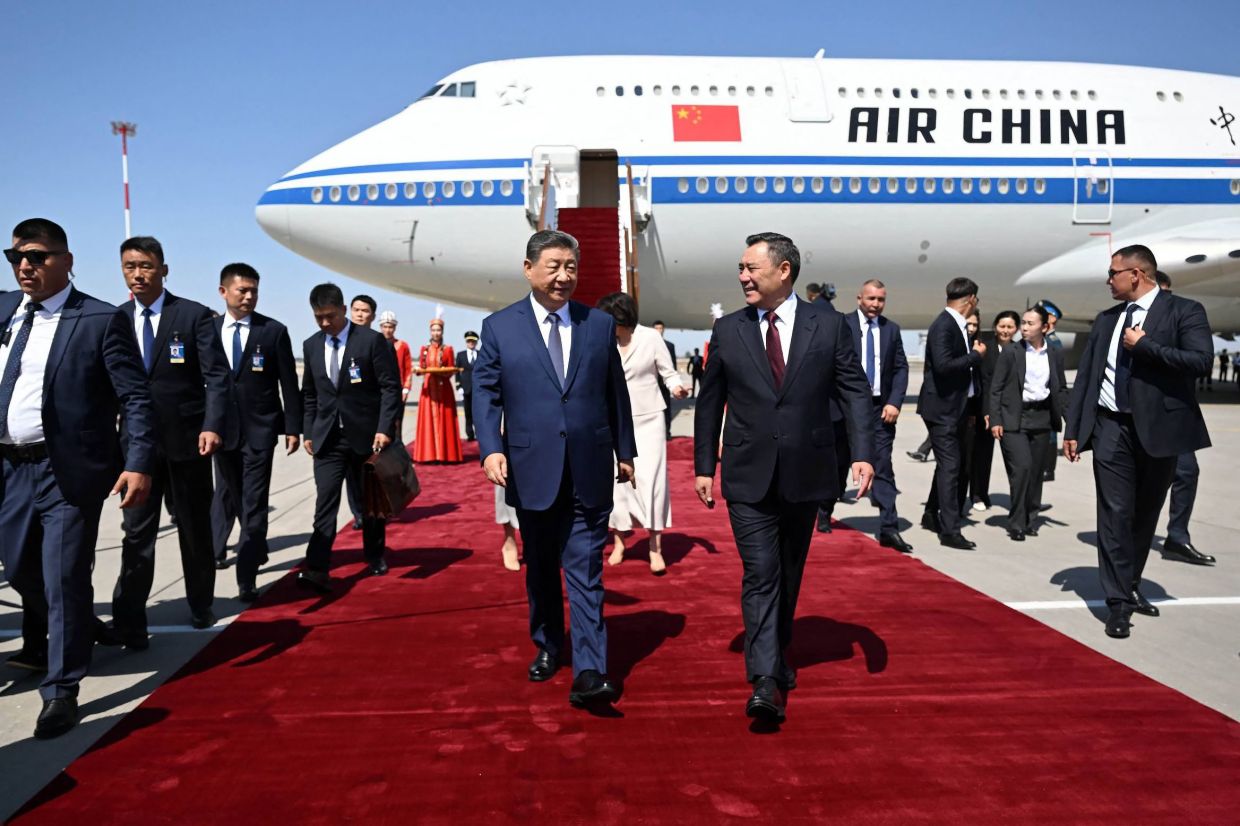
The Shanghai Cooperation Organisation is hosting its latest summit in Bishkek this week, drawing together the heads of state from China, Russia and India alongside leaders from a coalition of nations seeking to amplify their collective voice in global affairs. The gathering represents a significant moment in ongoing efforts by Beijing and Moscow to frame the SCO as a viable counterbalance to Western-dominated institutions, while simultaneously testing whether the sprawling membership can maintain unity despite competing national interests across Asia and the Middle East.
Chinese President Xi Jinping, Russian President Vladimir Putin and Indian Prime Minister Narendra Modi will all be present for the Kyrgyzstan capital's proceedings, with several bilateral meetings scheduled throughout the agenda. Putin and Xi have planned a one-on-one meeting on Monday, while the Russian leader will also hold discussions with Iranian President Masoud Pezeshkian on Tuesday as the formal SCO sessions commence. These parallel negotiations underscore how major powers utilise the summit's framework to deepen strategic partnerships beyond the plenary discussions.
The SCO's origins trace back to 2001, when China and Russia joined four Central Asian republics to establish what was initially conceived as a regional security mechanism focused on border demarcation and counterterrorism cooperation. Over the past twenty-three years, the organisation has substantially expanded both its membership and its stated ambitions, though critics observe that its core mission and institutional effectiveness remain nebulous. The bloc now encompasses ten full members: Russia, China, India, Iran, Pakistan, Belarus, Kazakhstan, Kyrgyzstan, Tajikistan and Uzbekistan, with numerous additional countries maintaining dialogue partner status.
For Russia, now four and a half years into its military conflict in Ukraine, and Iran, engaged in a six-month confrontation with the United States and Israel, the SCO platform offers critical opportunities to strengthen diplomatic and economic connections with nations unwilling to align with Western sanctions regimes or political pressure. Both countries view the summit as essential for demonstrating that they retain meaningful partnerships and regional influence despite international isolation. This strategic imperative drives their active participation and bilateral diplomacy during the proceedings.
China has been the principal architect of the SCO's evolution into a more ambitious institution, consistently framing it as an alternative model to Western structures such as the G7. Beijing's Ministry of Foreign Affairs characterised the organisation last week as having successfully developed an innovative pathway for regional cooperation, echoing President Xi's long-standing vision of reshaping global governance norms. China has leveraged its economic strength and development programmes to expand the SCO's scope, positioning itself as a champion of non-Western alternatives to existing international arrangements while simultaneously consolidating its influence within the bloc.
Russia has aligned closely with Beijing's strategic narrative, jointly promoting the concept of a multipolar world order in which Beijing and Moscow exercise greater leverage than they do within existing Western-led institutions. This coordinated messaging aims to appeal to member states and dialogue partners who have experienced Western pressure or perceive themselves as marginalised by existing international hierarchies. The framing of the SCO as an ideological and institutional counterweight to Western dominance reflects deeper anxieties among authoritarian and semi-authoritarian governments about the durability and acceptability of the existing international system.
However, the reality of the SCO remains considerably more complicated than the unified bloc that China and Russia attempt to project. Member states harbour profound disagreements on numerous issues and pursue distinct national interests that frequently diverge from and even conflict with the collective agenda. Pakistan and China maintain longstanding security ties, yet India's relationship with both countries is marked by historical enmity and contemporary strategic competition. These fundamental tensions constrain the organisation's capacity to function as a cohesive political or military alliance, notwithstanding rhetorical claims of unity.
For India, the summit represents less a vehicle for substantive policy alignment than an opportunity for strategic signalling and geopolitical positioning. New Delhi faces a delicate balancing act: it must maintain its traditional security partnership with Russia whilst simultaneously deepening ties with the United States and Japan, whilst also managing its rivalry with both China and Pakistan. Dinakar Peri, a security studies fellow at Carnegie India, observes that the SCO grants India a seat at the table within a region increasingly defined by great power competition, enabling the country to monitor shifting alignments and project itself as a dependable stakeholder without surrendering policy autonomy. This positioning allows India to hedge its geopolitical bets whilst retaining access to crucial intelligence about regional developments and the intentions of rival powers.
Turkey, which maintains dialogue partner status within the SCO structure, similarly views the platform as instrumental to its strategic interests within Eurasia. President Recep Tayyip Erdogan, who secured Turkey's admission as a dialogue partner in 2012, has repeatedly expressed ambitions for full membership within the bloc. This aspiration reflects Ankara's broader foreign policy orientation, which seeks to preserve its traditional Atlantic ties through NATO membership whilst simultaneously strengthening its position within Central Asian and Middle Eastern affairs. Despite deep economic and political integration with the European Union under a 1995 customs agreement, Turkey's formal membership application to the EU has stalled for more than two decades, making organisations like the SCO attractive as alternative venues for influence and status.
For Southeast Asian observers and policymakers, the SCO summit illuminates the extent to which regional powers increasingly view global affairs through the lens of great power competition and non-Western bloc formation. The gathering demonstrates how nations throughout Asia and the Middle East are seeking institutional frameworks that offer alternatives to Western-dominated arrangements without necessarily surrendering strategic autonomy or embracing full alignment with Beijing or Moscow. The SCO's ambiguous nature—neither a binding military alliance nor a coherent economic community—allows member states to participate selectively in initiatives that serve their interests whilst avoiding the constraints of more formalised institutional commitments.
The summit's outcomes will likely reveal whether the SCO can evolve beyond a venue for bilateral diplomacy and geopolitical signalling into a more substantive institutional mechanism, or whether it will remain what many analysts describe as a largely rhetorical counterweight to Western institutions. The fundamental challenge confronting the organisation concerns whether states with competing interests and distinct strategic priorities can sustain meaningful collective action, or whether the SCO will ultimately function primarily as a platform where major powers like China and Russia advance their individual agendas whilst other members maintain protective distance. For Malaysia and other Southeast Asian nations watching regional developments, the SCO's trajectory will significantly influence how effectively they can navigate great power competition and maintain strategic flexibility in the coming years.

