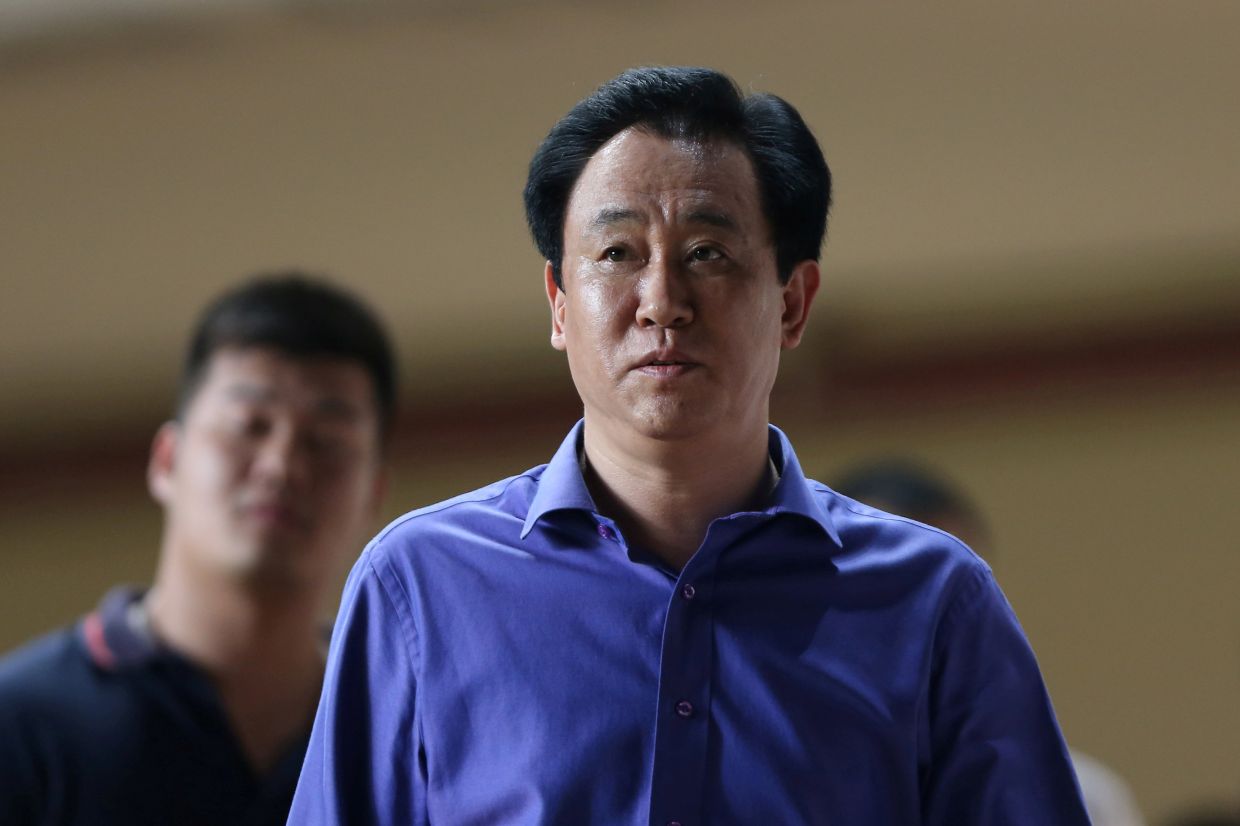
China has sentenced Evergrande Group founder Xu Jiayin to life imprisonment and levied penalties totalling 15.82 billion yuan (US$2.4 billion) against the company and its real estate subsidiary, the Shenzhen Intermediate People's Court announced on Thursday. The ruling represents a watershed moment in China's handling of the property sector crisis that has gripped the nation's economy since 2020, delivering consequences that extend far beyond Xu's personal circumstances to symbolise Beijing's intensified crackdown on corporate malfeasance within an industry that once formed the backbone of Chinese economic growth.
Xu's downfall encapsulates the dramatic reversal of fortune experienced by Evergrande, an enterprise that epitomised the exuberant expansion of China's residential development sector during decades of sustained real estate appreciation. The company became synonymous with ambitious property ventures across the country, marketing homeownership as a cornerstone of middle-class aspiration whilst simultaneously leveraging increasingly aggressive financial strategies to fund rapid expansion. However, this growth trajectory proved unsustainable once the government implemented structural reforms designed to curtail speculative borrowing and excessive leverage within the property market.
The Shenzhen court found that between 2016 and 2021, Evergrande and Xu engaged in systematic, large-scale financial fraud involving asset inflation and liability concealment that violated national regulations. According to judicial findings, these activities extended beyond accounting manipulation to encompass bribery schemes that facilitated the company's acquisition of control stakes in financial institutions, though authorities did not publicly identify these institutions. The breadth of misconduct reflected in the charges suggests a comprehensive strategy of deception spanning multiple operational domains rather than isolated lapses in governance.
Xu's guilty plea in April to charges encompassing embezzlement, bribery, and financial fraud paved the way for Thursday's sentencing. Beyond the life sentence itself, the court revoked his political rights permanently and ordered complete forfeiture of personal property, measures that effectively erase his civil standing within Chinese society. This multi-layered punishment regime extends consequences beyond incarceration to encompass permanent social and economic disenfranchisement, reflecting Beijing's determination to establish severe deterrents against high-level corporate criminality.
The 2021 default that precipitated Evergrande's unravelling occurred after the company encountered insurmountable difficulty servicing its accumulated debt obligations. The financial pressure intensified dramatically once credit markets tightened in response to government-imposed restrictions targeting overleveraged developers. This sequence of events demonstrated how regulatory interventions designed to stabilise the property sector could trigger cascading defaults amongst heavily indebted entities, with Evergrande becoming the most visible casualty of this transition.
Beyond the founder's fate, Thursday's proceedings resulted in prison sentences for five additional senior executives, with custodial terms ranging from six to eighteen years for offences including fraud. This enforcement action against multiple figures within the organisation's leadership underscores that culpability extends throughout the managerial hierarchy rather than concentrating solely on the founder. Such comprehensive accountability mechanisms signal Beijing's resolve to pursue organisational wrongdoing systematically rather than accepting token gestures of reform.
For Malaysian and Southeast Asian observers, the Evergrande resolution carries several implications. The case demonstrates how swiftly property market dynamics can reverse when government intervenes decisively in financial conditions underpinning real estate speculation. Malaysian developers and financiers operating within Southeast Asian markets characterised by similar leverage patterns should consider whether comparable regulatory tightening might occur regionally, particularly if debt-to-asset ratios exceed sustainable thresholds. The severity of Xu's punishment may also signal Beijing's expectation that comparable transgressions at regional subsidiaries or ventures involving Chinese companies could attract equivalent enforcement responses.
Moreover, the case illustrates how interconnection between property markets and broader financial systems creates systemic risks that governments ultimately address through coercive measures. The revelation that Evergrande obtained control of financial institutions through bribery underscores how property company activities extended into banking and securities spheres, creating contagion risks that justified regulatory intervention. Southeast Asian jurisdictions increasingly concerned about property sector concentration of credit should monitor whether similar patterns emerge domestically and whether comparable enforcement frameworks might become necessary.
The financial penalties imposed represent substantial resources extracted from the corporate entity and its management, resources that otherwise might have remained available for creditor repayment or operational restructuring. This allocation reflects a prioritisation of punishment and general deterrence over rehabilitation or preservation of enterprise value. For investors holding Evergrande securities or engaged in supply chain relationships with the company, these developments confirm that resolution of the company's default will proceed within a framework prioritising accountability enforcement rather than commercial rehabilitation.
Xu's sentencing finalises a personal trajectory from celebrated property entrepreneur to convicted felon within a compressed timeframe, illustrating the speed at which reputational collapse can occur when market conditions shift and regulatory scrutiny intensifies. This evolution carries cautionary resonance for developers across Southeast Asia whose business models depend upon sustained access to leverage and whose balance sheet strength may prove vulnerable to similar interest rate increases or credit market contractions. The Evergrande case demonstrates that scale, political connections, and prior success offer limited insulation against consequences once serious misconduct becomes demonstrable and regulators determine enforcement is warranted.

