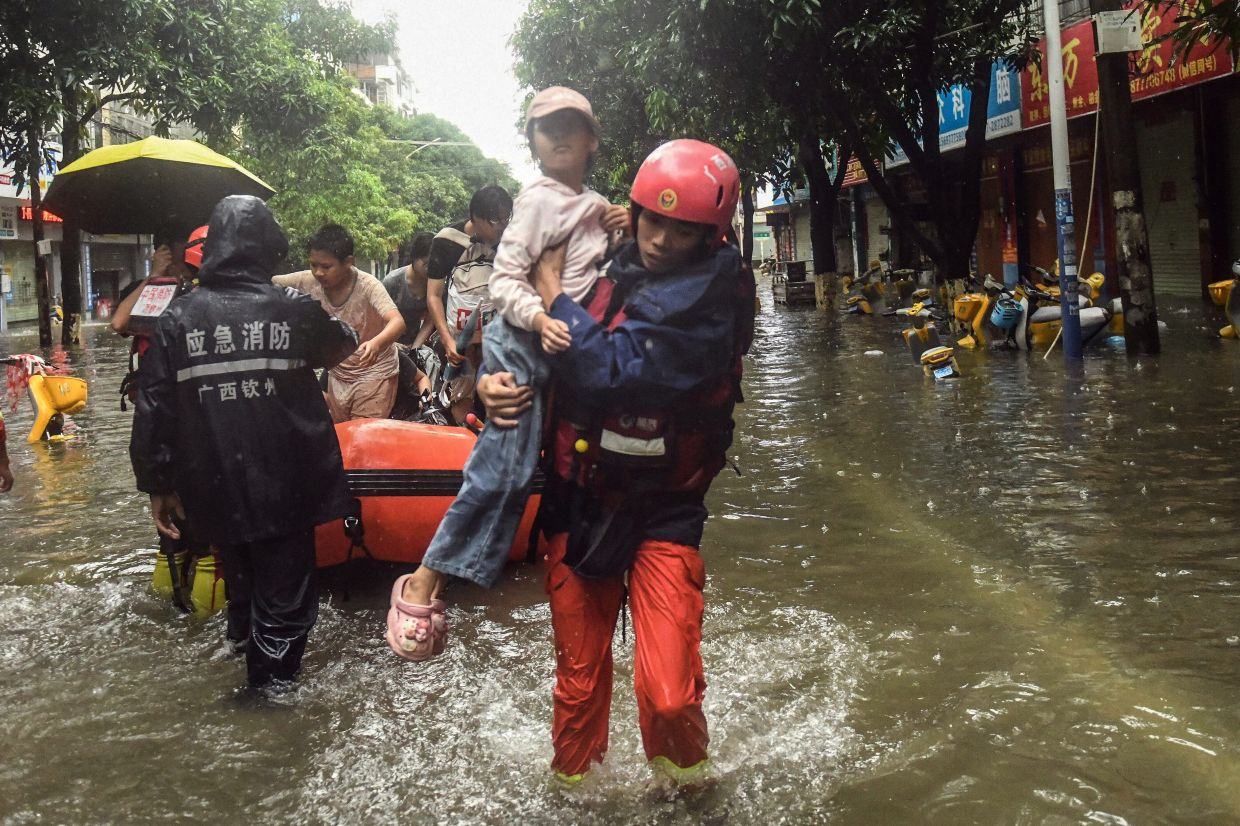
Rescue teams across multiple Chinese provinces are racing against time to locate missing persons following a series of catastrophic natural disasters that have claimed dozens of lives and displaced over 100,000 residents. The calamities underscore the vulnerability of densely populated regions in China to seasonal weather extremes, a phenomenon that has intensified in recent years and poses significant challenges for emergency management across the country and the wider Southeast Asian region.
The southern province of Guangxi bore the brunt of torrential downpours unleashed by Typhoon Maysak, which triggered widespread flooding that has so far killed six people with at least 130,000 evacuated from vulnerable areas. The typhoon's impact extended beyond immediate casualties, as the relentless rainfall overwhelmed critical water infrastructure designed to protect populated zones. A reservoir dam burst under the pressure of accumulated floodwaters, with dramatic footage from state broadcaster CCTV capturing the moment surging water breached the structure's concrete walls. Rescue personnel deployed on inflatable boats worked to navigate the chocolate-coloured torrents that swept across the landscape, illustrating the severity of conditions faced by emergency responders.
The hydrological impact across Guangxi has been extraordinary. Fast-flowing water burst the banks of 40 rivers and waterways throughout the region, inundating farmland on a massive scale. Nearly 13,000 acres of agricultural land suffered damage, representing a substantial blow to local food production and rural livelihoods. Such agricultural losses carry implications that extend beyond immediate economic hardship, potentially affecting food security across a broader geographical area and contributing to inflationary pressures on staple crops.
Meteorological authorities warned that the ordeal would extend well into Wednesday, with predictions that rain would continue pounding Guangxi and the adjoining province of Guangdong. This extended weather pattern creates compounding risks, as saturated soil and already-overwhelmed drainage systems become increasingly unable to absorb additional moisture. Minister of Water Resources Li Guoying issued a stark warning about anticipated flood peaks exceeding safe thresholds by more than six metres at the critical Wuzhou Hydrological Station, expected to arrive early Thursday. He emphasized that the combination of relentless rainfall and persistently high water levels would subject reservoirs and embankments to stress conditions that could compromise structural integrity.
Responding to the emergency, Chinese authorities mobilized substantial relief resources including food supplies, protective equipment, and rescue vessels directed toward affected areas. The State Flood Control and Drought Relief Headquarters maintained the second-highest alert level for the region, signalling the gravity with which officials regarded ongoing threats. President Xi Jinping instructed rescue personnel to "go all out" in executing emergency operations, a directive transmitted through state media that conveyed the national leadership's commitment to the response effort.
The destruction extended beyond southern China's flood zone. Thunderstorms and gale-force winds wreaked havoc in the central province of Hubei, killing 11 people and leaving 331 injured. The severe weather damaged nearly 4,800 residential structures and completely destroyed 22 homes, displacing families and creating additional demands on already-stretched emergency services. One person remained unaccounted for in the province as of reporting time.
More devastating still was a catastrophic landslide in northwestern Gansu province, which buried 33 people initially and ultimately claimed 21 lives according to official statements released Wednesday. The disaster struck Rencang village in Dangchang County at approximately 6:56 am Tuesday, burying homes and inhabitants beneath tonnes of earth and rock. Rescue teams mobilized to the remote location and conducted thorough searches of the affected area before concluding operations. Authorities have initiated an investigation into the geological and meteorological factors that triggered the slope failure, though findings have not yet been disclosed to the public.
Government response to the Gansu landslide included allocating 30 million yuan, equivalent to approximately US$4.4 million, toward reconstruction efforts. This financial commitment aims to help affected communities rebuild infrastructure and restore basic services, though such sums often prove insufficient for comprehensive recovery in rural areas where economic capacity remains limited.
These compounding disasters highlight the seasonal vulnerability that characterizes much of China's geography. Summer months bring intense regional weather variations, with some areas experiencing exceptional rainfall while others simultaneously endure extreme heat and drought conditions. Such variability creates complex challenges for water resource management and emergency preparedness, requiring coordination across multiple provincial authorities and investment in sophisticated early warning systems.
For Malaysia and other Southeast Asian nations, the unfolding situation in China carries strategic relevance. Shared river systems, regional weather patterns, and transnational water management agreements mean that significant flooding events in neighbouring countries can have downstream consequences. Additionally, the scale of China's disaster response capacity and the challenges it faces in managing simultaneous crises across vast distances offer instructive lessons for regional governments assessing their own resilience to natural hazards. As climate patterns become increasingly unpredictable, experiences from major population centres like Guangxi demonstrate the importance of investing in early warning infrastructure, evacuation protocols, and inter-agency coordination mechanisms that can function effectively even when multiple disasters occur simultaneously across different regions.

