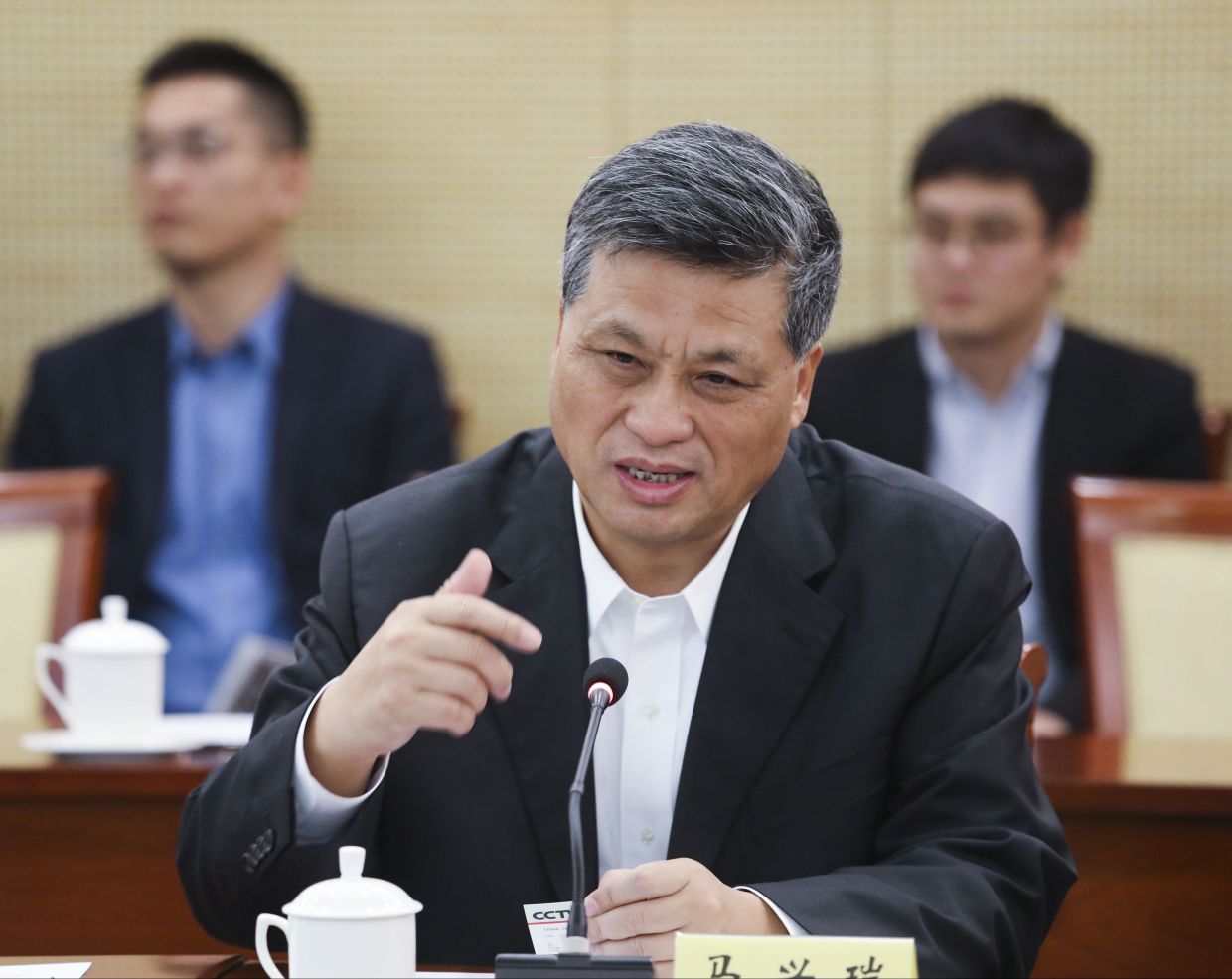
China's top disciplinary body has formally accused former Politburo member Ma Xingrui of orchestrating what it describes as systemic corruption within his family and circles of influence, a development that underscores the depth and breadth of President Xi Jinping's ongoing anti-corruption campaign within the party's highest echelons. The Central Commission for Discipline Inspection released findings on June 30 detailing allegations against the 67-year-old former official, who previously headed Xinjiang's regional government and once oversaw China's ambitious space programme. This case represents an extraordinary concentration of scrutiny on the Politburo itself—the Communist Party's 25-member governing council—with three members now under investigation during the current leadership term that began in 2022, a frequency unmatched in recent decades.
Ma's professional trajectory initially suggested a promising career within China's technocratic establishment. After spending the better part of a decade at the China Aerospace Science and Technology Corporation, where he rose to general manager while simultaneously serving as deputy commander-in-chief of the manned space programme and chief architect of the new-generation carrier rocket initiative, he transitioned into regional politics. Starting in 2013, Ma held the position of deputy party secretary in Guangdong province following a stint at the Ministry of Industry and Information Technology. His subsequent appointments saw him elevated to party secretary of Shenzhen, then provincial vice-governor and eventually governor of Guangdong before his 2021 appointment to lead Xinjiang, one of China's most strategically sensitive regions.
The disciplinary commission's report paints a portrait of institutional decay within Ma's sphere of authority, characterizing his actions as a comprehensive betrayal of party principles. Officials accused him of abandoning his ideological moorings, losing faith in communist doctrine, and fundamentally corrupting the exercise of public power entrusted to him. Beyond the individual transgressions, the investigation found that Ma had fostered an environment permitting his relatives to engage in widespread profiteering from his official position, creating what the CCDI termed a condition of "rampant corruption across his family." This particular finding holds significance for Southeast Asian observers, as it reflects how corruption networks often operate through family structures and demonstrates the vulnerability of political systems where personal relationships can override institutional safeguards.
Specific charges against Ma detail a sophisticated apparatus for converting official position into personal enrichment. He allegedly accepted improper gifts and monetary payments while facilitating below-market property purchases for family members. The CCDI further documented instances of what it euphemistically termed "power-for-sex and money-for-sex transactions," suggesting sexual coercion linked to his official authority. More substantially, Ma weaponized his governmental role to direct business contracts, project allocations, and personnel appointments toward individuals who provided him and his associates with financial benefits. Through intermediaries and family members, he accumulated substantial undisclosed assets that investigators have characterized as "huge amounts of money and property" obtained through illegal channels.
Particularly damaging to Ma's standing within party circles was the finding that he failed to exercise adequate supervisory control over subordinates under his command, allowing their disciplinary violations and suspected criminal activity to proliferate unchecked. This negligence compounded his own direct misconduct and suggests systemic dysfunction within the administrative structures he oversaw. Additionally, Ma's response to initial CCDI inquiries fell short of the forthright confession the party typically demands, indicating either defiance or calculated deception during the investigation phase. More notably, this pattern of wrongdoing apparently continued even after Xi Jinping's explicit 2012 pronouncement of sweeping anti-corruption measures and new standards for official conduct—a particularly grave transgression in the eyes of party authorities who view such defiance as contempt for leadership directives.
Ma's removal from the Politburo, along with two senior military officers dismissed in preceding months, has reduced the body's membership to 21 from its full complement. He Weidong, former vice-chairman of the Central Military Commission that Xi personally chairs, faced expulsion from both the party and military in October, while Ma's tenure in Xinjiang came to an abrupt end as authorities prepared their formal accusations. The CCDI has recommended Ma's ill-gotten gains be confiscated and his case transferred to judicial authorities for formal criminal prosecution, a procedural sequence typical for high-ranking party members whose cases reach this stage.
The geographical concentration of recent investigations deserves particular attention. Xinjiang has become the focal point of the current anti-corruption wave, with multiple senior officials facing investigation within a compressed timeframe. Chen Weijun, former executive vice-chairman of Xinjiang's regional government, entered the investigative apparatus in December, while Li Xu, the former deputy commander of the Xinjiang Production and Construction Corps—a quasi-military entity with substantial economic power—underwent public investigation in January. This clustering of cases within a single region raises questions about whether specific systemic problems within Xinjiang's governance structure prompted intensified scrutiny, or whether the region's political sensitivity to Beijing made it a priority area for institutional cleansing.
Ma's aerospace background has also proven problematic in unexpected ways. Several of his former subordinates from his years directing China's space programme have independently encountered anti-corruption investigations in recent years, suggesting either that Ma's management style cultivated a culture of misconduct or that investigators have systematically reviewed networks connected to his aerospace tenure. This pattern illustrates how anti-corruption sweeps, once initiated against a prominent figure, often expand to encompass anyone within their administrative orbit, potentially creating cascading consequences for individuals whose primary connection to a corrupted superior was purely professional.
For Malaysia and other Southeast Asian nations, Ma's case carries implications extending beyond Chinese domestic politics. The investigation demonstrates the party's capacity and willingness to pursue even its most senior members when deemed necessary, a capability that shapes how Beijing interacts with regional partners. The systematic nature of the allegations—spanning years, multiple positions, and family networks—reflects institutional vulnerabilities that could theoretically affect business dealings and governance partnerships involving Chinese officials. Additionally, the case illustrates how positions of regional authority in China's interior can become vehicles for personal enrichment, a pattern potentially relevant to how resources and investments flow through official channels in joint Sino-Southeast Asian projects.

