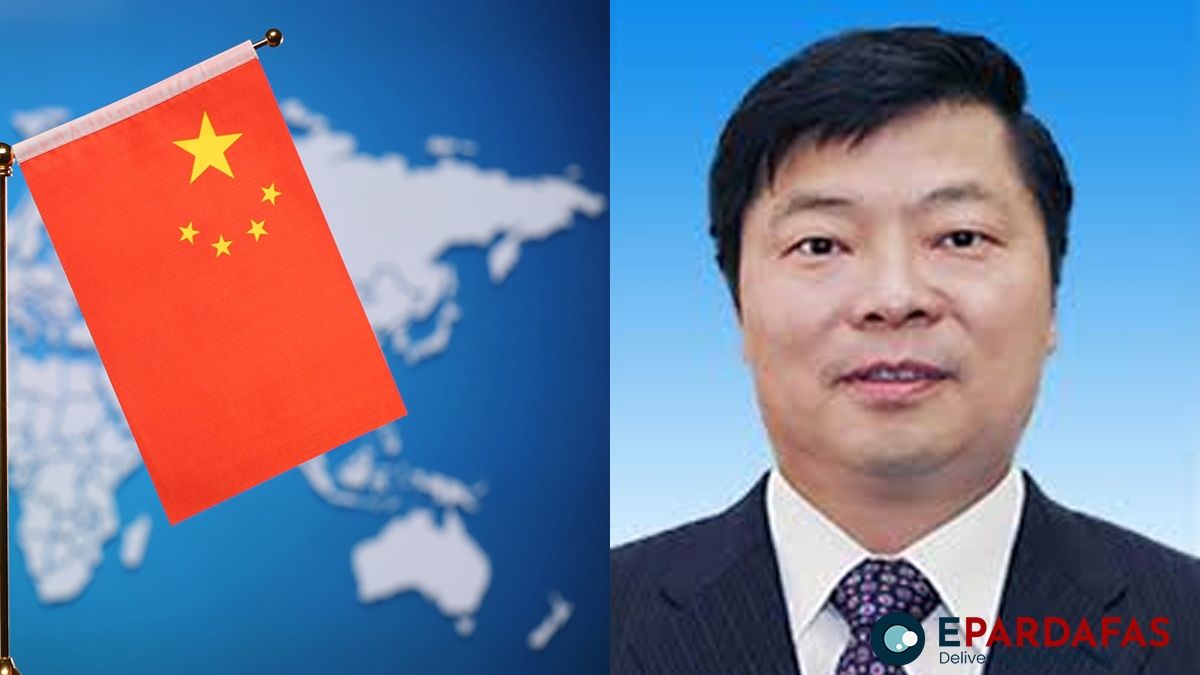
Beijing's top anti-corruption watchdog announced on Sunday that Ouyang Weimin, a former president of the China Development Bank, faces investigation on suspicion of serious violations of party discipline and the law. The Central Commission for Discipline Inspection and the National Commission of Supervision disclosed the probe through a terse statement, providing minimal additional context about the nature or scope of the allegations against the senior financial official.
Ouyang's career trajectory reflects the interconnected nature of China's state financial system and political structure. He joined the Chinese Communist Party in 1986 and spent much of his early professional life working within the People's Bank of China, where he built expertise in monetary policy and financial management before his career expanded into broader provincial and national responsibilities.
His rise through the ranks took him to increasingly prominent positions within China's economic hierarchy. He served as vice-governor of Guangdong, the economically vibrant province that borders Hong Kong and has historically been a driver of China's growth and market-oriented reforms. This appointment positioned him as a key figure in managing one of Asia's most dynamic regional economies.
In 2019, Ouyang reached the apex of his career when he was appointed president and deputy party secretary of the China Development Bank, one of the country's most strategically important financial institutions. His tenure as the bank's leader placed him at the centre of decisions affecting major infrastructure projects, industrial development, and capital allocation across China's economy. However, his leadership proved relatively brief. He stepped down from the presidency in 2023, though the circumstances of his departure were not widely publicised at the time.
The China Development Bank itself is a significant player in Beijing's economic machinery. Established in 1994, it functions as a state-owned development finance institution with a specific mandate to support economic development in strategically important industries and regions that lack sufficient private investment. The bank operates under the direct oversight of the State Council, giving it institutional weight and influence across multiple sectors of the Chinese economy. Its work is integral to implementing national development strategies and supporting industries deemed critical to China's long-term growth and competitiveness.
Ouyang's investigation must be understood within the broader context of President Xi Jinping's anti-corruption campaign, a governance priority that has reshaped China's political landscape since Xi assumed power. The campaign has touched officials at every level of government and military, resulting in investigations and sanctions against numerous high-ranking figures. While publicly framed as essential housekeeping to combat genuine graft and restore confidence in governance, analysts note that the campaign has simultaneously served to consolidate power around Xi's leadership by targeting potential political rivals and removing officials perceived as obstacles to his authority.
The mechanics of such investigations in China's system offer limited transparency to external observers. The joint announcement by two powerful oversight bodies signals that authorities view the allegations as sufficiently serious to warrant formal investigation, yet the one-line statement reveals nothing about specific accusations, the evidence prompting the probe, or the timeline for resolution. This opacity reflects broader characteristics of China's anti-corruption process, where investigations often unfold behind closed institutional doors with limited public disclosure until formal charges are filed or judgements are rendered.
For regional observers in Southeast Asia and beyond, Ouyang's case illustrates the risks that accompany elevated positions within China's state apparatus. The China Development Bank's international footprint, particularly through its involvement in Belt and Road Initiative projects, means that decisions made at the highest levels of the institution affect neighbouring economies. Personnel changes at this level can signal shifts in Chinese development priorities or financing approaches that have cascading implications for partner countries and their infrastructure ambitions.
The timing of investigating a former bank president also reflects the cyclical nature of China's anti-corruption apparatus. Officials who have left their posts remain vulnerable to investigation years after their departure, as happened with Ouyang stepping down in 2023 before being formally investigated in 2024. This extended exposure creates a deterrent effect but also generates uncertainty about the security of former officials' positions and legacies.
Outside observers note that distinguishing genuine corruption cases from cases driven by factional politics or power consolidation within China's governance structure remains extremely difficult. Without independent judicial processes or meaningful transparency mechanisms, assessing the credibility and substantive basis of any particular investigation poses significant analytical challenges. What remains clear is that Ouyang's investigation demonstrates that even positions of considerable authority and institutional importance provide no immunity from China's expansive anti-corruption enforcement machinery.

