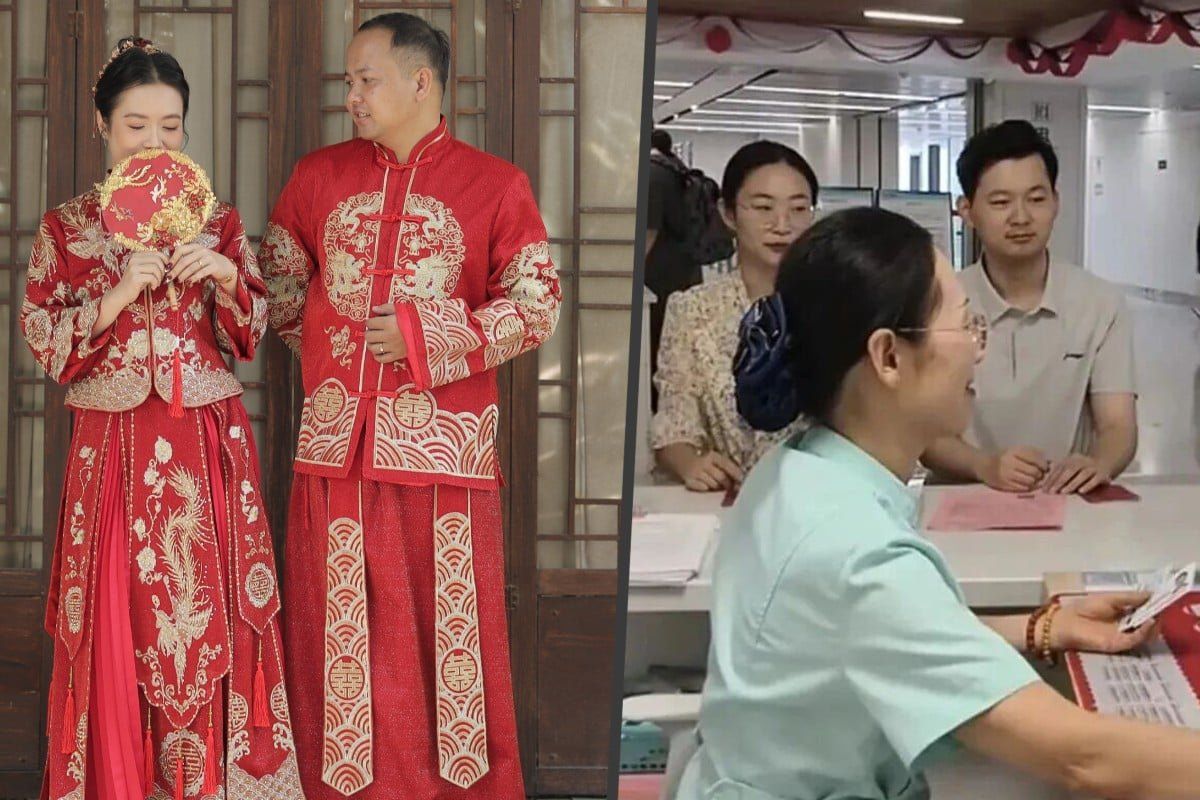
China's battle against plummeting marriage rates has taken a peculiar turn, with government authorities expanding registration services to venues as varied as hospital maternity wards and nightclub dance floors. The phenomenon reflects mounting desperation among policymakers confronting a demographic crisis that threatens economic growth and social stability. A Postal Savings Bank branch in Tianjin became the nation's first bank to offer marriage registration services in August, followed shortly by the Maternal and Child Health Hospital of Linzi District in Zibo City, Shandong province, which announced similar services during the Qixi Festival, known as Chinese Valentine's Day.
The hospital's initiative exemplifies the government's reasoning behind these unconventional partnerships. By consolidating marriage registration, premarital medical examinations, and preconception health counselling under one roof, authorities argue they are genuinely improving convenience for young couples navigating the early stages of matrimony. Yet the strategy has sparked considerable ridicule online, with netizens sardonically suggesting that law firms, police stations, universities, and airports should join the trend to "make life easier for people." Their mockery, it turned out, was prescient. In January, Guangzhou Baiyun International Airport in Guangdong province became China's first airport marriage registry, sweetening the deal with complimentary observation deck access where couples can watch aircraft operations.
These developments represent the logical endpoint of regulatory liberalisation implemented in May of last year, when Beijing fundamentally restructured marriage registration procedures. Couples gained the freedom to register in locations outside their hukou, or household registration zone, eliminating bureaucratic complications tied to internal migration. Simultaneously, authorities scrapped the requirement to present original hukou booklets, replacing them with electronic verification systems. The intent was clear: strip away administrative friction that younger generations cited as inconveniences when delaying marriage decisions. This reengineering of regulations catalysed an explosion of alternative registration venues, transforming marriage certification into something geographically ubiquitous rather than confined to civil affairs offices.
The geographical diversification has been remarkable. Ancient temples in Beijing and Nanjing now facilitate ceremonies in traditional costumes, while Hefei's metro system became the first public transport network in China to offer marriage registration services. Shanghai took a distinctly modern approach, partnering a nightclub with local civil affairs officials to conduct formal certification ceremonies within the club environment itself. By May this year, merely one year after the regulatory overhaul, China had established over 500 official marriage registration sites beyond the civil affairs bureaus, supplemented by more than 1,300 outdoor locations collaborating with government bodies to issue marriage certificates. The infrastructure expansion has been comprehensive and remarkably swift.
Statistical outcomes initially appeared encouraging. During the third quarter of the preceding year, 1.61 million couples registered marriages nationwide, representing a robust 22.5 per cent year-on-year increase. The annual figures for the complete previous year reached 6.76 million registrations, indicating a gain of 657,000 couples compared to the preceding twelve months. These gains suggested that procedural streamlining and venue diversification were successfully nudging hesitant individuals toward matrimonial commitment. However, this optimistic trend evaporated abruptly. During the first half of the current year, China recorded 3.28 million marriage registrations, reflecting a concerning 7.5 per cent decline compared to the same period in the previous year.
The reversal exposes a fundamental reality that policymakers appear reluctant to acknowledge: young Chinese citizens are not avoiding marriage primarily because registration procedures are inconvenient. Social media discourse reveals the actual barriers confronting a generation grappling with genuine existential anxieties about matrimonial life. One online commenter sardonically questioned whether marriage registration venues had genuinely been the impediment, querying whether couples truly refrained from wedlock simply because they lacked convenient locations. Another user mockingly suggested establishing divorce registration services atop Mount Everest, highlighting the absurdity of treating venue accessibility as a meaningful solution. These critiques, while humorous in presentation, articulate serious underlying concerns.
The genuine obstacles discouraging marriage among contemporary Chinese youth are substantially more complex than administrative inconvenience. Young adults simultaneously grapple with anxiety regarding financial sustainability and the psychological burden of household-related responsibilities, while increasingly rejecting the cultural narrative positioning matrimony as a necessary life accomplishment. One observer noted that what truly constrains marriage decisions is not complicated procedures but rather "the confidence to face the life challenges they may encounter in the coming decades." Financial uncertainty, potential family discord, apprehension about personal autonomy erosion, and fundamental philosophical reassessments of matrimony's role in meaningful living collectively constitute a formidable psychological barrier that no amount of venue diversification can address.
This demographic dilemma carries profound implications extending far beyond ceremonial concerns. China's marriage decline directly corresponds with declining birth rates, threatening the sustainability of the pension and healthcare systems supporting an increasingly elderly population. The younger cohort, already constrained by demanding career expectations and elevated housing costs, perceives marriage as a significant additional financial commitment during an economically uncertain era. The cultural context matters considerably as well; traditional gender expectations within marriage continue to burden women disproportionately with household labour and childcare responsibilities, creating a calculus where marriage increasingly appears unfavourable compared to independent existence.
Southeast Asian nations watching these developments should note troubling similarities within their own demographic trajectories. Singapore, South Korea, and Taiwan have experienced comparable marriage rate declines, though rarely as severe as China's recent reversals. The common thread across these Asian societies involves young cohorts delaying or foregoing matrimony due to economic pressures, shifting cultural values, and evolving gender dynamics rather than administrative barriers. Authorities throughout the region similarly sometimes misdiagnose the underlying causes of declining marriages, occasionally implementing solutions addressing procedural convenience rather than substantive lifestyle and financial concerns.
For Malaysia specifically, these trends warrant careful observation. While Malaysian marriage rates remain comparatively healthier than East Asian levels, the country shares several underlying vulnerabilities: rising urban housing costs, increased female labour force participation, and generational value shifts prioritising career achievement and personal autonomy. Young Malaysians increasingly question whether matrimony represents a necessary life component, particularly when considering the financial burdens and lifestyle adjustments matrimony entails. Should Malaysia's marriage rates subsequently decline, the Chinese experience offers a cautionary lesson: superficial convenience improvements cannot substitute for addressing the genuine economic and social anxieties preventing younger generations from committing to marriage.
The sustainability of demographic systems depends fundamentally upon addressing root causes rather than surface inconveniences. China's multiplication of marriage registration venues, while creative and initially eye-catching, ultimately represents administrative theatre rather than substantive policy response. Young couples require genuine economic stability, equitable burden-sharing within relationships, cultural affirmation of diverse life choices, and confidence in their future prospects before marriage becomes an appealing option. Until policymakers across Asia directly confront these foundational concerns, multiplying wedding registration locations will remain an elaborate distraction from the challenging demographic restructuring already reshaping the region's future.

