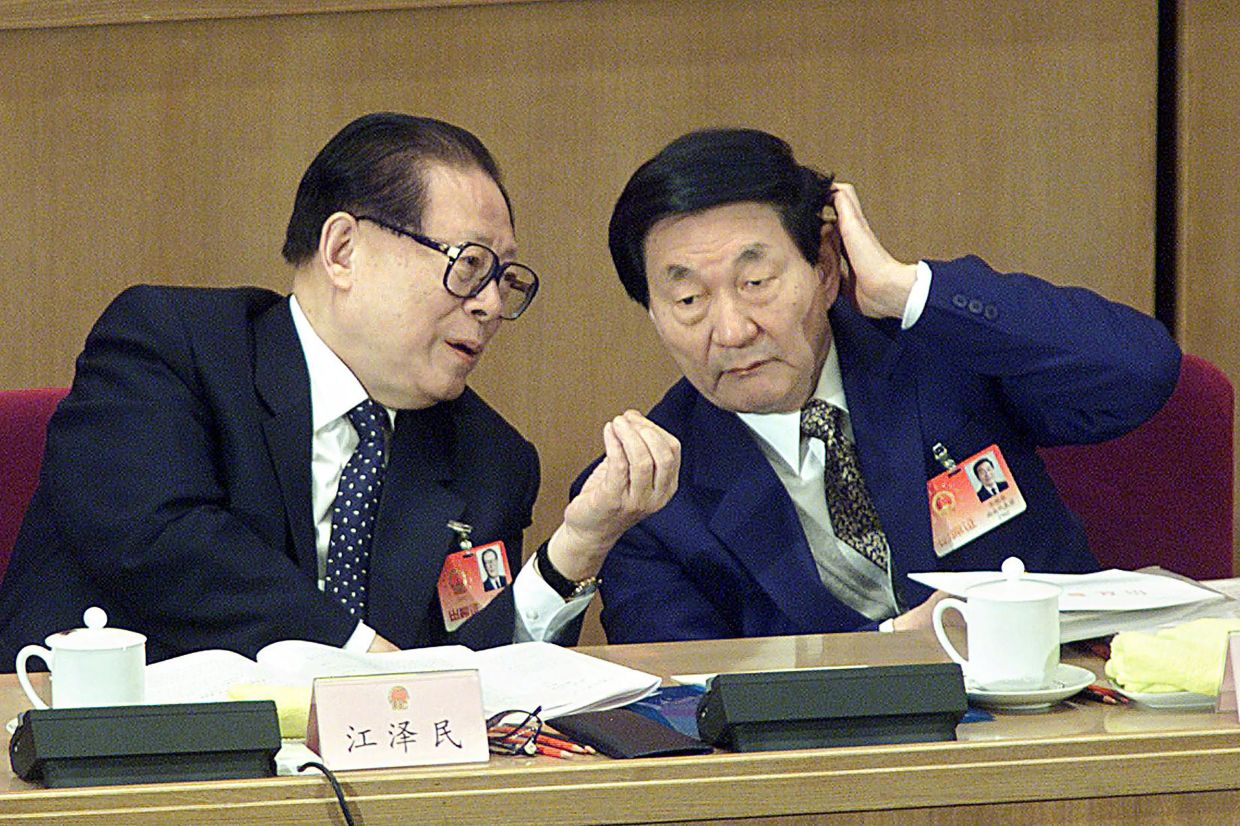
The near-simultaneous memorials for two of China's most consequential late leaders – former president Jiang Zemin and former premier Zhu Rongji, who jointly steered the nation during the late 1990s and early 2000s – have prompted widespread reflection on China's transformative past while simultaneously raising uncomfortable questions about its present trajectory and future direction. Zhu passed away on August 12 at the age of 97, with an official funeral ceremony held on August 18 featuring flags at half-mast nationwide, whilst Jiang's centennial celebration took place in Beijing on August 17, just a day earlier, creating an unprecedented overlap of commemoration that has resonated deeply across Chinese society and beyond.
President Xi Jinping's prominent participation in both events underscored their political significance within the contemporary Chinese leadership structure. At Jiang's centenary ceremony held in the Great Hall of the People, Xi delivered a substantive 40-minute oration emphasising the late former president's "indelible contributions" to the nation, carefully positioning historical continuity between Jiang's accomplishments and the present administration's agenda. Similarly, Xi attended Zhu's funeral at Babaoshan Revolutionary Cemetery alongside other senior Politburo Standing Committee members, engaging in traditional rituals of respect whilst projecting an image of unified party leadership. The participation of Hu Jintao, Xi's immediate predecessor, through a commemorative wreath further illustrated the significance accorded to these occasions by China's political establishment.
The convergence of these memorials has unleashed a wave of public nostalgia for the reform and opening-up era that Jiang and Zhu represented, particularly among ordinary Chinese citizens who recall that period as one characterised by rapid wealth creation, expanding opportunities, and palpable optimism about the nation's trajectory. Between 1998 and 2003, when these two leaders partnered in governance, China experienced remarkable economic expansion, secured its entry into the World Trade Organisation, and substantially elevated its standing in international affairs. Observers of Chinese politics note that the official state narrative has consistently framed Jiang's legacy as foundational to the contemporary era, positioning him not as an alternative model or foil to current leadership but rather as a predecessor whose contributions led logically to Xi's vision of national rejuvenation and Chinese-style modernisation.
However, beneath the ceremonial surface lies a discernible tension that reveals deeper anxieties within Chinese society and the political establishment itself. Lee Jong-hyuk, an associate professor at Sungkyunkwan University specialising in Chinese politics, observed that whilst Jiang's centennial commemoration follows established political precedent – reminiscent of how Deng Xiaoping's 100th birth anniversary was marked in 2004 – the temporal overlap with Zhu's passing has created an unusual interpretive space that inevitably encourages comparison between past and present. This timing has emerged as particularly sensitive given China's current economic headwinds, including persistent sluggishness in the property sector, mounting local government debt burdens, and escalating geopolitical tensions with Western powers, all of which stand in stark contrast to the dynamism of the Jiang-Zhu era.
The official characterisations of both deceased leaders have carefully emphasised themes of unwavering party loyalty and continuity rather than distinctiveness or divergence from contemporary policies. Zhu's official obituary specifically highlighted his consistent support for the Communist Party leadership regardless of generational succession, whilst Xi's commemorative address focused on Jiang's political conviction, innovative spirit, and ability to navigate crises – qualities the current president explicitly connected to the "new journey" that China has begun under his direction. Yet this narrative construction itself reflects underlying concerns about legitimising comparisons that might prove unflattering to the present administration, explaining why the party apparatus has invested considerable effort in contextualising these memorials within a framework of historical progression rather than nostalgic retrospection.
Beyond official channels, however, a more unfiltered public discourse has emerged on Chinese social media platforms where citizens have shared archival photographs and video footage of Jiang and Zhu, often depicting moments of apparent warmth and collegial rapport between the two men. These informal commemorations have resonated particularly among those who experienced the prosperity of that era firsthand and who contrast it with present-day anxieties about employment, property investments, and economic mobility. Yet the apparent sensitivity surrounding such public expressions of sentiment towards the departed leaders has become evident through the strategic use of coded language, nicknames such as "the Elder" for Jiang, and indirect references designed to evade internet content monitoring systems – a phenomenon that itself demonstrates the political stakes surrounding these commemorations.
A notable instance illustrating this tension emerged when prominent economist Zhao Jian penned a reflective essay mourning Zhu's passing whilst explicitly lamenting what he characterised as the erosion of security and optimism compared to the environment three decades prior. The piece, which implied a contrast between past and present stability, was reportedly removed from the WeChat messaging platform within a single day, signalling explicit editorial intervention by platform administrators likely responding to political sensitivities. Such suppression efforts underscore the government's wariness about enabling narratives that might position contemporary circumstances unfavourably against the remembered achievements of the reform era.
The legacies of these two leaders, whilst intertwined in the public consciousness, remain distinctly complex and contested among analysts. Jiang, who ascended to the paramount position following Deng Xiaoping's intervention to prevent purged party chief Zhao Ziyang's succession in the aftermath of the 1989 Tiananmen incident, successfully navigated China's diplomatic isolation and maintained relative stability in US-China relations during a turbulent period. His "Three Represents" doctrine, which formally incorporated private business owners into party membership, represented a significant ideological flexibility that helped sustain economic momentum. Nevertheless, his tenure witnessed persistent allegations of corruption endemic throughout the state apparatus and documented crackdowns on religious movements including Falun Gong, casting shadows across otherwise economically successful years.
Zhu's administrative record similarly presents a mixed evaluation that becomes increasingly relevant given contemporary policy challenges. His tenure as premier coincided with China's successful World Trade Organisation accession and comprehensive restructuring of state-owned enterprises that substantially improved operational efficiency and market responsiveness. However, the aggressive pace of these reforms imposed severe social costs, displacing approximately 30 million workers from employment and generating widespread hardship among affected communities. Economic historians have further identified Zhu's 1994 tax-sharing reform – which compelled local governments to increase reliance upon land sales revenues – as a foundational structural factor contributing to the contemporary property market instability and cascading local government debt that currently constrains China's economic policy options.
Daria Impiombato, a senior analyst at the Mercator Institute for China Studies in Germany, contextualised these commemorations within the broader political calendar, observing that they occur at a notably sensitive juncture as the Communist Party prepares for significant leadership reshuffles anticipated during the party congress scheduled for late 2027. The leadership apparatus, in her assessment, remains deeply concerned with image management and the construction of institutional narratives that emphasise party cohesion and unbroken continuity. The current environment, she argued, prioritises above all else the demonstration of absolute loyalty within party ranks and the projection of unified organisational purpose – objectives served by ceremonial reverence toward deceased predecessors framed within a narrative of historical progression toward Xi's envisioned national rejuvenation.
For Malaysian and Southeast Asian observers monitoring Chinese political developments, these commemorations carry particular significance given the region's economic interdependence with China and the implications of Chinese domestic stability for regional prosperity. The implicit tensions between nostalgia for the dynamism of the Jiang-Zhu era and current anxieties about economic stagnation suggest potential pressures on Beijing's ability to maintain the robust regional engagement that characterised earlier decades. Additionally, the careful curation of these memorials by the Xi administration demonstrates the regime's acute sensitivity regarding public comparisons between past and present governance, a concern that may influence how Chinese leaders approach regional partnerships and economic initiatives throughout Southeast Asia.
The dual memorials ultimately reveal a Communist Party leadership simultaneously celebrating the accomplishments of its recent past while attempting to constrain public discourse about potential divergences between that remembered prosperity and current realities. Xi's invocation of these figures as exemplars for the present era reflects an effort to harness their historical prestige in service of contemporary political consolidation, yet the evident enthusiasm with which ordinary Chinese citizens have engaged in remembrance – despite censorship efforts – suggests that the emotional resonance of the reform era continues to shape public expectations and aspirations in ways that current policies may struggle to satisfy. As China navigates mounting economic challenges and approaching leadership transitions, these commemorations may ultimately function as a barometer of whether the party can sustain legitimacy through appeals to historical continuity or whether the gap between remembered prosperity and present circumstances will widen in ways that no ceremonial address can adequately bridge.

