China's pursuit of artificial intelligence applications in scientific research faces a fundamental vulnerability: the country remains heavily dependent on imported precision instruments to generate the high-quality experimental data that underpins AI model development. This structural weakness, compounded by tightening US export controls, creates what some leading researchers describe as a critical impediment to Beijing's broader AI ambitions in the sciences.
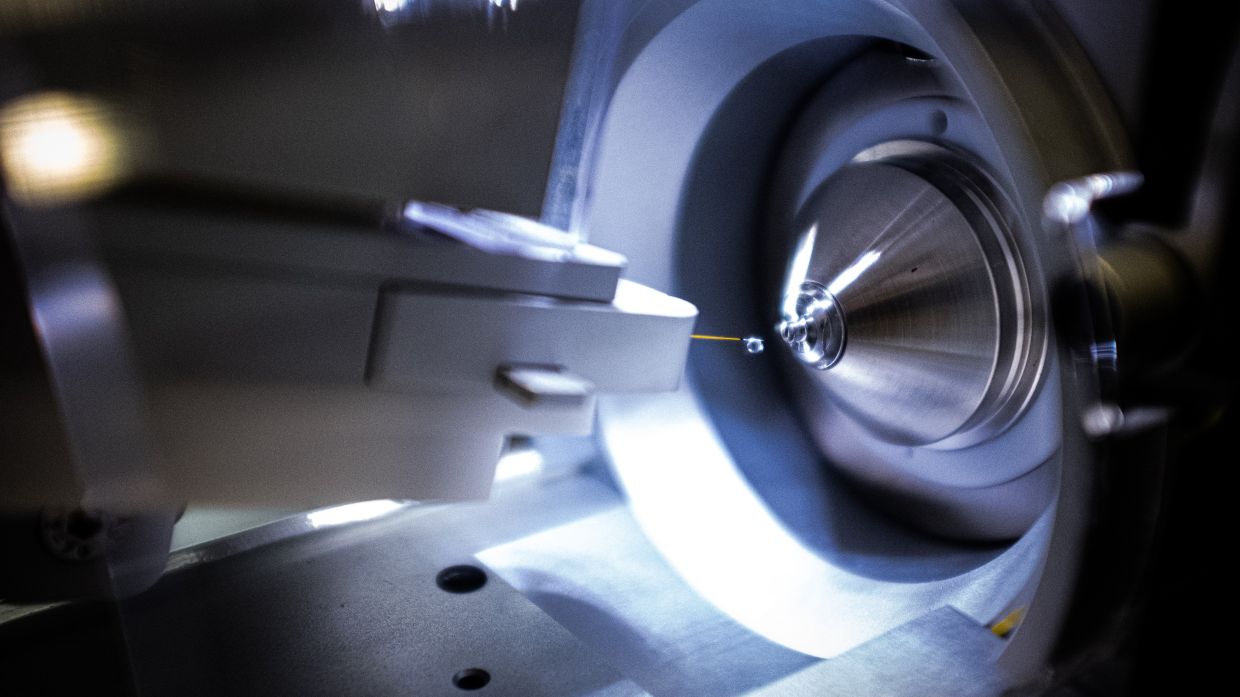
At an "AI for Science" conference in Shanghai last week, Weinan E, a mathematics professor at Peking University and member of the Chinese Academy of Sciences, highlighted the severity of this constraint. Using a vivid metaphor, E characterised the situation as attempting to cook without rice—researchers cannot develop, validate and improve sophisticated AI models when they lack reliable access to the cutting-edge instruments necessary for gathering empirical evidence. Mass spectrometers, chromatographs and spectrometers form the backbone of experimental science, enabling researchers to identify molecular structures, separate chemical compounds and analyse material properties with precision that raw data collection alone cannot match.
The scale of China's import dependence is substantial. During 2024, the country imported nearly US$17 billion in scientific equipment, with over three-quarters of major research instruments originating abroad, according to a December report by Beijing-based consulting firm Puhua Policy. The challenge intensifies when examining specific categories: LeadLeo, another consultancy, estimated that China relies on imports for 83 per cent of its mass spectrometers and chromatographs, and 75 per cent of its spectrometers. The country is almost entirely dependent on foreign suppliers for optical instruments and biological tissue analysis equipment, creating a precarious position for researchers attempting to maintain competitiveness in advanced scientific fields.
This dependence translates into tangible obstacles for Chinese research institutions. Heavy reliance on imported equipment drives up operational costs, extends maintenance timelines and slows the availability of after-sales technical support. The cumulative effect undermines research efficiency and raises uncomfortable questions about supply-chain vulnerability. In an era where scientific leadership increasingly determines geopolitical influence, China's inability to domestically manufacture these critical instruments represents a significant strategic weakness.
Geopolitical pressures are intensifying these vulnerabilities. The United States has increasingly weaponised export controls as a tool to constrain China's technological advancement, particularly in domains perceived as relevant to military capabilities. By December 2020, during Donald Trump's first administration, more than 42 per cent of China-related entries on the US Commerce Control List faced restrictions. Rather than retreating, these efforts have accelerated during Trump's second term, driven by Washington's conviction that advanced technologies could facilitate Chinese military modernisation and enable weapon design through AI applications.
Recent US policy moves underscore this hardening stance. In January, the US Department of Commerce announced fresh export controls specifically targeting high-parameter flow cytometers and certain mass spectrometry equipment, explicitly citing their capacity to generate biological data suitable for developing AI and biological design tools. The restriction represents a direct attack on the very instruments Chinese researchers require to advance their AI for science ambitions, creating a deliberate mismatch between Beijing's stated priorities and its actual technological access.
Beyond hardware constraints, E identified what he characterised as equally fundamental weaknesses in China's AI foundation models themselves. The country's AI systems lag behind international counterparts in foundational capabilities—a gap that, E cautioned, represents a critical risk that cannot be sidestepped or downplayed. Chinese researchers and policymakers must confront an uncomfortable reality: simply grafting scientific capabilities onto existing open-source models has proven insufficient for solving the complex problems that advanced science demands. Genuine breakthroughs require more robust underlying models rather than incremental modifications applied after initial training.
The divergence in US and Chinese approaches to scientific AI development reveals competing philosophies. American institutions have concentrated on strengthening general-purpose foundation models while integrating them with automated research infrastructure—a top-down strategy that assumes broad capabilities will transfer effectively across domains. China has adopted a more application-centric pathway, building scientific AI infrastructure that consolidates data, software, computing resources and automated equipment, then deploying these capabilities to specific research sectors and scientific problems. Neither approach has proven definitively superior, but the different trajectories reflect distinct competitive advantages and weaknesses.
E's prescription for remedying these interconnected challenges extends beyond technical fixes to advocate systemic transformation of how Chinese science operates. He identified three critical "breaks" needed: dismantling disciplinary boundaries to enable cross-field research collaboration; closing the persistent divide between theoretical and experimental work; and eroding the traditional barriers separating academic institutions from industrial enterprises. These structural reforms address how scientific work is organised, not merely what instruments or models are deployed.
Equally significant, E proposed overhauling traditional research evaluation systems that have historically privileged peer-reviewed publications as the primary measure of scholarly contribution. A modernised evaluation framework should recognise and reward the development of data infrastructure, software tools and research platforms—contributions that may prove more valuable than individual papers in accelerating scientific progress through AI, yet remain systematically undervalued in current academic incentive structures. This represents a fundamental shift in how China conceptualises scientific success.
For Malaysia and other Southeast Asian economies, China's equipment import dependency offers strategic lessons. Countries in the region might position themselves as alternative suppliers of precision instruments or specialised components, potentially capturing market share from traditional Western manufacturers while diversifying global supply chains away from concentrated dependence on any single supplier. The geopolitical tensions between Beijing and Washington simultaneously create opportunities for smaller Asian economies to expand their scientific instrument manufacturing sectors and technical capabilities.
The broader implication extends beyond equipment procurement: it demonstrates that AI advancement in scientific research cannot be divorced from physical infrastructure and supply-chain resilience. Nations pursuing genuine scientific AI leadership must build comprehensive ecosystems encompassing both algorithmic sophistication and the material capacity to generate quality experimental data. China's current predicament illustrates what happens when technological ambitions outpace the underlying infrastructure required to sustain them—a cautionary tale for any nation aspiring to scientific primacy in the AI era.

