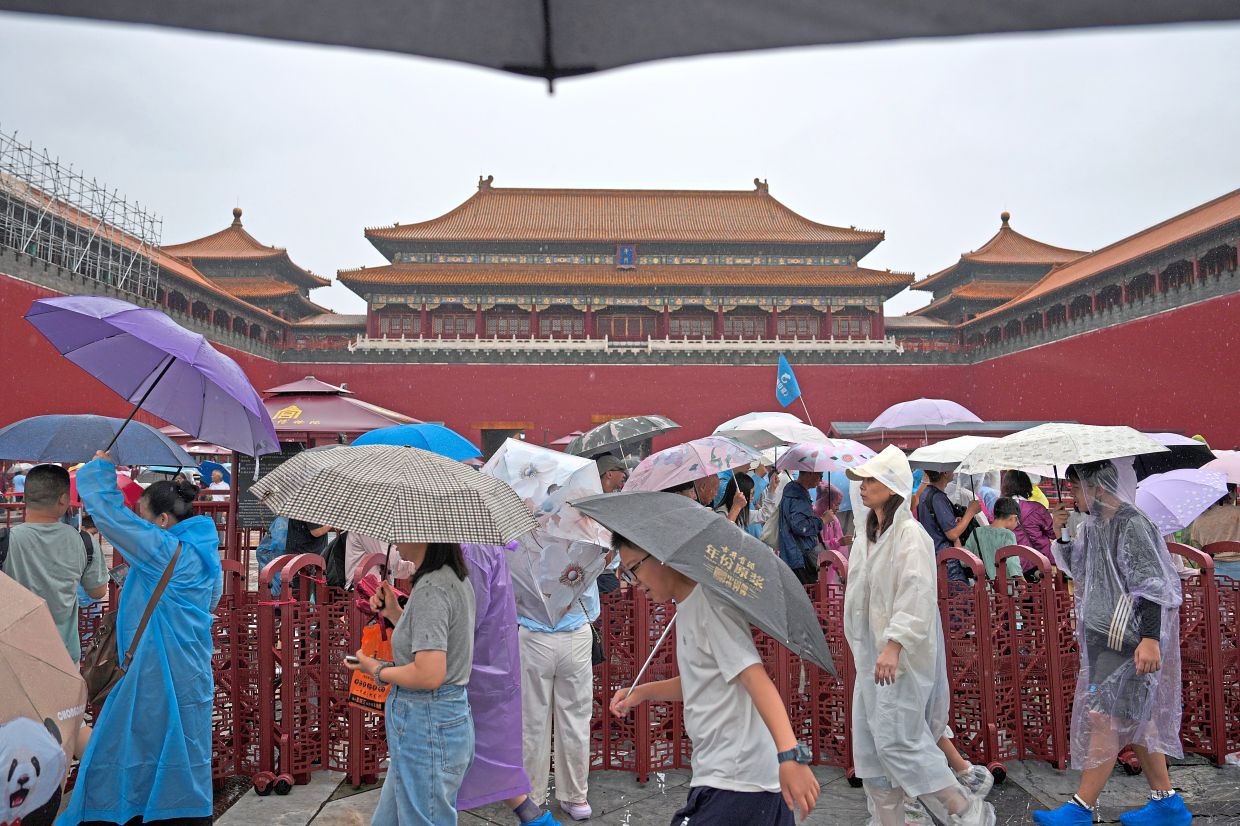
China's aggressive tourism recovery campaign has delivered results that exceed even optimistic projections, with foreign visitor numbers and spending surpassing pre-pandemic levels for the first time in 2025. The turnaround represents a significant reversal from the sluggish initial recovery that followed the abrupt end of Covid-19 restrictions, suggesting that careful strategic positioning and targeted marketing have fundamentally reshaped how international travellers perceive the country as a destination.
The catalyst for this transformation lies partly in an unlikely place: social media. Young travellers, particularly from Southeast Asia and the West, have been captivated by carefully curated content showcasing everything from Shanghai's contemporary architecture to Yunnan's misty landscapes. Claire Thum, a 28-year-old from Singapore, exemplifies this trend—she had no intention of visiting China until algorithmic feeds repeatedly served her viral travel reels from minimalist villas and Instagram-famous perfumeries. Her subsequent visit to Shanghai, which included stops at the viral perfumery To Summer and a snowboarding simulation experience, convinced her to plan a return journey covering Yunnan, Xinjiang and Harbin. These individual conversions, multiplied across millions of users, have quietly created a powerful marketing engine that traditional tourism boards might struggle to replicate.
China's governmental strategy shifted decisively in 2023 when authorities launched a comprehensive visa-free travel programme encompassing 50 countries. This initiative, combined with a sophisticated online promotion campaign deliberately deployed across Western social media platforms banned within China itself, demonstrated a willingness to engage audiences on their own digital terrain. The timing proved crucial. By 2025, favourable international perceptions of China had reached record highs in numerous countries, buoyed partly by shifting global attitudes toward the United States under Donald Trump's presidency. Simultaneously, internet phenomena like "Chinamaxxing"—where Western citizens adopt Chinese lifestyle habits such as drinking hot tea—went viral, creating organic cultural momentum that no government campaign could manufacture.
The numbers validate this strategy's success. Approximately 35 million foreign tourists arrived in 2025, positioning China alongside Thailand and just behind Japan and Malaysia as a major Asian destination. The National Bureau of Statistics data reveals that visa-free entry accounted for over 70 percent of all arrivals last year, a stunning 50 percent increase from 2024. This trajectory has accelerated further into 2026, with 18 million visa-free travellers arriving in the first half of the year alone, representing a 20 percent overall increase in foreign tourist arrivals. South Korea, Russia, Malaysia and Thailand lead the current surge, though regional dynamics remain complex—Vietnamese and Russian numbers in Beijing have climbed sharply, while Japanese visitor figures have declined following diplomatic tensions between the nations.
The financial commitment supporting this tourism offensive has been substantial. Local governments across China have allocated dedicated budgets to tourism promotion, with Beijing receiving CNY2.64 million (RM1.26 million) in 2026 specifically to manage the increased visitor volume and launch digital publicity projects. Shanghai plans to spend at least CNY1.6 million on promotional campaigns through Expedia and Booking.com this year. Beyond these direct expenditures, cities have funded initiatives such as reward schemes for travel agencies that recruit foreign-language tour guides, recognising that the tourist experience hinges on seamless communication and authentic cultural exchange. Municipal officials, acknowledging social media's outsized influence on younger travellers, have personally jumped the "Great Firewall" to establish accounts on X and TikTok—platforms inaccessible within China—to maintain direct engagement with international audiences.
Chongqing's tourism administration exemplifies this innovative approach. Deputy Director General Zhu Mao has explicitly prioritised making the neon-lit mountainous megacity "Internet famous," leveraging both micro-influencers and celebrity endorsements, including American basketball star Stephen Curry, to build international visibility. This strategy reflects a deeper understanding that viral moments now drive tourism more effectively than traditional marketing. When international visitors venture beyond conventional attractions to experience everyday local life—exploring Huawei's technology showcase, shopping at theme-park-style Pop Mart stores, or dining at Haidilao hot-pot restaurants—they generate authentic social media content that resonates far more persuasively than government-produced material. Bobo Rok, founder of artificial intelligence tourist guide Kora, articulates this philosophy: travellers begin "to see a real China, not just something from paper or imagination" once they escape the tourist circuit.
Geopolitical circumstances have also inadvertently assisted China's tourism recovery. The ongoing war in West Asia has substantially increased air ticket prices through traditional Gulf-region transit routes, prompting redirected passenger flows through Chinese hubs instead. State-run carriers China Eastern, Air China and China Southern have all benefited from this structural shift, capturing transit traffic previously routed through the Middle East. Simultaneously, these Chinese airlines offer significantly lower fares than foreign carriers, which have not yet restored pre-pandemic route capacity to China. This combination of circumstance and competitive pricing has created a powerful pull effect for international travellers seeking cost-effective connectivity.
Despite these achievements, China's tourism sector remains structurally underdeveloped compared to mature competitors. Foreign tourist spending generates roughly one-third of the inbound tourism receipts that the United States receives, and per-capita inbound spending stands at approximately US$2,240 (RM9,163)—roughly 40 percent of comparable figures from established tourism economies. Most strikingly, international tourism contributed less than 0.5 percent to China's national GDP in 2025, drastically lower than mature tourism-dependent economies such as Spain and Thailand, where the sector comprises approximately 8 percent of GDP. This gap suggests enormous latent capacity for expansion, though realising that potential requires addressing persistent infrastructure and accessibility challenges.
The immediate beneficiaries of the tourism surge have been retail sectors struggling with sluggish domestic consumption and a troubled real estate market. Dental cleaning services, priced at approximately one-fifth of American levels, have attracted American tourists, while Europeans have embraced bespoke suit commissions at local garment markets. At Miniso's flagship store on Shanghai's Nanjing East Road, foreign visitors comprise up to 70 percent of foot traffic during peak periods, drawn by limited-edition collaborations featuring Chiikawa, Sanrio, Harry Potter and Disney characters. This commercial phenomenon extends beyond physical retail. Miniso reported that rising overseas demand fuelled by international visitors' social media exposure has propelled its overseas sales to exceed domestic revenue, growing 20 percent year-on-year. Similarly, Joy Group, parent company of viral beauty brands Judydoll and Joocyee, generated over CNY600 million (RM363.88 million) in overseas retail sales last year, with Judydoll achieving over tenfold growth within two years, particularly in Vietnam and Japan.
Persistent friction points, however, threaten to constrain future growth. China's predominantly cashless urban economy creates payment challenges for international tourists lacking local bank accounts, digital payment wallets compatible with Chinese systems, or local phone numbers. The absence of language support compounds this difficulty, as does the lack of access to mainstream global applications including Google, Instagram and WhatsApp without using a VPN—technically illegal within China's jurisdiction. These barriers, while manageable for patient travellers, deter spontaneous exploration and reduce the convenience that mature tourism destinations provide. Emerging solutions like Kora, an artificial intelligence tourist guide that has served tens of thousands of visitors through simplified ride-hailing, restaurant reservation and chatbot services since its launch in 2026, represent entrepreneurial responses to these gaps. However, systemic solutions require governmental coordination that extends beyond tourism bureaus into telecommunications, financial services and regulatory agencies.
Individual visitor experiences reveal both the appeal and the remaining friction. Virgile Kebaili, a 23-year-old history student from France, spent more than two weeks touring Chengdu, Chongqing, Xi'an and Beijing during his inaugural China visit, ranking the culinary experience among his top two best travels alongside India. He departed with several packs of Chinese cigarettes, priced at one-sixth of French retail prices—a dramatic price differential that incentivises repeat purchasing and gift procurement. More intriguingly, Kebaili observed a relative scarcity of international tourists during substantial portions of his journey, yet found locals eager to photograph him and engage with his perspective. When interviewed by students at the Sanxingdui museum about his travel experience, he embodied precisely the kind of cross-cultural exchange that soft power ambitions seek to cultivate.
China's tourism recovery ultimately reflects a sophisticated understanding that modern travel decisions flow through social media ecosystems, price-competitive transportation networks and authentic cultural experiences. The strategy has succeeded magnificently at the upper funnel—convincing millions to visit. The critical challenge ahead involves retaining these visitors through improved accessibility, streamlined digital integration and sustained authenticity. Should China's government and private sector resolve these operational impediments, the sector's contribution to GDP could expand dramatically, creating virtuous cycles of investment in hospitality infrastructure and further tourism growth. For Malaysia and Southeast Asia more broadly, China's tourism surge signals both opportunity—as regional carriers and destinations benefit from increased transit traffic and regional visitor integration—and competition, as neighbouring destinations now contend with a revitalised major player in Asia's tourism hierarchy.

