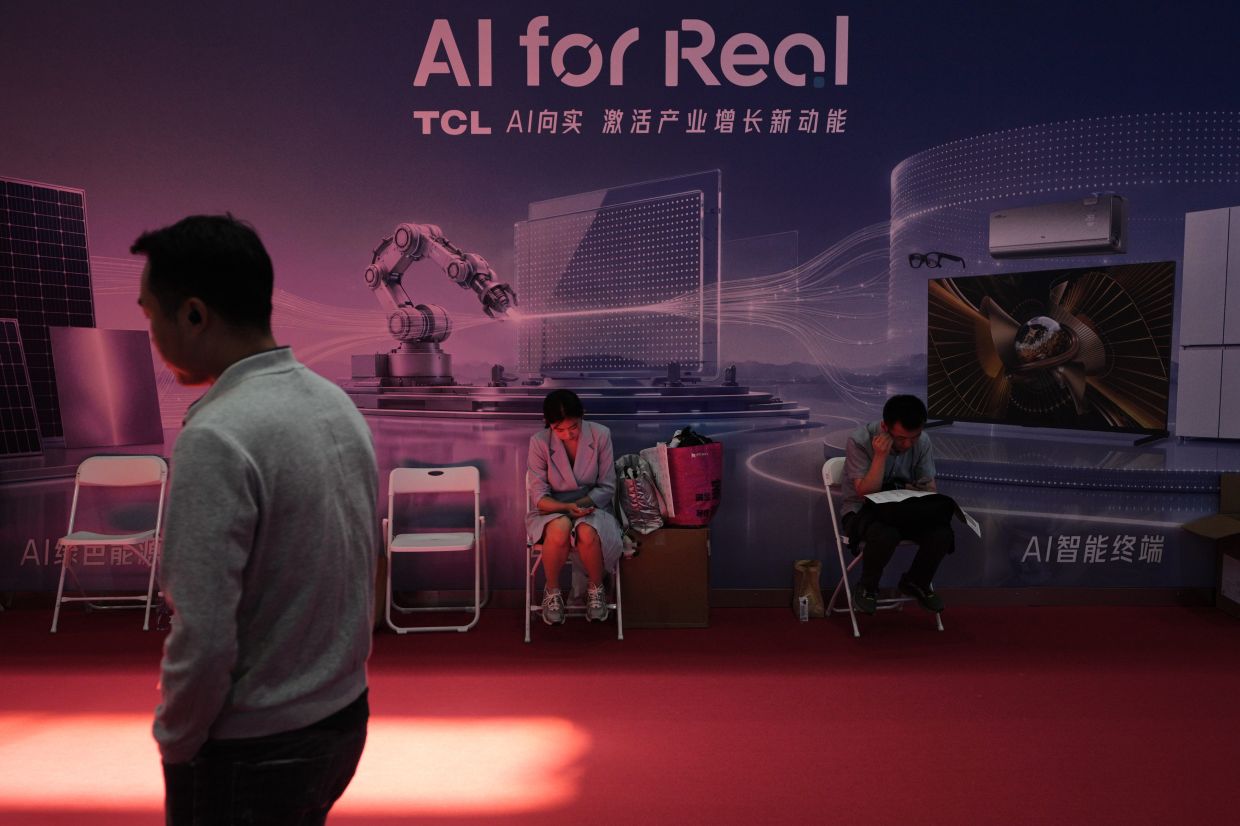
China's workers are confronting an unprecedented wave of technological disruption as artificial intelligence reshapes labour markets across the nation's vast economy. Backed by aggressive government policies, AI adoption is accelerating faster in China than in most other countries, forcing people in fields ranging from software engineering to translation and content creation to either reinvent themselves professionally or risk obsolescence. The phenomenon has sparked both anxiety and pragmatic adaptation, with many workers recognising that embracing AI tools has become essential for remaining competitive, even as entire occupational categories shrink or transform beyond recognition.
The government's deliberate strategy to embed AI throughout the economy is a defining feature of China's technological competition with the United States. Through initiatives like the "AI Plus" programme and its five-year development plan extending to 2030, Beijing is channelling resources and policy support to accelerate AI integration across industries far more systematically than most other nations. This top-down approach means AI penetration into different economic sectors is likely to occur more rapidly in China than elsewhere, potentially amplifying the pace of workforce displacement while simultaneously boosting productivity in ways that may not translate into proportional job creation.
The scale of AI adoption in Chinese industry has reached striking levels. According to market intelligence firm IDC, the share of Chinese industrial enterprises deploying AI models and autonomous agents nearly quintupled in just one year, jumping from 9.6 per cent in 2024 to 47.5 per cent last year. This explosive growth reflects both genuine technological capability and government encouragement, creating a uniquely fertile environment for AI implementation. Yanze Du, an IDC senior research manager based in Beijing, attributes this dynamism partly to China's thriving open-source model ecosystem, which enables businesses to translate advanced AI capabilities into practical industrial applications more efficiently than in many competing economies.
Concrete examples illustrate how comprehensively AI is transforming specific sectors. Humanoid robots now sort parcels in postal centres, direct traffic, and prepare food, though still at limited scale. Food delivery robots are proliferating across Chinese cities, posing an existential threat to millions of workers in that sector. In the short-drama industry, generative AI is revolutionising content creation, distribution, and production so thoroughly that the number of live-action short and vertical video series fell approximately 75 per cent in the first quarter of this year compared to the same period last year. These aren't theoretical scenarios; they represent tangible job losses happening now.
Workers displaced or threatened by AI are experimenting with diverse adaptation strategies, often with enthusiasm rather than resignation. Shujing He, a Beijing-based senior analyst at advisory firm Plenum, observes that anti-AI sentiment appears considerably less pronounced in China than in Western countries. Rather than organising resistance, many workers anxious about replacement are eagerly exploring AI-enabled business ventures and independent enterprises. This willingness to pivot reflects both cultural attitudes toward technological change and limited safety nets for displaced workers, but it also demonstrates genuine entrepreneurial energy in response to disruption.
Case studies reveal individual trajectories within this larger transformation. A 40-year-old programmer named Fei acknowledged that mid-level coding positions have become essentially replaceable by AI, yet he recognises that using AI tools is now mandatory for survival in his field. Rather than resist, he has taken a career break to experiment with vlog-style videos documenting ordinary people's lives, pursuing creative expression while seeking sustainable alternatives. Similarly, Du Qinchun, a part-time translator from Chengdu, has paradoxically found work helping to train AI translation models, temporarily gaining employment even as translator compensation has plummeted by more than half compared to previous years. This illustrates AI's complex impact: it can simultaneously destroy traditional jobs while creating transitional opportunities.
Certain demographics face disproportionate displacement risk. An International Labour Organization report found that women experience higher employment vulnerability from AI automation than men, primarily because they concentrate in sectors particularly susceptible to automation, such as electronics assembly, while remaining underrepresented in science and technology fields that tend to offer more stable prospects. This gender dimension adds an equity concern to China's AI revolution, potentially widening existing labour market disparities if policy does not actively address the imbalance.
The macroeconomic implications troubling economists extend beyond simple job loss statistics. China's already-slowing economic growth is being further dampened by consumer reluctance to spend, driven partly by worker fears about job security. When millions of people worry about future employment, household spending contracts, reducing domestic demand just as China's housing sector languishes in prolonged downturn. Eswar Prasad, an economics professor at Cornell University, warns that while AI will broadly lift productivity, it could simultaneously create severe employment disruption, exacerbating existing job growth problems and threatening social stability. Tech giants including Chinese firms have already cut or restructured tens of thousands of positions partly due to AI implementation, signalling the scale of dislocation already underway.
Unemployment figures reveal a troubling bifurcation in China's labour market. While the overall urban unemployment rate hovers around five per cent, youth joblessness among those aged 16 to 24 (excluding students) is roughly triple that rate. This youthful cohort, increasingly educated but entering an economy where AI is displacing entry-level positions faster than new opportunities emerge, faces particularly bleak prospects. The government faces mounting pressure to ensure that AI's productivity gains translate into expanded employment rather than mass displacement concentrated among vulnerable populations.
However, some economists identify a potential silver lining in China's demographic crisis. The nation's population of 1.4 billion is shrinking and rapidly ageing, a trajectory that will intensify workforce shortages. Projections suggest that by 2050, China will have fewer than two working-age adults for every retiree, compared with more than 2.5 in the United States. In this context, automation and AI-driven productivity improvements could partially offset labour supply losses rather than serving purely as threats to employment. Xuenan Cao, a San Francisco Bay University professor focusing on technology and society, suggests that automation might ultimately become essential for sustaining economic output as China's demographic base contracts. This longer-term perspective offers some optimism, though it provides little comfort to workers facing displacement today.
Cultural attitudes toward AI's role in creative and knowledge work reveal sophisticated worker understanding of technological capabilities and limitations. Wang Zhicheng, a 32-year-old former scriptwriter for a company producing educational 3D animated content, observed that while AI tools could assist with brainstorming and fact-checking, AI-generated scripts often felt awkward and formulaic, with repetitive patterns and inconsistent educational depth. After his company laid off roughly half its writing staff, he resigned to work independently creating illustrated children's books. Wang's pragmatic assessment—treating AI as a tool similar to Microsoft Word while insisting that humans remain decision-makers regarding which AI outputs to pursue—reflects emerging worker philosophy: accommodation without abdication of judgment.
Education sector workers appear less immediately threatened than those in creative, translation, and technical fields. Yang Zheng, a high school chemistry teacher, does not view AI as a professional threat despite students using it for homework assistance. This relative confidence may reflect genuine difficulty in automating complex pedagogical relationships, or it may reflect insufficient reflection on how AI tutoring systems could eventually transform education delivery. The divergent vulnerability across sectors underscores that AI disruption is neither uniform nor inevitable in every profession, even as transformation accelerates across the economy.
China's AI revolution presents a distinctive challenge: rapid technological transformation occurring within a state-directed development framework, reshaping employment faster than alternative sectors can absorb displaced workers, while social safety nets remain underdeveloped relative to Western standards. The outcome will significantly influence not only China's economic trajectory but also global patterns of AI adoption and workforce displacement, offering lessons—both cautionary and encouraging—for nations worldwide grappling with similar transitions.

