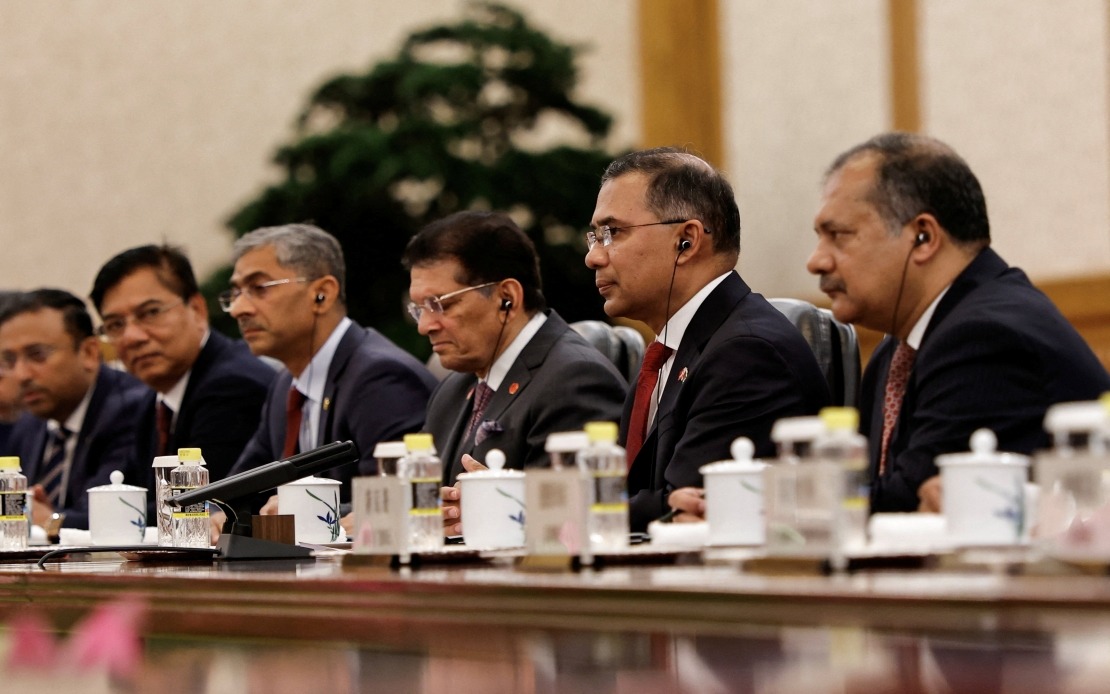
Bangladesh has secured a major commitment from twelve Chinese enterprises pledging US$9.2 billion in investments across critical economic sectors, marking a significant deepening of bilateral ties between Dhaka and Beijing. The investment proposals emerged during Prime Minister Tarique Rahman's week-long visit to China from June 22 to 26, with Bangladesh state media confirming the pledges on Sunday. The scale and diversity of the proposed projects underscore China's strategic interest in positioning itself as a principal development partner for Bangladesh, particularly as the South Asian nation seeks to diversify its economic base and accelerate infrastructure modernisation.
The investment commitments span sectors identified as priorities for Bangladesh's continued growth and industrial expansion. Energy generation, port development, highway construction, manufacturing facilities, and educational infrastructure all feature prominently in the proposals, with Bangladesh officials explicitly seeking to attract Chinese capital to bolster these areas. The anticipated employment generation from these projects runs into tens of thousands of positions, a consideration that carries particular weight given Bangladesh's ongoing urbanisation and the persistent challenge of absorbing labour force entrants into formal economic sectors. This employment dimension adds a socio-political significance to the commercial transactions, as job creation remains a key metric for evaluating government performance in South Asian democracies.
Port modernisation and expansion represent a flagship component of the China-Bangladesh partnership framework. Mongla Port, situated on Bangladesh's southwestern coast, has been identified for joint development by both nations, with China Civil Engineering Construction Corporation (CCECC) proposing US$650 million to establish and operate an economic zone centred on the facility. The initiative encompasses warehouse construction and comprehensive logistics infrastructure designed to enhance Mongla's capacity as a regional shipping and distribution hub. This project carries implications for maritime trade throughout South and Southeast Asia, as improved Bangladeshi port capacity could reshape regional trade routes and reduce reliance on traditional hubs like Singapore and Port Klang in Malaysia.
Highway development represents the single largest investment commitment, with Sichuan Road and Bridge Group pledging US$4.5 billion to upgrade the critical Dhaka-Chattogram corridor. This route, connecting Bangladesh's capital with its largest port city, constitutes the nation's economic spine, and capacity constraints have long hindered containerised cargo movement and regional trade connectivity. The public-private partnership structure proposed for this development demonstrates China's preference for blended financing models that distribute risk while maintaining operational control. For neighbouring Southeast Asian nations competing for regional manufacturing hubs and supply chain leadership, the Dhaka-Chattogram upgrade represents a potential shift in Bangladesh's competitive positioning.
Environmental and resource management investments reveal another dimension of Chinese strategy in Bangladesh. Shanghai SUS Environment Company's US$890 million waste-to-energy plant proposal addresses Bangladesh's urban sanitation challenges while generating revenue through energy production, a model increasingly deployed across Asia where waste management and energy deficits coincide. Zhongxin Environmental Protection Group's US$1.65 billion e-waste processing initiative at the Payra Port Industrial Zone responds to growing Asian electronics consumption and the associated disposal challenges. These environmental technology transfers carry significance beyond Bangladesh, as Southeast Asian neighbours grapple with identical waste management crises resulting from rapid urbanisation and consumption growth.
Manufacturing and industrial diversification anchor several proposals. Huaxin Textile Industry Company Limited plans a 200 megawatt solar power installation coupled with expanded textile and battery manufacturing operations, representing US$190 million in investment. This integrated approach—combining renewable energy generation with factory construction—reflects contemporary industrial strategy that couples operational sustainability with production capacity. Shenzhen Kaifa Technology's US$250 million electric smart meter manufacturing facility targets the regional demand for grid modernisation and smart electricity systems, while SF Express's US$180 million cold-chain logistics facility addresses the growing Southeast Asian appetite for temperature-controlled food and pharmaceutical distribution.
China Future Energy Group Holding Limited's US$250 million commitment to gas field exploration and development signals continued Chinese interest in Bangladesh's hydrocarbon resources. This investment extends Beijing's energy security strategy, ensuring access to fuel supplies while generating revenue for Bangladesh through production-sharing arrangements. For Malaysia and other regional energy producers, the Bangladesh gas sector represents a competitor market for both capital investment and technical expertise, particularly as global energy transition pressures reshape resource development economics.
The joint communiqué issued at the conclusion of Prime Minister Rahman's visit emphasised China's commitment to strengthening trade, e-commerce, industrial cooperation, and supply chain integration with Bangladesh. The language employed—particularly references to upgrading export capacity and upholding multilateral trade systems—reflects Chinese rhetorical positioning as a defender of open commerce at a moment when Western trade protectionism shapes global commerce. For Malaysian observers, Bangladesh's embrace of Chinese partnership presents both opportunity and challenge, as enhanced Bangladesh-China integration potentially diverts trade and investment flows that might otherwise benefit Malaysian firms operating in South Asia.
Bangladesh's Commerce Minister Khandakar Abdul Muktadir explicitly framed the Chinese investments as mechanisms for reducing Bangladesh's structural trade deficit with China, a persistent challenge for most nations engaging with Chinese manufacturing and exports. The current account imbalance creates political pressure within Bangladesh to secure Chinese direct investment that generates local value-added activity and employment, thereby improving the bilateral trade accounting. This dynamic applies similarly to Malaysia and other regional economies maintaining significant import dependencies on Chinese goods.
The proposed industrial park in Chattogram represents a spatial concentration strategy that seeks to cluster Chinese firms and supply chains within defined zones offering regulatory certainty and infrastructure concentration. This model has proven effective in coastal Chinese provinces and increasingly in Cambodia, Vietnam, and Myanmar. For Bangladesh, the Chattogram park aspires to position the nation as a competitive manufacturing location for Asian production networks, potentially drawing firms from China seeking lower labour costs and nearness to South Asian markets.
The timing of these investment announcements carries geopolitical significance in South Asia's complex balance-of-power dynamics. Bangladesh's diversification of economic partnerships, evident in its simultaneous engagement with China, India, Japan, and Western nations, reflects strategic pragmatism in navigating competing regional interests. Yet the scale and momentum of Chinese investments suggest Beijing's view of Bangladesh as a strategic priority zone for economic expansion and supply chain deepening. This orientation mirrors broader Chinese strategy across South and Southeast Asia, where infrastructure and manufacturing investments serve dual purposes of commercial profit and geopolitical positioning.
For Malaysia and other Southeast Asian economies, Bangladesh's trajectory as a Chinese investment recipient merits careful monitoring. As labour costs in coastal China and frontline Southeast Asian manufacturing hubs continue rising, subsequent tiers of Asian economies including Bangladesh increasingly attract capital seeking cost-competitive production locations. The Bangladeshi investment wave may therefore signal broader Asian industrial reorganisation, potentially diverting manufacturing opportunities from established Southeast Asian centres. Simultaneously, improved Bangladesh-China infrastructure connectivity through Mongla Port and highway developments could enhance regional trade flows benefiting established hubs, depending on how Chinese firms integrate new Bangladeshi production into existing supply networks.

