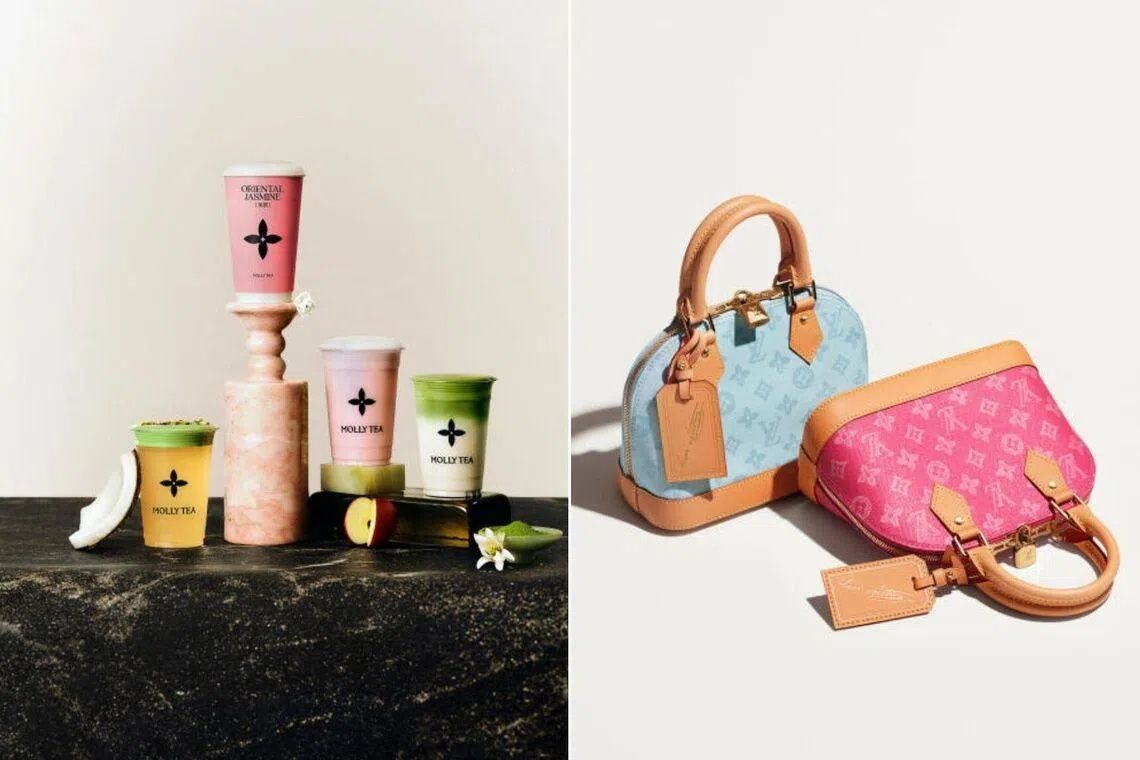
A trademark dispute between a Chinese milk tea company and one of the world's most recognisable luxury brands has ignited intense discussion about intellectual property protection and the boundaries of cultural design ownership. The Suzhou Intermediate People's Court ruled on June 29 that Molly Tea, based in Shenzhen, had infringed seven of Louis Vuitton's registered four-petal flower graphic trademarks, ordering the company to cease the infringement, pay 10.3 million yuan (US$1.5 million) in damages, and issue a public apology. The decision has already spawned millions of online conversations across Chinese social media platforms, with a related hashtag generating over 360 million views, reflecting broader tensions between trademark protection and the use of traditional artistic motifs in modern commerce.
The dispute centred on the visual similarity between Molly Tea's brand emblem—a four-petal flower design—and Louis Vuitton's iconic monogram patterns that have defined the luxury house's visual identity for decades. Louis Vuitton initiated legal proceedings in May 2025, and the judgment came less than two months later. Molly Tea has already signalled its intention to appeal the verdict to a higher court, ensuring the matter will likely remain contested in judicial forums for some time. The speed with which this case moved through the courts underscores the seriousness with which Chinese intellectual property authorities treat established trademark infringement claims, particularly when major international brands are involved.
Molly Tea's trademark application strategy reveals an aggressive effort to build a distinctive visual identity centred on floral elements. Since March 2024, the company and its affiliated entities filed multiple trademark applications featuring various floral designs with the China National Intellectual Property Administration, primarily targeting categories including restaurant and accommodation services, advertising, and convenience foods. However, the vast majority of these applications encountered rejection from authorities. Only the trademark containing the Chinese characters for "Molly Tea" successfully secured registration, suggesting that intellectual property examiners already harboured concerns about the originality of the company's graphic elements.
The case has divided public opinion along predictable yet revealing fault lines. One segment of online discourse contends that Molly Tea's floral emblem bears uncomfortably close visual resemblance to the Louis Vuitton design, constituting obvious trademark infringement. Conversely, other commentators argue that meaningful visual differences exist between the two marks and emphasise that the companies operate in entirely distinct market segments—luxury fashion versus affordable beverages—making consumer confusion unlikely. A third perspective has emerged questioning the originality of Louis Vuitton's signature pattern itself, with some Chinese netizens suggesting that the French brand may have drawn inspiration from traditional Chinese cultural motifs, thereby lacking exclusive claim to floral design elements.
Kang Lixia, a partner at Beijing Standzer IP Firm, outlined the practical framework governing such disputes under Chinese law. She explained that trademark protection operates on a "first to file" principle, whereby the earliest applicant to register an identical or similar mark for identical or similar goods acquires exclusive rights, while subsequent applications face rejection. Critically, she noted that highly recognised marks like Louis Vuitton's logo receive cross-class protection, meaning their intellectual property rights extend beyond their original product categories to provide safeguards across unrelated merchandise. This doctrine creates significant challenges for later applicants seeking to utilise similar graphic elements, even in different market sectors.
The question of traditional cultural designs presents particular complexity within Chinese trademark jurisprudence. Kang emphasised that floral patterns and motifs originating from traditional Chinese culture technically belong to the public domain and theoretically remain available for use by any party. However, this principle becomes complicated when a company registers an earlier trademark incorporating such elements, effectively claiming commercial monopoly over that specific application. The tension here reflects a wider challenge facing intellectual property systems globally: determining where the line falls between protecting genuine creative innovation and preventing companies from claiming exclusive rights to cultural heritage accessible to all.
Liu Bin, an intellectual property lawyer from Beijing Zhongwen Law Firm, advocated for nuanced understanding of the dispute rather than simplistic conclusions about cultural appropriation. He explained that under trademark law, protection for graphical marks does not require the questioned design to be absolutely identical to the registered trademark. Instead, the decisive factor involves assessing whether consumers would likely experience confusion between the marks when encountering them in commercial contexts. This consumer confusion standard means that even substantially similar designs—rather than exact copies—can constitute infringement if they risk misleading purchasers about brand origin.
Liu highlighted that considerable public confusion exists regarding how traditional Chinese cultural patterns should be managed and employed equitably. Many observers, he noted, believe that such motifs should remain available to anyone since they constitute shared heritage rather than the creation of any single entity. However, he drew an important distinction between cultural patterns themselves and branded commercial applications of those patterns. Whilst traditional elements should indeed remain open and available for cultural continuation, he argued, commercial trademarks employing those elements must not create marketplace confusion or replicate previously registered brand identities.
The broader implications of this case extend beyond the immediate parties involved, carrying significance for how Chinese courts will navigate future disputes pitting international intellectual property protection against local cultural design practices. For Malaysian and Southeast Asian business operators, the verdict demonstrates that Chinese courts will vigorously enforce established trademark rights, particularly when major international brands demonstrate prior registration. Companies seeking to build brand identities in the Chinese market must conduct thorough trademark searches and avoid designs bearing similarity to previously registered marks, regardless of whether they operate in nominally different sectors. The cross-class protection principle means that even tea merchants cannot safely adopt designs resembling luxury brand trademarks, as courts may find infringement despite the apparent dissimilarity of product categories.
Molly Tea's decision to appeal offers an opportunity for clarification of these principles through higher court review. The appellate process will likely require the company to present compelling evidence demonstrating that its four-petal flower design possesses sufficient originality and distinctiveness to warrant protection alongside Louis Vuitton's mark. Should Molly Tea succeed on appeal, it would establish important precedent limiting cross-class protection for luxury brands and affirming broader rights to use traditional design elements. Conversely, should the lower court verdict stand, it reinforces that internationally recognised trademarks receive expansive protection within Chinese jurisdiction and that companies must avoid even apparent visual similarity with established marks.
The resolution of this dispute will likely influence how Chinese authorities approach future applications involving traditional motifs and how businesses throughout the region calibrate their branding strategies. The case illuminates fundamental questions about intellectual property in an age of globalised commerce: whether protection mechanisms designed to prevent consumer confusion adequately account for shared cultural heritage, and whether companies can legitimately claim monopolies over design elements with deep roots in centuries-old artistic traditions. For Southeast Asian entrepreneurs watching from outside China, the verdict serves as a cautionary note about the strength of trademark enforcement in the region's largest market and the necessity of distinctive, original branding if they hope to compete effectively.

