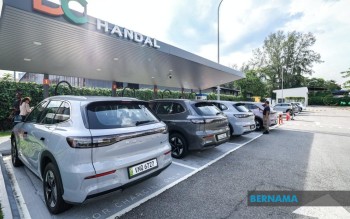
Chinese smart charging solutions are making inroads into Malaysia's burgeoning electric vehicle market, with industry players emphasising that successful technology transfer requires far more than simply transplanting proven systems from one market to another. Xi'an LINCHR New Energy Technology Co Ltd, a major player in EV charging infrastructure, is exploring partnerships with local manufacturers to develop charging networks suited to Malaysia's unique climate and regulatory environment. The company's participation in the Global Automotive and Technology Expo at MITEC from August 26 to 28 underscores the growing momentum around EV infrastructure development as Malaysia's vehicle electrification trajectory accelerates over the coming three to five years.
LINCHR chairman Yuan Qingmin articulated a crucial reality about EV market development: charging infrastructure and vehicle adoption advance in tandem, with bottlenecks in either domain creating cascading constraints on the other. This interdependence means that as Malaysia's EV sales volumes increase, the shortage of reliable charging stations could become a critical limiting factor. Conversely, building charging networks without sufficient EV adoption creates underutilised infrastructure investments. For Malaysia specifically, this balance remains delicate, as the local EV market is still maturing and charging availability remains patchy outside major urban centres. The strategic implication for policymakers and investors is that coordinating vehicle promotion incentives with infrastructure rollout is essential to avoid the mismatch that has plagued some markets.
While China has emerged as an early adopter of both EV technology and comprehensive charging ecosystems, LINCHR's leadership recognises that wholesale replication of the Chinese model would prove counterproductive in the Malaysian context. Rather than importing turnkey solutions, the company is advocating for a deliberate localisation strategy that combines technology transfer with grounded research and development tailored to Malaysia's conditions. This approach reflects lessons learned globally, where developing economies that attempted to simply copy infrastructure from advanced markets often discovered that systems optimised for different climates, grid configurations, and regulatory frameworks performed poorly. The philosophy extends beyond mere technical adaptation to encompassing economic viability, cultural integration, and regulatory alignment—factors that vary significantly between nations.
A tangible example of LINCHR's localisation strategy illustrates the practical implications of this thinking. The company has modified its charging station designs by incorporating oil-immersed insulation technology on printed circuit boards specifically to withstand Malaysia's notorious salt spray corrosion, a consequence of the tropical maritime climate combined with high humidity. Such modifications might appear incremental, but they directly impact equipment longevity, maintenance costs, and overall system reliability. Without these adaptations, imported charging stations would require significantly more frequent servicing and replacement, undermining the economic case for infrastructure expansion. This demonstrates how climate-specific engineering becomes not merely a technical detail but a fundamental business concern affecting the viability of the entire charging ecosystem.
LINCHR's partnership with Swift Bridge Technologies, a local EV charger manufacturer, exemplifies the collaborative approach gaining traction in Malaysia's emerging EV infrastructure sector. The two companies are jointly developing solutions spanning infrastructure standards, product design, technology platforms, and engineering specifications. This arrangement creates mutual benefits: the Chinese firm gains market access and local knowledge while the Malaysian partner acquires advanced technological capabilities and global benchmarking expertise. Such partnerships have become increasingly common in Southeast Asia as foreign technology providers recognise that genuine market penetration requires embedding themselves within local industrial ecosystems rather than maintaining arm's-length commercial relationships. The cooperation between LINCHR, Swift Bridge, and the Standards and Industrial Research Institute of Malaysia (SIRIM), formalised through a tripartite agreement signed in March of the previous year, further institutionalises this collaborative framework.
The standards and testing dimension of Malaysia's charging infrastructure development warrants particular attention, as it underpins both safety and interoperability. SIRIM's involvement in establishing testing and certification protocols ensures that charging infrastructure meets Malaysian regulatory requirements while maintaining international quality benchmarks. This institutional coordination prevents the fragmentation that can occur when multiple manufacturers adopt incompatible systems, ultimately creating a confusing landscape for EV owners. For Malaysia, establishing clear, science-based standards early in the infrastructure buildout phase positions the nation ahead of other Southeast Asian competitors, some of which continue operating with minimal standardisation. Yuan noted that LINCHR commands over 70 percent of China's testing technology market share, a position that provides both technical credibility and an incentive structure aligned with rigorous quality assurance.
The strategic calculus underlying LINCHR's Malaysian expansion illuminates broader patterns in technology transfer within the EV sector. The company's experience suggests that overseas expansion cannot succeed through straightforward technology licensing or simple manufacturing agreements. Instead, genuine localisation requires establishing R&D capabilities within target markets, partnering with established local firms possessing market knowledge and distribution networks, and embedding technical teams within host country regulatory and industrial ecosystems. This capital-intensive and time-consuming approach contrasts sharply with earlier models of technology transfer, where multinational corporations simply exported finished products with minimal local adaptation. The shift reflects both the technical sophistication of modern EV infrastructure and the political economy of Southeast Asian markets, where regulators and domestic manufacturers increasingly demand meaningful local involvement rather than accepting a subordinate role as mere distributors.
Looking toward the medium-term future, LINCHR's chairman signalled that charging technology itself will continue evolving as electric vehicles become more sophisticated and interconnected. The current model of unidirectional power flow from grid to vehicle represents merely an interim state in the longer maturation of EV ecosystems. Emerging vehicle-to-grid (V2G) technologies enable EVs to discharge electricity back into the grid during peak demand periods, transforming parked vehicles from passive loads into distributed energy storage assets. This transition from EVs as simple electricity consumers to vehicles functioning as mobile energy sources has profound implications for grid stability, electricity market operations, and the broader economics of power generation and distribution. Malaysia, with its grid infrastructure administered by Tenaga Nasional Berhad and embedded within ASEAN's broader energy architecture, will need to adapt regulatory frameworks and grid management protocols to accommodate this transition.
The implications of V2G technology adoption extend beyond technical infrastructure to encompassing energy policy and climate goals. In Malaysia's context, where renewable energy integration remains a strategic priority for the government, bidirectional EV charging could facilitate smoother accommodation of variable solar and wind generation. During periods of high renewable output, excess electricity could charge EV batteries rather than being curtailed or wasted. Conversely, during peak demand periods or when renewable generation is low, EVs could discharge stored electricity, reducing reliance on conventional generation. This flexibility enhances overall grid efficiency while potentially lowering electricity costs. However, realising these benefits requires coordinated development of enabling technologies, regulatory frameworks, and market mechanisms—areas where Malaysia's ongoing collaboration with international partners like LINCHR becomes strategically valuable.
For Malaysian policymakers and industry stakeholders, the LINCHR-Swift Bridge collaboration represents a microcosm of the broader challenge facing the nation's EV infrastructure buildout. Success requires balancing multiple objectives: acquiring advanced technology while maintaining local industrial capability, establishing rigorous safety and performance standards while avoiding unnecessarily restrictive regulatory barriers, and developing infrastructure that serves immediate market needs while remaining flexible enough to accommodate future technological evolution. The emphasis on localisation rather than simple technology import reflects a maturing industrial policy approach that recognises neither pure protectionism nor complete reliance on foreign providers serves long-term national interests. Instead, structured partnerships that embed technology transfer within collaborative frameworks, supported by capable local firms and robust regulatory institutions, offer the most promising pathway forward as Malaysia navigates the transition to a more sustainable, electrified transportation system.

