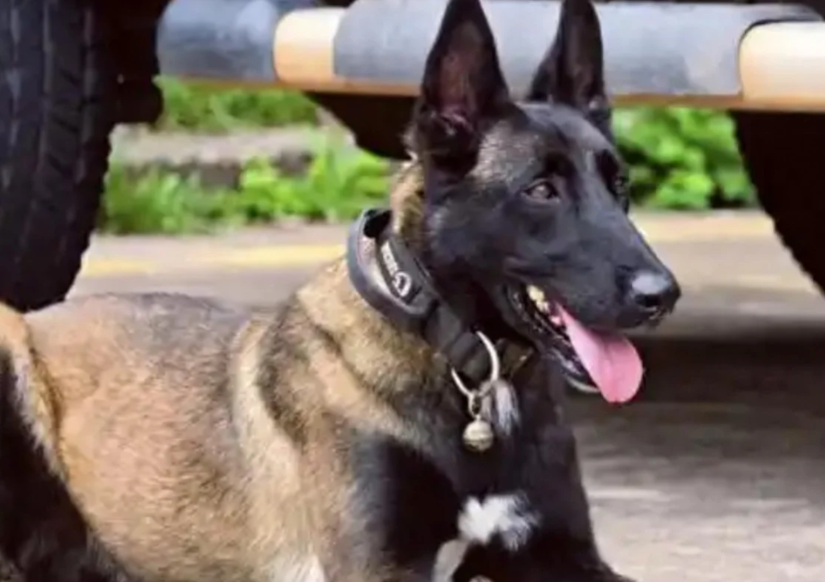
A four-year-old German shepherd named Bulu has become an unlikely symbol of loyalty and perseverance across China after a haunting separation from his handler, Officer Awei, concluded in an emotional reunion that has resonated with millions of viewers. The incident unfolded in Yunnan province's Chuxiong district, where the specially trained narcotics detection dog and his human partner were conducting an operation at an abandoned building targeting suspected drug dealers when tragedy struck. What began as a routine enforcement action would test the bonds of partnership between handler and animal in ways that have profound implications for how Southeast Asian societies view the sacrifices made by working dogs in law enforcement.
The operational circumstances that led to Awei's serious injury reveal the genuine hazards faced by police officers working alongside canine units in complex environments. During the November raid, Bulu's acute senses detected fleeing suspects, and the dog surged ahead with Awei pursuing closely behind. In the darkness and treacherous conditions of the debris-scattered corridor, Awei lost his footing and plummeted from a second-storey height, suffering catastrophic injuries that would fundamentally alter his immediate future. Officers at the scene discovered him convulsing, vomiting blood, and drifting between consciousness and unconsciousness, with one colleague's voice capturing the desperation of the moment: "Hold on. We still have battles to fight together."
What makes this incident particularly striking is Bulu's unwavering response during those critical first moments. Rather than abandoning his handler or seeking safety, the dog remained by Awei's side, anxiously circling and nuzzling him in desperate attempts to rouse him from his dangerous state. This instinctive protective behavior demonstrates the depth of training and emotional bonding that characterizes working relationships between police canines and their handlers across professional law enforcement agencies. Awei was transported to hospital, where medical staff diagnosed multiple fractures affecting his head and chest, conditions serious enough to induce a five-day coma before consciousness gradually returned.
During Awei's extended hospitalization and recovery period, Bulu was relocated to a training base, where the dog's behavior underwent a profound and troubling transformation. Over the course of approximately six months, Bulu effectively ceased all working activities, exhibited signs of restlessness and anxiety, and dramatically reduced his food and water consumption. Surveillance footage documented the dog repeatedly returning to locations where his handler might appear—the dormitory, the base gate, and familiar training routes—suggesting a sustained psychological search for his missing partner. On one particularly poignant occasion, Bulu rushed toward a returning police vehicle only to discover that Awei was not aboard, an moment captured on camera that underscores the emotional complexity of the dog's separation trauma.
The psychological dimensions of this separation highlight an underappreciated aspect of working animal welfare in law enforcement. Police dogs in China, like their counterparts across Southeast Asia, form intense bonds with their handlers through years of shared training and operational deployment. These relationships transcend simple conditioning; they represent genuine partnerships forged through mutual dependence and trust. When Awei suddenly vanished from Bulu's world without explanation or return date, the dog experienced what can reasonably be characterized as grief and depression. The refusal to eat and drink, combined with repetitive searching behaviors, reflects genuine psychological distress rather than mere behavioral abnormality—a reality that challenges conventional assumptions about animal cognition and emotional capacity.
When Awei finally cleared medical checkpoints and returned to active duty, authorities arranged for his reunion with Bulu, an encounter that would eventually captivate millions across digital platforms. The dog immediately recognized his handler, barking frantically and sprinting toward him with undeniable urgency. Awei, understanding the significance of the moment, dropped his luggage and knelt down to embrace the animal. This unrehearsed gesture of mutual recognition and affection was captured on video and subsequently shared across mainland Chinese social media platforms, where it accumulated more than 10 million views and over 580,000 likes. The video resonated far beyond casual interest in animal stories; it touched something fundamental in viewers' understanding of loyalty, sacrifice, and the bonds that transcend species barriers.
While Awei recovered and Bulu waited, their colleagues advanced the original investigation without pause. The operational team continued pursuing the drug trafficking network that had prompted the initial deployment, ultimately achieving significant results that vindicated the initial operation's strategic objectives. Officers successfully arrested 11 suspects connected to the network, seized 4.4 kilograms of narcotics, and recovered more than 500,000 yuan in illicit proceeds—approximately 75,000 US dollars. These arrests culminated the broader investigation and demonstrated that even tragic incidents cannot derail the systematic pursuit of organized crime threats. The case's successful conclusion provides important context for understanding why Awei's return to duty carried such significance; it marked the end of a chapter that had involved genuine loss and sustained operational pressure.
The viral moment has catalyzed broader public awareness regarding China's extensive police dog establishment. According to CCTV News, mainland China maintains more than 29,000 active police dogs across its law enforcement agencies as of 2024, a significant canine workforce that operates across narcotics detection, tracking, patrol, and specialized response functions. These working animals typically serve careers spanning approximately eight years, during which they experience intensive physical and mental demands. The physical toll of sustained high-intensity deployments frequently results in joint and spinal injuries that parallel occupational health challenges faced by human officers. The conversation sparked by Bulu and Awei's reunion has highlighted the welfare considerations that should accompany the deployment of such substantial numbers of working animals.
Retirement protocols for Chinese police dogs reveal systemic approaches to post-service care that warrant examination across Southeast Asian jurisdictions considering similar programs. The predominant practice involves allowing dogs to remain with their original units under the continued care of their handlers, a arrangement that recognizes the ongoing bond between human and animal while providing familiar environments and trusted caretakers. Some retired dogs become available for public adoption, expanding their post-service possibilities beyond institutional settings. These arrangements suggest recognition that working dogs have developed psychological attachments and behavioral patterns requiring continuity in care rather than abrupt institutional transitions. Malaysia and other regional nations developing or expanding police dog programs might consider similar protocols as they scale their canine workforce capacity.
The broader significance of Bulu's story extends beyond sentimental interest in animal behavior, touching questions about the ethical deployment of working animals and society's obligations toward creatures that serve in dangerous capacities. Across Southeast Asia, police and military agencies increasingly rely on canine units for detection, tracking, and protective functions, yet public discourse rarely examines the welfare, psychological needs, and post-service care of these animals. The viral resonance of Awei and Bulu's reunion suggests public appetite for understanding these relationships more deeply. The story humanizes both the officers who work alongside these animals and the dogs themselves, challenging viewers to recognize working animals not merely as tools but as sentient beings capable of profound emotional responses. This reframing has implications for how regional governments develop animal welfare standards within law enforcement training and deployment protocols.
Online commentators have articulated the deeper emotional currents underlying the story's popularity. One widely-cited comment reflected: "What Bulu was waiting for was not just its handler, but a comrade-in-arms. I am deeply moved by the bond between humans and animals." This observation captures the essence of why the story transcends regional boundaries and species-specific interest. Viewers across Asia recognize in Bulu's loyalty and Awei's commitment a mirror reflecting universal values regarding duty, sacrifice, and the possibility of genuine connection across difference. The story arrives amid growing regional interest in police modernization, animal welfare standards, and the human dimensions of law enforcement work. Its circulation demonstrates how personal narratives of devotion and perseverance can reshape public understanding of institutional practices and prompt reconsideration of how societies honor both human and animal service.
The implications for Southeast Asian law enforcement agencies deserve consideration as regional nations develop their own canine unit programs and grapple with questions of animal welfare and handler relationships. Bulu's story provides a powerful case study in the psychological and emotional bonds that develop between working animals and their human partners, relationships that demand recognition in training protocols, deployment decisions, and post-service care arrangements. As police modernization progresses across Malaysia, Singapore, Thailand, and other regional jurisdictions, the integration of working dog programs should proceed with full recognition of the welfare responsibilities accompanying such deployments. The public response to Awei and Bulu's reunion suggests that citizens across Asia increasingly expect their institutions to demonstrate ethical stewardship of the animals serving in law enforcement and security functions. This cultural shift toward recognizing working animals' intrinsic worth alongside their operational value may ultimately produce more humane and sustainable approaches to canine deployment across Southeast Asian police and security services.

