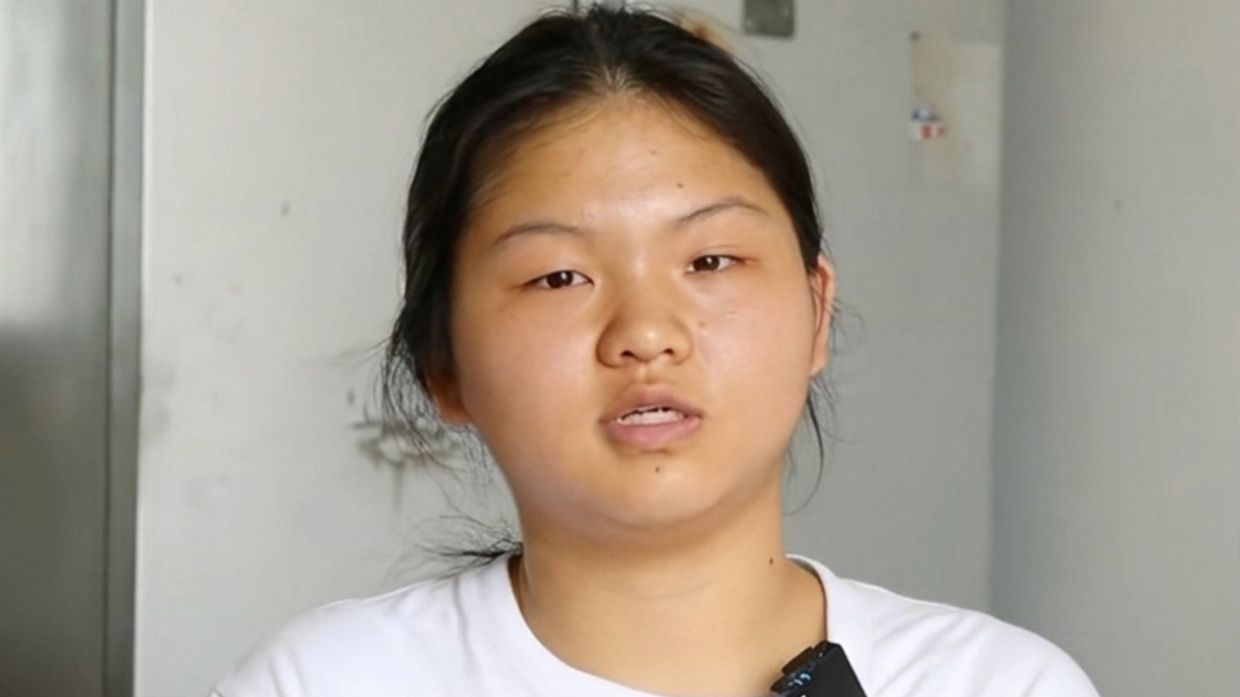
An 18-year-old Chinese student has captured public attention with an act of extraordinary compassion at a time of profound personal loss. Zeng Zixuan, who became an orphan just as she prepared to embark on her university education, has declined further charitable donations and instead urged donors to redirect their generosity towards individuals facing more severe circumstances. Her selfless response to tragedy reflects a maturity and social consciousness that has resonated deeply across China, offering a counterpoint to narratives about privilege and entitlement among young people.
Zeng achieved a gaokao score of 564 out of 750, securing her place in higher education. She had deliberately selected her university based on proximity to her home, hoping the location would enable regular visits to her elderly grandmother, who had been her primary caregiver since childhood. The choice reflected not ambition for a prestigious institution but rather a commitment to maintaining family bonds—a priority that underscores the close relationship between the teenager and the relative who had raised her through multiple family crises.
The foundations of Zeng's difficult life were laid during her early childhood when her parents' marriage dissolved. Following the separation, her mother remarried and departed from her life almost entirely, while her father relocated to Guangdong province to seek employment. Stripped of conventional parental support, Zeng depended entirely on her grandmother for emotional and practical care. Despite these circumstances, she distinguished herself academically, consistently achieving top rankings throughout her schooling and demonstrating the discipline and focus that would eventually produce her respectable gaokao result.
Trauma deepened when Zeng was in her senior secondary years. Her father, the parent who had remained nominally present through work arrangements in another province, died in an accident. The death was catastrophic not only emotionally but economically—the family's already precarious financial situation collapsed entirely. With her father gone and her mother absent, Zeng and her grandmother survived through a combination of government assistance programmes and educational subsidies provided by her school. The teenager shouldered adult responsibilities while attempting to maintain her studies and prepare for the critical gaokao examination.
The psychological toll manifested visibly. Teachers observed a dramatic shift in Zeng's demeanor, noting that a previously cheerful personality gave way to withdrawn behaviour. One educator responded with particular sensitivity, recognizing that academic intervention alone was insufficient and choosing instead to establish regular supportive conversations with the struggling student. Simultaneously, local government structures mobilized to address the family's vulnerability. Village officials assigned a representative specializing in women's affairs to coordinate and monitor the support being provided to both Zeng and her grandmother, demonstrating how grassroots administrative apparatus can serve vulnerable populations when properly directed.
As Zeng navigated her final secondary education and looked toward university, she drew encouragement from her supervising teacher, who counseled her that educational achievement represented her pathway to stability and a means of honouring both her deceased father and her aging grandmother. This framing transformed academic success from individual aspiration into a form of filial and familial duty—a perspective deeply rooted in Chinese cultural values that emphasize intergenerational reciprocity and responsibility.
The narrative took another devastating turn in early July, just as Zeng was preparing for university entry. Her grandmother, the woman who had provided unwavering support through decades of family upheaval, fell ill and passed away. Zeng, at eighteen years old, had lost every immediate family member and now faced the transition to university as a complete orphan. The timing appeared almost deliberately cruel—the moment of anticipated new beginning coincided with final loss.
The community response was swift and emotionally generous. Learning of Zeng's circumstances, strangers began offering financial assistance through village government channels. Within a compressed timeframe, contributions accumulated to exceed 60,000 yuan, equivalent to approximately US$8,800. The sum was substantial in the context of rural Chinese economics and represented a meaningful response to a young person's catastrophic circumstances. However, Zeng's subsequent action distinguished her from typical aid recipients and captured broader public imagination.
Zeng petitioned the village office to cease accepting further donations. In her appeal, she expressed deep gratitude for the contributions received, describing the donors as uncles, aunties, brothers, and sisters—familial language that reflected the communal bonds being forged through collective support. Crucially, she asserted that the accumulated funds were sufficient for her immediate needs, specifically covering tuition and accommodation expenses. Her statement transcended mere politeness, however, articulating a deliberate ethical argument: earning money is difficult for ordinary people, and numerous individuals throughout China face circumstances more dire than her own.
This reasoning revealed sophisticated moral thinking uncommon in teenagers. Rather than viewing charitable giving as a zero-sum allocation where her needs competed fairly with others', Zeng implicitly argued that cumulative hardship across society created competing claims on scarce generosity. By acknowledging that others faced even more challenging situations, she positioned her own needs as less urgent within a larger framework of social suffering. Her request that donors redirect their resources toward those in greater need reflected a form of comparative vulnerability assessment—a recognition that need exists on a spectrum and that her status as a university-bound student with secured housing and tuition represented a qualitatively different position than some potential aid recipients.
To address her living expenses throughout university, Zeng determined she would pursue part-time employment. The village government, recognizing both her circumstances and her demonstrated character, offered her a position specially designed to accommodate student schedules. This arrangement represented a pragmatic solution allowing Zeng to maintain her education while contributing to her own subsistence, preserving both her dignity and her economic participation in the community that had supported her.
The response from online observers reflected how Zeng's narrative intersected with broader anxieties and aspirations in contemporary China. Many commentators emphasized the resilience and brightness of her future despite accumulated tragedy, framing her as fundamentally fortunate to navigate hardship within a social context that mobilizes collective support. Others highlighted the paradox of her status—disadvantaged in terms of family structure and economic resources yet advantaged by living in a moment of national development where social safety nets, however imperfect, existed to catch her when she fell. For Malaysia and Southeast Asia, where questions about social responsibility, educational access, and community care increasingly occupy policy discussions, Zeng's story and the institutional responses it triggered offer meaningful lessons about what societies can accomplish when they treat vulnerable young people not as charity cases but as valued members deserving of collective investment.

