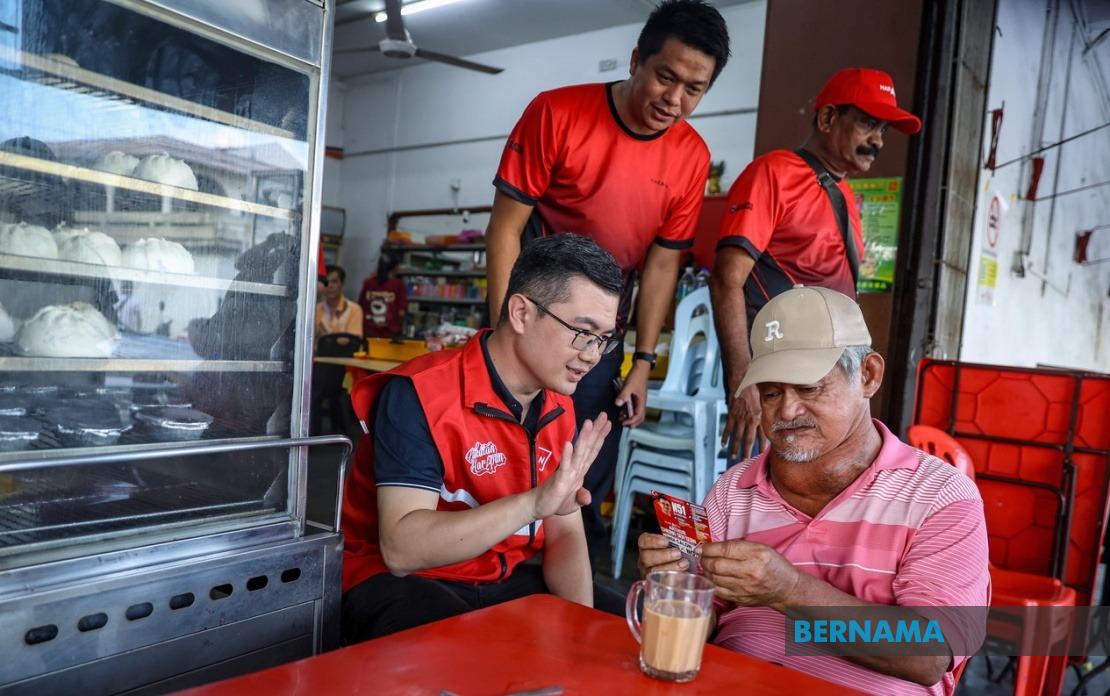
Arthur Chiong Sen Sern, the incumbent assemblyman for Bukit Batu, is mounting his re-election campaign on the strength of nearly two years of service work across the constituency, hoping to overturn the razor-thin 137-vote margin that secured his initial victory in 2022. The Pakatan Harapan candidate believes his sustained presence and community initiatives have built sufficient goodwill to deliver a more decisive result when Johor voters head to the polls on July 11, with early voting commencing on July 7.
The 36-year-old legislator's confidence rests on consistent positive feedback from constituents and his visible engagement across the 49,963-strong electorate of Bukit Batu. Since assuming office, Chiong has prioritised accessibility and grassroots problem-solving, systematically addressing concerns irrespective of voter demographics or political affiliation. This approach appears designed to consolidate his support beyond the narrow coalition that propelled him to victory in the 15th state election, when he topped fellow contenders Datuk S. Suppayah of Barisan Nasional, Tan Heng Choon representing Perikatan Nasional, and Lee Ming Wen of Warisan.
Chiong's development agenda centres on tangible infrastructure improvements and direct assistance to underserved communities. He has established a pattern of funding community facilities, notably contributing RM20,000 towards installing lighting systems at a futsal court that continues serving young residents. Such targeted investments in recreational infrastructure appeal to younger voters whilst addressing gaps in local amenities that might otherwise be overlooked by state or federal authorities. His interventions extend to Felda settlements, traditional rural constituencies where financial constraints often limit access to basic services and maintenance.
Flood mitigation represents a particularly significant focus area for the Bukit Batu incumbent. Chronic inundation in areas such as Kampung Rahmat and Kampung Seri Paya had plagued residents for years, yet Chiong's collaborative approach with the Department of Irrigation and Drainage has reportedly generated measurable improvements. His strategy emphasises personal involvement during emergency situations, positioning himself as present and responsive when constituents face crisis. This hands-on approach during natural disasters creates memorable impressions that translate into electoral support, particularly among voters experiencing recurring hardship from flooding.
The Bukit Batu contest has evolved into a four-way battle rather than the previous four-cornered affair, though crowding at the ballot box should theoretically benefit the incumbent with superior name recognition and existing machinery. Chiong faces challenges from R. Kumaran, the Barisan Nasional and Kulai PKR chief candidate, M. Premanand representing Ikatan Demokratik Malaysia-MUDA, G. Tamili contesting for Bersama, and independent candidate Kamaruzaman Ali. The fragmentation among opposition and fringe contenders may work in Chiong's favour, though MUDA's growing appeal among younger, more educated voters in urban and semi-urban constituencies like Bukit Batu could present genuine competition.
Chiong has publicly expressed gratitude towards Prime Minister Datuk Seri Anwar Ibrahim and the broader Pakatan Harapan leadership for reaffirming their confidence through the nomination. This declaration of backing from the federal leadership signals that PKR and its coalition partners view the Bukit Batu seat as strategically defensible and potentially winnable by larger margins. For Anwar's government, retaining the seat matters both symbolically—demonstrating Pakatan Harapan's ability to build on electoral foundations—and arithmetically, as Johor's legislative support remains crucial to federal coalition stability.
The significance of the Johor state election extends beyond local governance to broader Malaysian politics. The state has traditionally served as a bellwether for national sentiment, and results will offer early indicators of whether Pakatan Harapan can sustain momentum or whether voter dissatisfaction is gathering. A strong performance in Bukit Batu and other Selangor-leaning constituencies suggests that Anwar's administration retains sufficient public confidence, whilst unexpected losses might signal emerging cracks in the coalition's support base.
Chiong's strategy reflects evolving approaches to electoral competition in Malaysia's maturing democracies. Rather than relying primarily on divisive rhetoric or party machinery, his campaign emphasises demonstrable delivery and personal accessibility. This methodology appeals particularly to centrist and swing voters who prioritise functionality over ideological alignment. The emphasis on non-partisan service delivery—repeatedly noting assistance regardless of race or religion—attempts to transcend communal voting patterns that have historically dominated Malaysian politics.
The previous 137-vote margin indicates that Bukit Batu represents genuinely competitive terrain rather than a safe seat. This competitive context explains Chiong's comprehensive engagement strategy and his willingness to highlight specific achievements in minute detail. Voters in marginal constituencies tend to scrutinise incumbent performance more rigorously than those in safe seats, and Chiong appears acutely aware that complacency would invite defeat. His campaign narrative—transforming initial victory into a stronger mandate through sustained work—resonates with sophisticated voters who evaluate performance over time rather than voting reflexively along party lines.
The polling timeline provides adequate opportunity for campaigns to reach constituents, with the July 7 early voting window accommodating those with scheduling constraints or mobility challenges. This extended engagement period favours incumbents with established networks and volunteer infrastructure, advantages that Chiong should possess after two years of continuous constituency work. However, his opponents will similarly have time to mobilise their respective support bases, and the four-way nature of the contest creates uncertainty that straight head-to-head polling cannot fully capture.
Bukit Batu's voter composition—encompassing Felda settlements, semi-urban residential areas, and industrial zones—requires differentiated messaging that Chiong appears to have developed through his targeted interventions. His approach of combining infrastructure development with direct assistance to specific communities demonstrates understanding that electoral victory requires coalition-building across diverse interests rather than appealing to monolithic voter segments. Whether this strategy successfully converts community engagement into increased vote share will become apparent when Johor residents cast their ballots on July 11, determining not only Chiong's political future but also offering insights into the broader trajectory of Malaysian electoral politics.

