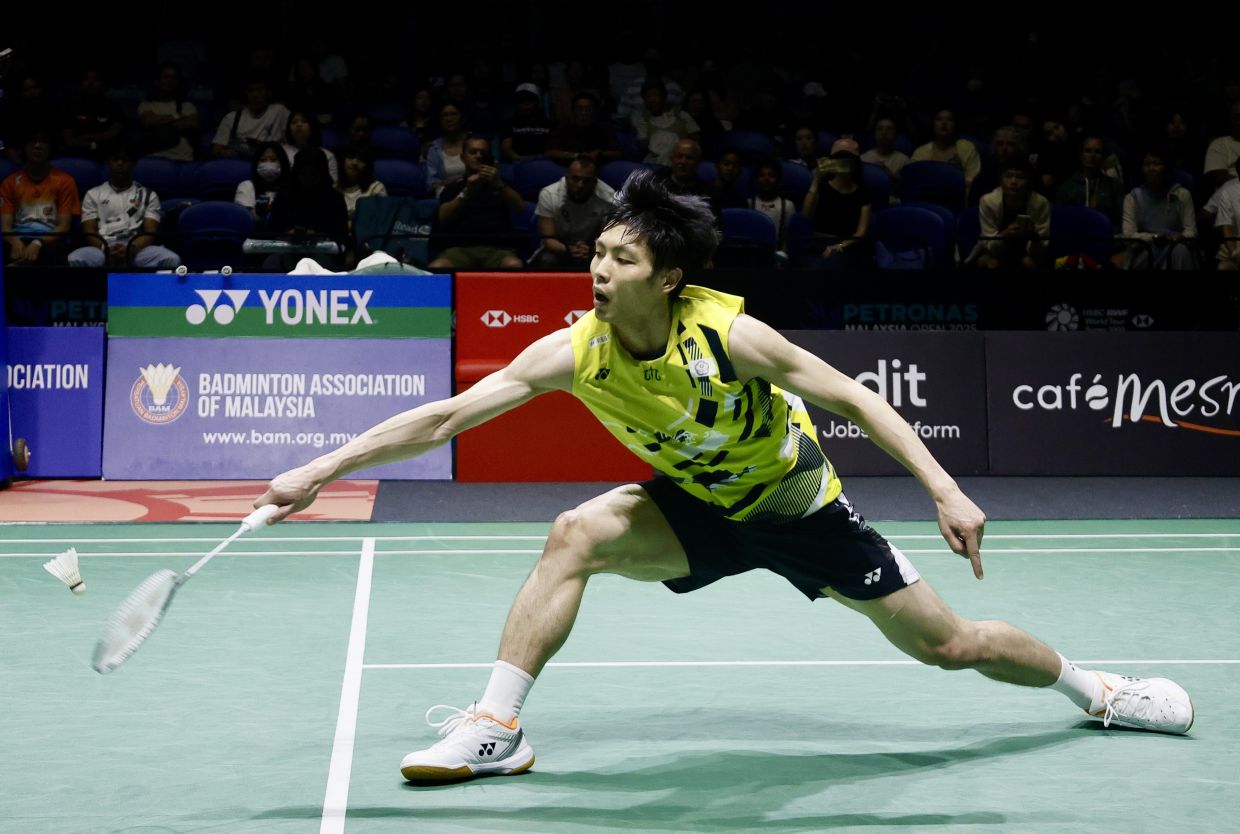
Taiwan's Chou Tien-chen delivered a performance that defied conventional wisdom about age and athletic longevity, capturing the China Open Super 1000 title in Changzhou at 36 years old. His straight-sets victory over France's Toma Junior Popov—a player a decade his junior—proved that sustained dedication and meticulous preparation can overcome the physical demands that typically define badminton's competitive window. The 64-minute final showcased a veteran's tactical acumen, with Tien-chen recovering from a second-set loss to dominate the decider with a commanding 21-13 scoreline.
The significance of this triumph extends beyond Tien-chen's personal milestone. Taiwan's wait for a men's singles champion at the China Open extended three decades, with Fung Permadi's victory in 1996 marking the last occasion when a Taiwanese player claimed this particular crown. That 30-year gap underscores how rare such accomplishments are at one of the Badminton World Federation's most competitive Super 1000 tournaments, which attracts the sport's elite competitors from across the globe. Tien-chen's breakthrough therefore represents a watershed moment for Taiwanese badminton's standing at this prestigious stage.
Remarkably, the achievement arrived barely a week after Tien-chen suffered a dispiriting early exit at the Japan Open, where he fell to Ireland's Nhat Nguyen in the opening round. The rapid turnaround—from disappointment to triumph—illustrates the resilience required to maintain competitiveness in elite badminton. Rather than dwelling on that setback, Tien-chen and his support team, including physiotherapist Victoria Kao, rapidly analysed what required adjustment and implemented corrections. This capacity to absorb defeat, dissect performance, and recalibrate strategy distinguishes champions operating at the sport's highest tier, where margins between success and failure are measured in millimetres.
Tien-chen's victory also established him as the oldest player ever to claim a BWF World Tour Super 1000 title, a record that challenges persistent assumptions about athletic decline with advancing age. Whilst badminton demands explosive physicality and aerobic capacity, his success suggests that experience, court awareness, injury prevention discipline, and mental fortitude can partially offset the physiological advantages typically possessed by younger competitors. For regional athletes contemplating career longevity, Tien-chen's example offers encouragement that strategic management of physical and mental resources can extend competitive windows beyond commonly expected timelines.
In reflecting on his achievement, Tien-chen acknowledged the improbability of his journey to the final, let alone claiming the title itself. His comments revealed a player grounded in reality regarding the challenges of competing at elite levels in his fourth decade. The mental burden of professional badminton—returning to training immediately after defeats, maintaining optimism through setbacks, and managing the cumulative wear of thousands of hours on court—constitutes a psychological test as demanding as the physical one. Tien-chen's emphasis on gratitude and his attribution of success to faith provided insight into the psychological frameworks supporting sustained high-level performance across extended careers.
The role of his support infrastructure proved decisive throughout his campaign at Changzhou. Tien-chen's specific mention of Victoria Kao and his physiotherapy team highlighted how modern badminton champions depend on collaborative ecosystems encompassing sports medicine, nutrition, and recovery protocols. These technical components address the reality that maintaining competitive standards at age 36 requires compensating for natural aging processes through enhanced preventive and recuperative approaches. The daily attention to physical preparation that Tien-chen described represents an investment that younger rivals might not yet consider necessary, creating a strategic advantage born from his experience.
Across the tournament, Southeast Asian presence remained notable, particularly in doubles competitions. The Indonesian pairing of Fajar Alfian and Shohibul Fikri triumphed in men's doubles, defeating South Korea's Kim Won-ho and Seo Seung-jae 16-21, 21-19, 21-19 in a closely contested encounter. This result underscored the continued strength of Indonesian badminton in doubles formations, an area where the nation has historically demonstrated particular prowess. The mixed doubles title also remained in Chinese hands, with Guo Xinwa and Chen Fanghui prevailing in an intense match against domestic rivals Feng Yanzhe and Huang Dongping.
Japan's Akane Yamaguchi secured the women's singles crown with a dominant performance, defeating China's Chen Yufei 21-18, 21-16 to reinforce Japan's competitive standing in singles disciplines. The women's doubles category, however, remained dominated by Chinese partners Liu Shengshu and Tan Ning, who dispatched Japan's Yuki Fukushima and Mayu Matsumoto 21-14, 21-19. These results reflected the broader competitive landscape within East and Southeast Asian badminton, where multiple nations maintain capacity to contend across categories.
Looking forward, Tien-chen's accomplishment may inspire reconsideration of career arcs within regional badminton. Malaysian and Southeast Asian players observing his achievement might reassess retirement timelines and the viability of extended competition at elite levels. The China Open victory demonstrates that accumulated experience, sophisticated injury management, and unwavering commitment can yield remarkable outcomes even as athletes approach their late thirties. For sports administrators across the region, Tien-chen's example suggests the value of supporting veteran players through mentorship and medical infrastructure that recognises their continued potential rather than viewing aging athletes as inevitable career endpoints.

