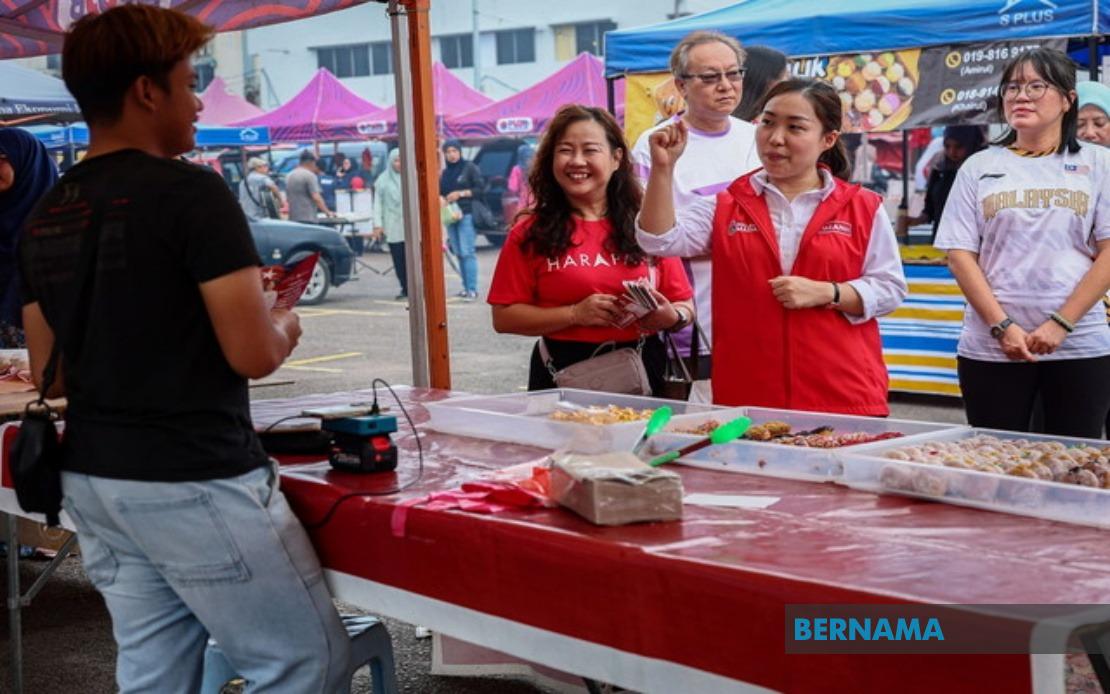
Chu Poh Yee, a young lawyer and Pakatan Harapan candidate contesting the Mengkibol state seat in Johor, has unveiled an ambitious three-part programme centring on infrastructure development, economic revitalisation, and social safety nets as her core undertakings to voters. The candidate's platform reflects an attempt to address the varied concerns of the constituency's residents whilst positioning herself as a representative committed to tangible, locally-focused improvements rather than broad national messaging.
The infrastructure dimension of Chu's campaign focuses on foundational improvements that many constituencies in Johor have long identified as requiring attention. Road quality emerges as a central concern, with plans to systematically upgrade transport networks across Mengkibol. Beyond conventional highway maintenance, her strategy encompasses urban agriculture initiatives intended to utilise underutilised space for community-based farming projects. These schemes aim to foster both food security and environmental stewardship whilst creating employment for residents interested in agricultural pursuits at the grassroots level.
On the economic front, Chu characterises Kluang's business environment as possessing dormant potential awaiting strategic activation. Her vision involves cultivating an ecosystem more receptive to entrepreneurial ventures, particularly by reducing bureaucratic barriers and establishing clearer pathways for small and medium enterprises to establish operations. The candidacy recognises a persistent challenge facing many districts in Johor: the departure of young people seeking opportunities in larger urban centres. By generating viable employment prospects locally, Chu argues that brain drain can be curtailed and communities strengthened through retained talent and capital.
Culturally-driven economic initiatives form part of this broader economic strategy. Chu specifically highlighted the Kluang Rail Festival as evidence that creatively-conceived tourism events can generate meaningful economic spillovers benefiting merchants, service providers, and hospitality operators. Rather than viewing such festivals as one-off celebrations, she positions them as components of a deliberate economic diversification strategy designed to reduce dependence on any single industry or sector whilst enhancing Kluang's regional profile.
The social dimension of Chu's agenda addresses gender equity within the workforce, an issue gaining traction across Malaysia as organisations and policymakers recognise the economic and social costs of underutilising female talent. Her commitment to strengthening women's workforce participation extends beyond rhetorical support, encompassing concrete proposals such as establishing well-resourced childcare facilities. By reducing the practical obstacles mothers face in balancing professional and familial responsibilities, such centres would theoretically enable more women to sustain careers without internalising guilt or facing impossible trade-offs between ambition and motherhood.
The candidate's childcare initiative speaks to a broader recognition that state-level representation can meaningfully impact daily quality of life. Facilities offering both reliable supervision and developmental programming would benefit working parents whilst potentially providing early education advantages for children from economically disadvantaged backgrounds. This represents the kind of granular, family-focused policymaking that often resonates with voters more powerfully than abstract commitments to economic growth or national development agendas.
Chu's campaign has encountered typical obstacles accompanying electoral contests in polarised environments. Campaign materials have faced vandalism at multiple locations, incidents she attributes to political provocation. Rather than portraying these disruptions as cause for retreat, Chu has framed them as motivating her team's determination to persist. Her rhetoric on this point attempts to transform adversity into evidence of commitment, a rhetorical strategy common among candidates seeking to demonstrate resilience and genuine dedication to constituents.
The Mengkibol constituency represents one of 56 state seats across Johor contested in the upcoming election, with Chu facing a straight fight against Barisan Nasional candidate Yap Zhi Peng. This two-way contest contrasts with some other constituencies where candidates from multiple coalitions compete, potentially simplifying voter calculations. Across Johor, 172 candidates in total are contesting, reflecting the significance of this state-level election for national political trajectories and coalition positioning.
The electoral timeline concentrates campaign activity into a compressed period, with early voting scheduled for July 7 and main polling on July 11. This compressed schedule places pressure on candidates to communicate their platforms efficiently whilst consolidating support among committed voters and persuadable swing constituencies. For younger candidates like Chu, the campaign period represents both an opportunity to demonstrate political viability and a test of organisational capacity and media management skills that will prove consequential regardless of electoral outcome.
Chu's candidacy reflects broader patterns within Malaysian politics whereby younger professionals, particularly those with professional credentials and urban orientations, increasingly contest seats under opposition banners. Her emphasis on practical, locally-rooted solutions rather than ideological appeals aligns with trends among younger voters sceptical of partisan abstraction. Whether such granular policy commitments sufficiently mobilise voters against established Barisan Nasional incumbencies remains a persistent question shaping competitive constituencies across the country.

