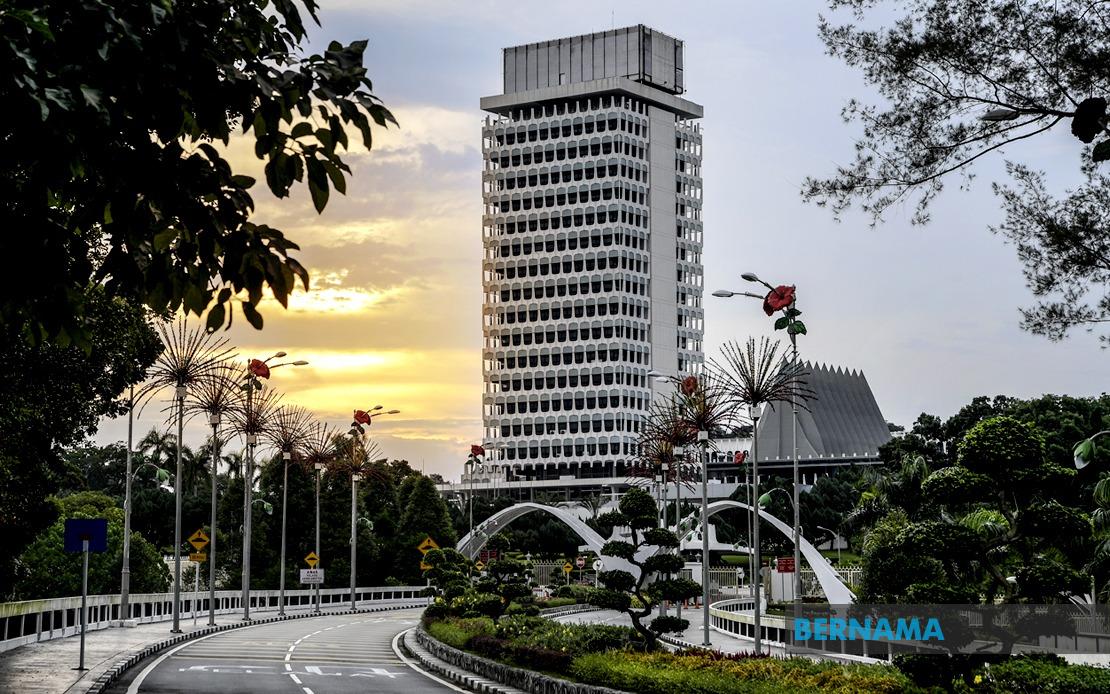
Forty-four civil society organisations alongside 25 prominent individuals have issued a coordinated call for Malaysia's 15th Parliament to complete its full term, arguing that premature dissolution would jeopardise critical democratic and governance reforms. The joint statement, released in Kuala Lumpur on August 12, underscores growing concern within civil society about the stability required to implement meaningful institutional change. The groups maintain that Parliament should continue its work indefinitely unless the government loses the confidence of the parliamentary majority—a threshold that would legitimately trigger earlier elections but prevent destabilising snap polls.
The coalition backing this position represents a broad cross-section of Malaysian civil society, including Project Stability and Accountability for Malaysia (Projek SAMA), the influential youth organisation Angkatan Belia Islam Malaysia (ABIM), election watchdog Coalition for Clean and Fair Elections (Bersih), anti-corruption body Centre to Combat Corruption and Cronyism (C4 Center), Gabungan Bertindak Malaysia (GBM), the Institute for Democracy and Economic Affairs (IDEAS), the Kuala Lumpur and Selangor Chinese Assembly Hall (KLSCAH), and Pertubuhan IKRAM Malaysia (IKRAM). This diverse representation signals consensus that parliamentary stability serves the national interest, transcending the usual ideological divisions that characterise Malaysian politics.
The organisations have proposed that Prime Minister Datuk Seri Anwar Ibrahim convene a high-level cross-party summit bringing together all government and opposition parties with parliamentary representation. Such a gathering would establish a shared legislative agenda for the remainder of the parliamentary term, creating the conditions for bipartisan support on critical reforms. This approach reflects frustration with Malaysia's recent history of parliamentary churn, where successive governments have pursued partisan advantages through strategic dissolutions rather than focusing on institutional development that would benefit any administration in power.
The reform agenda outlined is substantial and technically ambitious. A priority initiative involves separating the constitutional roles of the Attorney General and Public Prosecutor, a structural change long advocated by governance experts as essential for prosecutorial independence. Equally significant is the proposed 10-year term limit for the Prime Minister, which would prevent personalised concentration of power and establish predictable leadership transitions. These constitutional reforms would require supermajority support in Parliament and extended deliberation, making parliamentary stability essential to their realisation.
Beyond constitutional amendments, the coalition advocates the passage of the Ombudsman Act, which would establish an independent body to investigate citizen complaints against government agencies—an institution already present in most democratic systems but absent in Malaysia. The proposed Freedom of Information Act would create statutory rights to government information, fostering transparency and enabling public scrutiny. Complementing these measures are targeted electoral reforms, including amendments to the Election Offences Act 1954 to tighten provisions around electoral misconduct, and expansion of postal and absentee voting mechanisms to reduce barriers for overseas Malaysians and those temporarily outside their constituencies.
The groups have raised concerns about parliamentary fairness that extend beyond the federal level. They urge all 13 state legislatures to adopt laws ensuring that development allocations—constituency funds that enable representatives to fund local projects—are distributed equitably to all members regardless of whether they belong to the ruling coalition or opposition. Currently, opposition assemblymen often receive minimal allocations, limiting their capacity to serve constituents. Transparent and accountable distribution would level the playing field and encourage voters to evaluate representatives based on performance rather than access to party patronage.
Parliamentary process improvements feature prominently in the reform package. The organisations call for strengthened select committees, which function as specialised bodies examining legislation and holding government to account. They also seek streamlined budget procedures—Malaysia's budget process has been criticised as unwieldy and lacking meaningful parliamentary input. Equally important is the introduction of mechanisms for Private Members' Bills, allowing individual parliamentarians to propose legislation rather than restricting the legislative agenda to government initiatives. These procedural reforms would transform Parliament from a largely reactive rubber-stamp body into a more vigorous institution where diverse voices shape national policy.
Electoral system reform at the state level represents an additional component of the proposed agenda. The groups advocate introducing party-list proportional representation alongside the traditional first-past-the-post system, arguing this would enhance representation and reduce winner-take-all distortions. Simultaneously, they emphasise the need to enhance representation of historically marginalised groups—women, youth, Orang Asli communities, and ethnic minorities—ensuring that Parliament better reflects Malaysia's demographic diversity and incorporates varied perspectives in legislative decision-making.
The coalition's framing emphasises that these reforms would benefit any future government, not merely the current administration. By repositioning institutional change as benefiting the system rather than individual parties, the civil society groups attempt to build political will across factional divides. This represents a measured approach to reform advocacy, acknowledging that opposition parties—mindful of potentially holding government—might support measures establishing norms that outlive any single political cycle.
A crucial element of the joint statement addresses electoral transparency and preparation. The organisations urge both federal and state governments to provide advance notice if they intend to dissolve legislatures before the scheduled term expiration, giving the Election Commission, law enforcement, civil service, and voters adequate preparation time. This proposal reflects experience of recent snap elections called with minimal notice, creating logistical challenges and constraining public engagement in electoral campaigns.
The initiative gains significance within Malaysia's specific political context, where coalition governments have proven fragile and parliamentary seats are frequently contested through defections. The recent pattern of government changes, including the fall of the Pakatan Harapan administration and subsequent reshuffling of coalitions, has generated instability that reforms advocates argue harms governance effectiveness. A full parliamentary term would provide continuity to tackle structural issues that frequently fall through the cracks amid electoral positioning.
For Malaysian civil society, the statement represents a shift toward institutional rather than purely partisan advocacy. Rather than aligning with specific parties, these organisations are positioning themselves as guardians of democratic infrastructure, arguing that strengthened institutions—whether parliamentary committees, independent prosecutors, or information access—improve governance across all political contexts. This approach aligns with similar movements in other democracies where civil society has championed systemic reform as preferable to cycling through competing partisan administrations.
The success of these reform efforts depends substantially on parliamentary cooperation and political will. While the joint statement provides a comprehensive roadmap, converting proposals into legislation requires agreement among competing political parties whose short-term interests may diverge from long-term institutional strengthening. Whether Prime Minister Anwar Ibrahim convenes the proposed summit and whether such a gathering could achieve consensus on substantive reforms remains uncertain, but the breadth of civil society support signals that Malaysian citizens increasingly recognise institutional development as essential to democratic progress.

