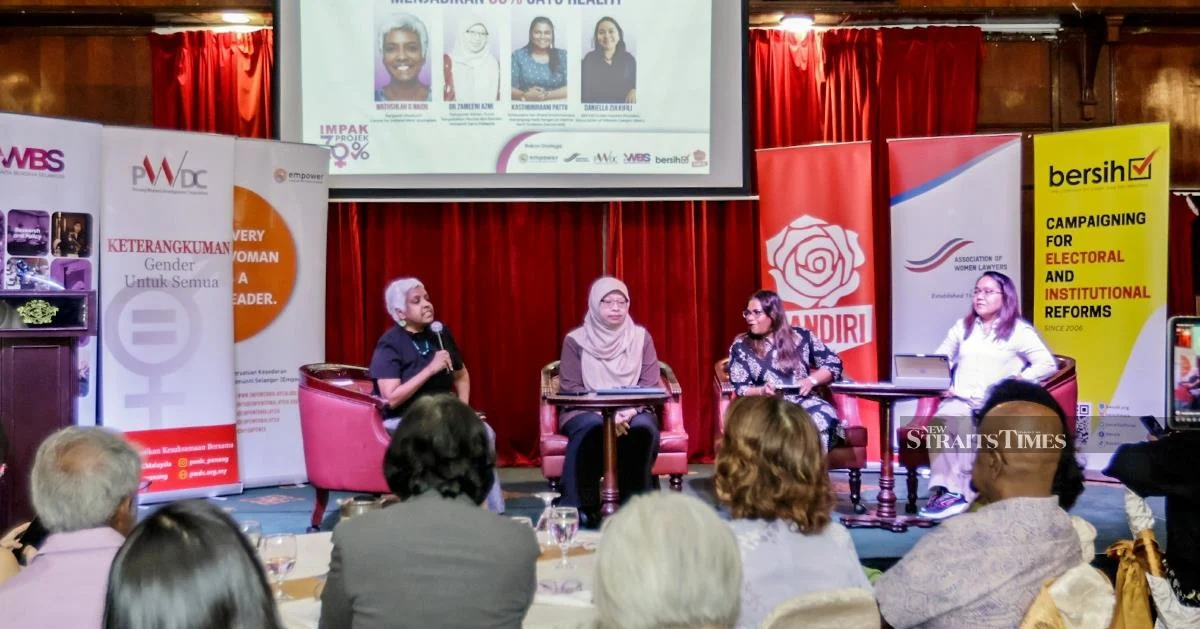
A broad coalition of civil society organisations has formally presented the government with a memorandum and proposed legislation requiring Malaysian political parties to ensure women constitute at least 30 per cent of their electoral candidates for the next general election. The initiative represents a significant push from non-governmental sectors to accelerate gender representation in national politics, targeting what advocates view as a critical threshold for meaningful female participation in parliament.
The submission comes at a moment when Malaysia's political landscape faces mounting pressure to address persistent gender imbalances in candidate selection. Women remain underrepresented in electoral contests relative to their demographic share of the population, and successive elections have failed to significantly improve their visibility as party nominees. By proposing a mandatory floor of 30 per cent, the coalition is seeking to institutionalise change rather than rely on voluntary party commitments, which have historically yielded inconsistent results across different political formations.
The 30 per cent threshold carries particular resonance in regional and international contexts. Many democracies globally have adopted similar targets through legislative means, recognising that voluntary measures alone typically fail to overcome entrenched party structures and nomination conventions. The figure also aligns with various international standards promoted by women's rights organisations, suggesting the Malaysian proposal draws from established best practices rather than representing an outlier demand.
Such legislation would fundamentally reshape how Malaysian political parties approach candidate recruitment and nomination processes. Party machinery would require formal mechanisms to identify, vet, and prioritise female candidates across diverse constituencies, from safe seats to competitive battlegrounds. The implementation burden would be substantial, potentially forcing parties to reconsider traditional hierarchies and establish transparent evaluation criteria that explicitly accommodate gender-sensitive selection procedures.
The implications for parliament itself could prove transformative. Should the legislation pass and take effect before the next general election, the composition of the Dewan Rakyat would shift noticeably toward greater female representation. Beyond mere numerical presence, increased female legislators could reshape legislative priorities, committee compositions, and parliamentary discourse around education, healthcare, social welfare, and economic policy areas where women voters and female-headed households have particular stakes.
Malaysia's current female parliamentary representation sits below regional averages. Neighbouring countries such as Thailand and the Philippines have achieved higher percentages of women legislators, partly through deliberate legislative interventions. The civil society submission implicitly positions Malaysia as lagging these peers and suggests that competitive regional standing requires proactive policy measures rather than passive hope that demographic change will naturally increase female candidature.
Implementation challenges would likely emerge in contested contexts. Political parties have historically resisted external mandates on candidate selection, viewing such matters as internal party prerogatives. Some may argue that quotas constrain merit-based selection or override grassroots determination of nominees. Others might contend that setting a floor at 30 per cent represents an arbitrary threshold unsupported by either constitutional prescription or electoral logic. These objections would probably feature prominently in parliamentary debate should the draft legislation advance.
The coalition's decision to pursue legislative rather than merely rhetorical strategies suggests recognition that informal advocacy has exhausted its utility. Previous calls from women's groups and progressive politicians for greater female representation have achieved some incremental gains, yet the overall trajectory remains slow. Formal law would create enforceable obligations and potential sanctions for non-compliance, shifting accountability from aspirational commitments to measurable outcomes.
Timing carries strategic significance. By submitting the memorandum before parliament dissolves for general elections, the coalition aims to keep the proposal on governmental agendas and potentially influence the policy platforms adopted by different political formations. Parties seeking to position themselves as progressive may embrace the quota enthusiastically, while others might view it as imposing costs or constraints. The electoral campaign itself could become a forum where gender representation gains traction as a substantive policy issue rather than remaining marginalised within political conversations.
The memorandum's reception from government remains uncertain. Whether the administration prioritises the proposal depends on multiple factors: broader commitments to gender equality, relationship between governmental leadership and civil society, and calculation of political advantage in endorsing or opposing mandatory quotas. Some cabinet ministers have previously advocated for greater female representation, yet translating such support into concrete legislative action requires sustained political will and cabinet consensus.
Regional observers may view the Malaysian initiative as indicative of growing sophistication within civil society advocacy on representation issues. Rather than accepting explanations that female candidature will naturally improve over time, organised groups are deploying legislative templates proven effective elsewhere and demanding their implementation locally. This represents evolution in advocacy strategy from persuasion toward compulsion, potentially signalling patterns that other Southeast Asian democracies may eventually follow.
The draft law ultimately forces a choice about whether Malaysia views female political representation as a desirable outcome worth mandating or merely an aspiration to achieve gradually through voluntary party reform. The coalition's submission indicates that many organised groups believe current trajectory toward better gender balance is insufficient and that legislative intervention represents the necessary mechanism to deliver meaningful change before the subsequent general election.