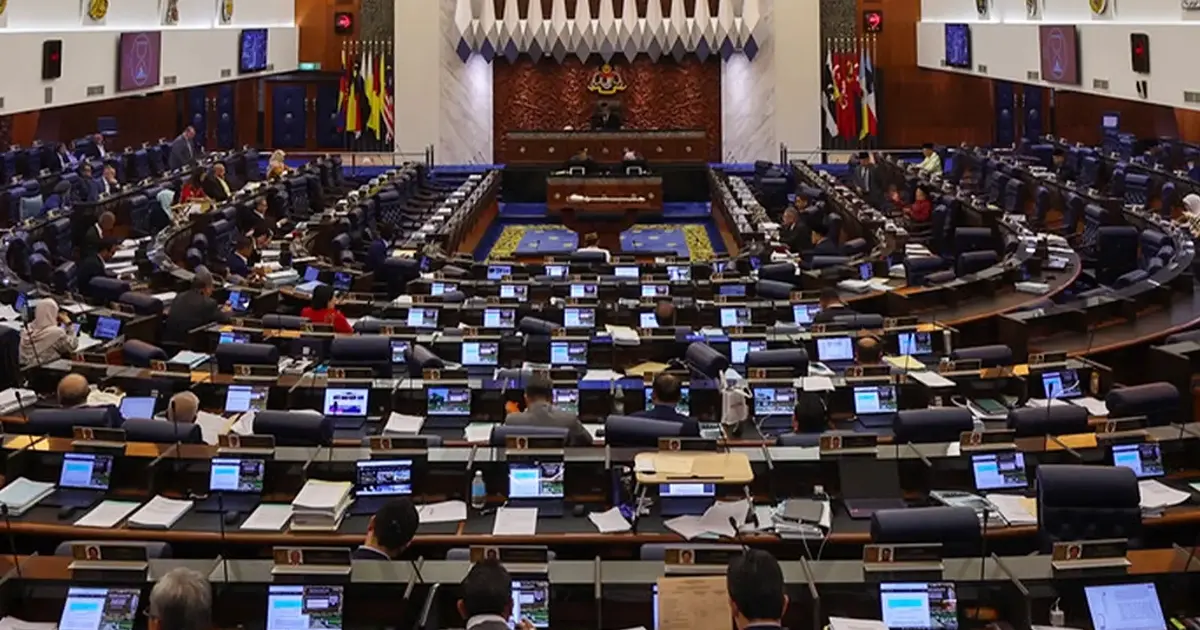
A coalition of civil society organisations has launched a fresh appeal to Malaysia's political leadership, advocating for sustained parliamentary governance and collaborative institutional reform across party lines. The groups are urging Prime Minister Anwar Ibrahim to convene a high-level summit bringing together representatives from both the ruling coalition and opposition parties to negotiate and cement a comprehensive reform agenda scheduled for implementation before General Election 16 takes place.
The call reflects growing concern within the non-governmental sector about political instability and the fragmentation that has characterised Malaysian governance in recent years. Civil society leaders contend that the persistent cycle of dissolution and electoral campaigns has diverted attention from systemic improvements that could strengthen democratic institutions and restore public confidence in governance. By encouraging all major political stakeholders to commit to shared reform objectives, these organisations hope to depoliticise certain institutional questions and create continuity across electoral cycles.
The proposed summit mechanism would serve several strategic purposes within Malaysia's political architecture. First, it would establish a formal mechanism for dialogue between governing and opposition forces on matters transcending immediate partisan interests. This approach acknowledges that fundamental reforms to parliamentary procedure, electoral law, anti-corruption frameworks, and constitutional amendments require broader legitimacy than any single party or coalition can provide. The summit format would also demonstrate to international observers and domestic constituencies that Malaysian democracy, despite its turbulence, retains capacity for constructive cross-party engagement on governance matters.
For Southeast Asian context, Malaysia's political trajectory carries significance beyond its borders. The region has witnessed democratic backsliding and institutional weakening in several countries, making successful examples of bipartisan institutional reform particularly valuable. A Malaysian precedent of opposition and government negotiating structural improvements could influence how other regional democracies approach similar challenges, particularly in Indonesia, Thailand, and the Philippines where institutional fragmentation similarly constrains reform efforts.
The NGOs' emphasis on allowing Parliament to complete its term before calling elections represents a departure from the recent pattern of abbreviated parliamentary sessions and unexpected dissolutions. Since 2020, Malaysia has experienced multiple changes of government without completing full electoral cycles, creating a governance environment of constant uncertainty. Completing a full parliamentary term would provide stability for legislative business and allow elected representatives to be held accountable for their performance across a defined period, rather than dissolving the legislature when political fortunes shift.
The timing of this civil society intervention is strategically significant. With GE16 not scheduled until late 2025 or 2026, depending on the Prime Minister's discretion, there remains a window for negotiating and preliminarily implementing reforms before the electoral contest. The NGOs are essentially arguing that Malaysia should use this period constructively rather than allowing it to become consumed by pre-election positioning and campaign preparation. Early agreement on reforms could also prevent them from becoming tools of electoral competition, where parties propose conflicting reform agendas to attract voters rather than seeking genuinely improved governance.
The institutional reforms under implicit discussion likely encompass several areas where Malaysian governance has faced sustained criticism. Electoral reform, including gerrymandering concerns and campaign financing transparency, represents one obvious domain. Anti-corruption mechanisms and enforcement of existing laws constitute another critical area, particularly given the complex criminal cases involving prominent political figures that have unfolded over recent years. Constitutional amendments relating to executive-legislative relations and the powers of particular offices would also require cross-party consensus to achieve the parliamentary supermajorities necessary for passage.
Implementing reforms on a cross-party basis carries practical advantages for their credibility and durability. Institutional changes negotiated and agreed by both government and opposition acquire greater legitimacy and resilience because they do not bear the perception of being imposed by a temporary majority potentially seeking partisan advantage. Future governments, even those from opposing coalitions, are more likely to respect reforms they helped design and negotiate, whereas changes perceived as one-sided carry risk of reversal when power changes hands.
The civil society position implicitly critiques the zero-sum approach that has dominated Malaysian politics, where winners view elections as mandates for comprehensive policy redirection rather than opportunities for incremental governance improvement. By calling for a reform pact, NGOs are essentially proposing a social contract where major parties agree that certain institutional matters transcend electoral competition. This represents a mature approach to governance that acknowledges some policy areas benefit from depoliticisation and continuity.
Implementing such an agreement faces evident obstacles. Political parties naturally prefer governing without self-imposed constraints, and opposition forces historically resist legitimising government authority through collaborative engagement. Building consensus requires trust that often proves elusive in competitive politics. Nevertheless, Malaysia's civil society is signalling that stakeholders recognise the costs of perpetual political instability and that windows exist for collaborative reform if political leadership chooses to seize them.
The proposal ultimately reflects a pragmatic assessment of Malaysian democracy's challenges and opportunities. Rather than seeking dramatic constitutional rupture or comprehensive regime change, civil society is advocating for incremental institutional strengthening achieved through inclusive processes. Success would require genuine commitment from political leaders to subordinate short-term partisan interests to longer-term democratic legitimacy and institutional effectiveness.

