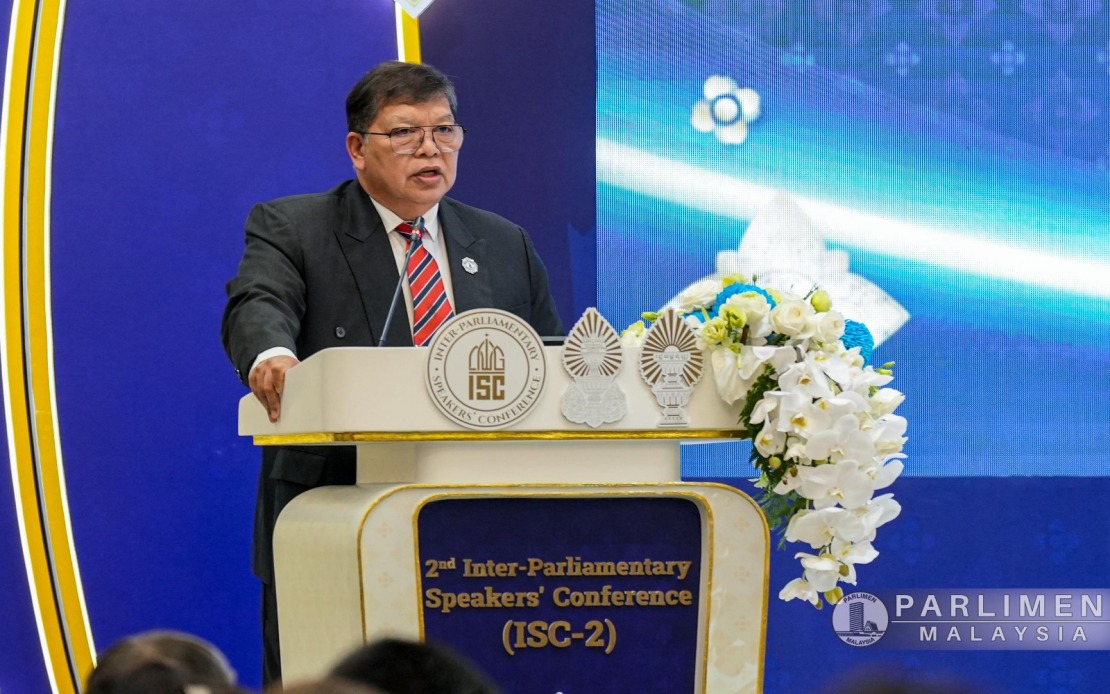
Tan Sri Dr Johari Abdul, Speaker of Dewan Rakyat, has issued a stark warning about the accelerating climate emergency, emphasizing that global inaction is inflicting severe hardship on vulnerable populations across the planet. Speaking at the Second Inter-Parliamentary Speakers' Conference in Phnom Penh on Friday, Johari stressed that climate change has transcended its environmental origins to become a multifaceted crisis threatening economic stability, public health, and fundamental resources including food and energy.
The Speaker's remarks come at a particularly poignant moment. Recent catastrophic flooding in Nepal has claimed at least 469 lives, left 2,381 people missing including 644 foreign nationals, and devastated countless communities. Initial investigations suggest the disaster originated from a glacial collapse in the Himalayan mountains, which unleashed torrential waters across river systems straddling the Nepal-China border. Several Malaysian citizens remain unaccounted for in this tragedy, bringing the climate crisis closer to home for Kuala Lumpur policymakers.
Johari expressed frustration at the apparent disconnect between rhetoric and action among world leaders, observing that climate change rarely features prominently in political discourse despite its profound implications. More troublingly, he highlighted a knowledge gap among lawmakers themselves, suggesting many legislators lack adequate understanding of climate science and mitigation pathways. This educational deficit translates into poor policy choices, such as continued deforestation and persistent reliance on coal-powered energy generation when cleaner alternatives like solar, wind, and ocean wave energy remain underutilized.
The Speaker articulated a comprehensive vision for addressing the crisis, centered on three interconnected pillars: integrating climate education into school curricula, dramatically expanding research and development spending, and accelerating technological innovation. These investments, he argued, must become central priorities for policymakers globally. Without substantial financial commitments to early education and technology development, governments risk perpetuating outdated energy systems and leaving populations exposed to escalating climate risks.
Regional context underscores the urgency of Johari's message. From the mountainous terrain of Nepal to the Mekong River valleys of Southeast Asia, communities throughout Asia face relentless exposure to climate-related disasters. The Philippines endures approximately 20 typhoons annually, while landlocked Laos and other nations battle recurring flash floods, landslides, and destructive storms that obliterate agricultural lands and critical infrastructure. Rural populations, particularly farmers and remote communities, shoulder disproportionate burdens, with their livelihoods and homes repeatedly destroyed by extreme weather events.
Cambodian Prime Minister Hun Manet recently echoed similar concerns, warning of rising water levels in the Mekong River and calling for heightened vigilance among riverine communities. While Hun Manet acknowledged the limits of preventing natural disasters entirely, he emphasized the necessity of building systematic resilience and developing responsive mechanisms to mitigate climate-related risks. This recognition by regional leaders reflects growing acceptance that climate adaptation must accompany mitigation efforts.
Johari highlighted China's long-term strategic commitment to green technology as a potential model worthy of emulation. Beijing's initiatives encompassing eco-friendly technological development, electric vehicle expansion, and substantial green space augmentation demonstrate how sustained political commitment can drive systemic transformation. The Speaker's invocation of China's approach suggests that competing political systems can find common ground on climate imperatives, provided leadership demonstrates genuine resolve.
The fundamental barrier, according to Johari, remains political will. Addressing climate change demands that world leaders move beyond rhetorical commitment to implement concrete policies backed by substantial resource allocation. He pointedly noted the widening gap between wealthy and developing nations, suggesting that climate action cannot succeed without equitable burden-sharing and financial support flowing from rich to poor countries. This equity dimension proves especially critical for Southeast Asian nations, whose limited historical contribution to atmospheric carbon accumulation stands in stark contrast to their vulnerability to climate impacts.
Scientific evidence reinforces the urgency underlying Johari's advocacy. Leading climate researchers continue documenting accelerating temperature increases, rising sea levels, and shifting precipitation patterns—changes that compound existing risks to human populations and natural ecosystems. These physical transformations represent not distant future scenarios but present-day realities reshaping agriculture, water availability, and disaster frequency across Asia.
The Dewan Rakyat Speaker's intervention at the inter-parliamentary conference positions Malaysia within broader regional discourse on climate governance. By emphasizing education and technology alongside mitigation efforts, Johari articulates an approach acknowledging that climate adaptation extends beyond environmental policy into development, health, and security domains. For Malaysian policymakers, this perspective suggests that genuine climate leadership requires integrating climate considerations across all governmental portfolios rather than compartmentalizing environmental concerns within specialized agencies.
Moving forward, Johari's call for political will and investment establishes benchmarks against which Malaysia's climate commitments can be measured. As extreme weather events increasingly impact the region with devastating human and economic consequences, the gap between aspirational rhetoric and actual resource deployment grows harder to justify. The Speaker's candid assessment suggests that genuine climate action demands not merely acknowledging the problem but fundamentally restructuring energy systems, education frameworks, and technological priorities—changes that require sustained political courage and financial commitment over decades.

