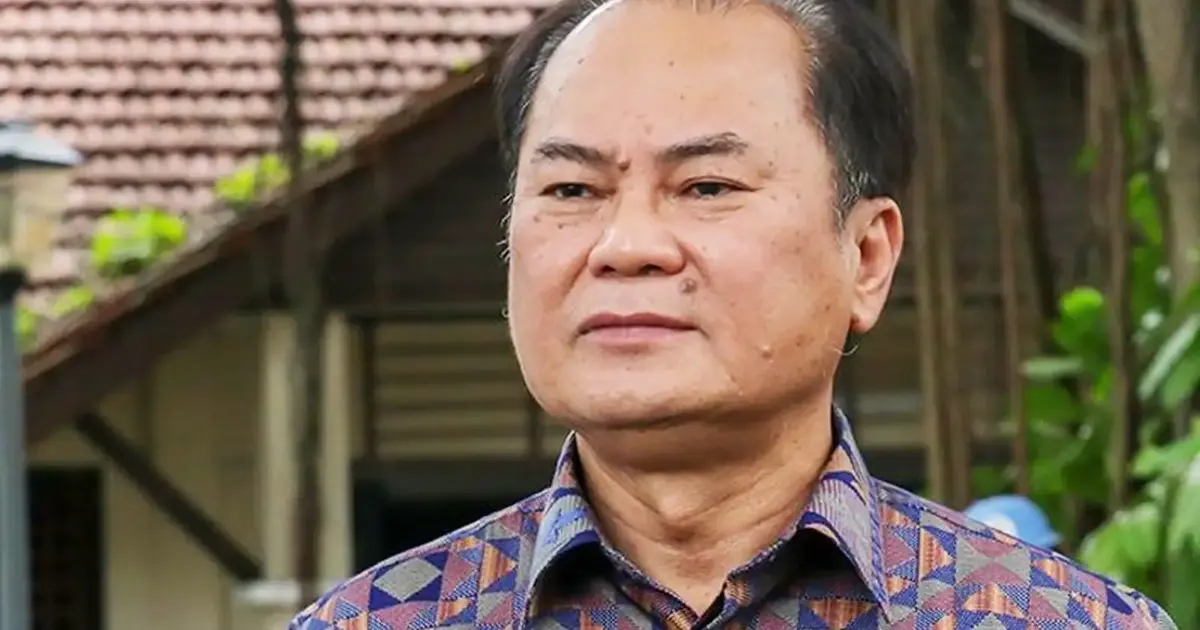
Malaysia's delicate political coalition faces an inevitable breakdown, according to Liu Tze Shao, the former Democratic Action Party leader, who argues that mounting tensions between Umno and PAS will ultimately tear apart the alliance that currently underpins government stability. The senior opposition figure contends that the two Malay-Muslim dominated parties will prove unable to coexist as coalition partners once each perceives itself as strong enough to capture additional parliamentary seats independently, a calculation that threatens to unravel the power-sharing arrangement that has defined Malaysian politics since the 2022 election.
Liu's forecast reflects a deepening institutional challenge that has preoccupied Malaysian political analysts for months. The Barisan Nasional, historically the country's dominant political force, entered into an unprecedented arrangement with Perikatan Nasional following the inconclusive 2022 general election result. This marriage of convenience brought Umno back into government after nearly two years in opposition, while simultaneously legitimizing PAS's claim to major-party status through ministerial appointments and patronage control. However, the underlying incompatibility of the two parties' strategic interests has never truly been resolved, merely suspended through careful power management.
The friction stems from a fundamental electoral mathematics problem. Both Umno and PAS draw their core support from Malay and Muslim voters, particularly in rural constituencies where demographic patterns favor Islamic-leaning candidates. This overlap creates an inherent competitive dynamic: as each party strengthens its organizational capacity and resource base through participation in government, the incentive to contest individually rather than cooperate grows proportionally. Party leaders across both organizations possess constituencies where they hold clear electoral advantages, creating pressure from their rank-and-file members to break free from coalition constraints and pursue maximum seat gains.
Historically, Malaysian coalitions have demonstrated remarkable resilience, often surviving internal contradictions that would fracture political alliances in other democracies. The Barisan Nasional itself endured similar tensions between its Umno core and smaller component parties for decades. Yet the contemporary political landscape differs substantially from previous eras. The rise of religious politics has sharpened ideological distinctions, while social media has empowered grassroots party members to mobilize against perceived inequitable seat distributions. Younger politicians in both Umno and PAS chafe under coalition restrictions that limit their electoral prospects, viewing the partnership as an artificial constraint rather than a strategic necessity.
The timeline Liu implicitly suggests points toward the next general election as the breaking point. Malaysian constitutional law requires parliamentary dissolution within five years of the preceding election, meaning Malaysians could head to the polls as early as late 2026 or mid-2027. This window provides sufficient runway for both Umno and PAS leaders to calculate whether remaining in coalition serves their long-term interests more effectively than contest competition. Should either party conclude that fragmenting the government and running independently offers superior electoral outcomes, the incentive structure for maintaining the pact collapses entirely.
The regional implications of such a fracture deserve particular attention. A "free for all" election, as Liu describes it, would likely increase support for non-coalition parties that currently lack government machinery and resources. This could include opposition parties such as the Democratic Action Party and Amanah, as well as emerging independent candidates capitalizing on voter frustration with established parties. The result might produce an even more fragmented parliament than 2022, potentially requiring complicated multi-party negotiations to form any government. Foreign observers monitoring Malaysia's democratic stability would likely view such an outcome with concern, given the unpredictability it would introduce into a market-oriented economy dependent on policy continuity.
For Umno specifically, the calculation involves reasserting its historical dominance of Malaysian politics after a humiliating 2020 election defeat that temporarily removed it from government entirely. The party's 2022 recovery was narrow and conditional, dependent on coalition partnership rather than commanding electoral mandate. Current Umno leadership under Prime Minister Anwar Ibrahim believes the party can recover lost ground through careful administration and patronage distribution. However, grassroots Umno members increasingly question whether the party sacrifices electoral potential by sharing cabinet positions with PAS rather than capturing all available Malay-majority seats.
PAS faces an inverse calculation. The party has achieved unprecedented influence through government participation, with religious affairs portfolios and substantial federal funding flowing to PAS-controlled states. Yet PAS's ideological constituency remains fractious, with elements viewing government participation as a compromise of the party's Islamic principles. Maintaining coalition discipline requires offsetting this discontent through visible electoral gains and policy victories that demonstrably advance the party's religious and social agenda. Should PAS perceive that independent electoral competition would secure more seats than coalition constraints allow, internal pressure to exit could prove irresistible.
The administrative stability Malaysia requires for economic development depends substantially on predictable governmental continuity. A coalition collapse would almost certainly produce an extended period of political uncertainty as various groupings attempt to assemble working parliamentary majorities. Foreign direct investment decisions often hinge on such stability assessments, and multinational corporations have demonstrated sensitivity to Malaysian political volatility. The business community, therefore, possesses significant interest in coalition preservation, though its lobbying capacity over these primarily ethnic and religious political actors remains limited.
Liu's forecast also touches on a broader transformation in Malaysian political culture. The nation's party system has gradually shifted from consensus-oriented coalition building toward more confrontational zero-sum competition. This reflects both generational change among political leadership and the increasing salience of identity politics around religious and ethnic questions that resist compromise solutions. Younger Malaysian voters, moreover, demonstrate less patience with the patronage-based coalition arrangements that characterized twentieth-century Malaysian politics, instead demanding tangible governance improvements and ideological clarity from political parties.
The breakdown Liu predicts would not arrive unexpectedly. Malaysian political observers have documented growing friction between Umno and PAS for months, with disagreements over cabinet positions, policy priorities, and electoral strategy creating public tension. State-level conflicts in Perak and other mixed-governance jurisdictions have highlighted the practical difficulties of coalition operation when constituent parties compete for identical voter pools. These visible fractures suggest that the rupture Liu foresees may already be underway at institutional levels, with formal announcement merely awaiting a triggering event or calculation by senior leadership.
Ultimately, Liu's analysis rests on a straightforward political reality: coalitions survive when all parties perceive membership as preferable to the alternative. As both Umno and PAS accumulate evidence that independent operation would generate superior electoral outcomes, that calculation deteriorates. Unless dramatic external circumstances intervene to remind both parties of mutual vulnerability, the alliance appears destined for dissolution well before Malaysians next visit the ballot box.

