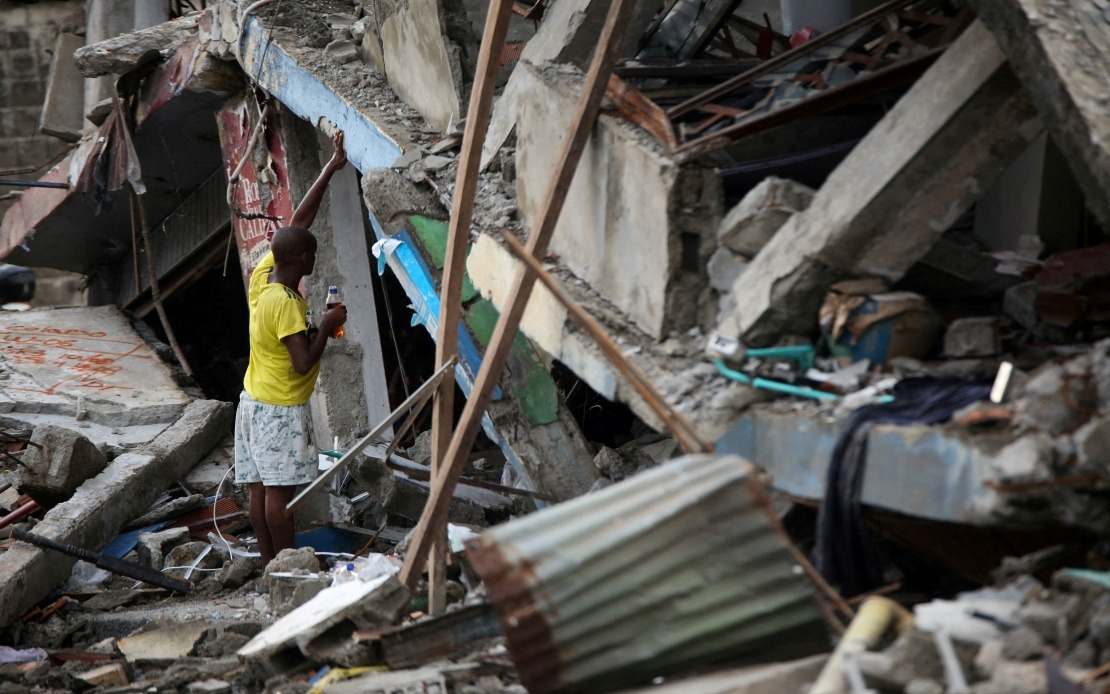
Colombia faces an unprecedented test of its disaster management capacity as the nation grapples with two major natural hazards unfolding simultaneously. Just days after a devastating 7.4 magnitude earthquake struck on August 10, emergency responders are now battling an explosive surge in wildfires across the country, stretching already depleted resources to breaking point. The convergence of these two crises has created a perfect storm for a nation whose recovery infrastructure is buckling under the strain of coordinating multiple fronts of emergency response.
The wildfire situation has spiraled dramatically in scope, with the Institute of Hydrology, Meteorology and Environmental Studies (IDEAM) reporting a staggering 93 per cent increase in red-alert municipalities within a single day. Currently, 344 municipalities across Colombia are operating under red alert status due to wildfire threats—a situation that reflects both the magnitude of the fire emergency and the severity of the environmental conditions driving it. The spread is concentrated in departments including Tolima, Cesar, Norte de Santander, Antioquia, Narino and Santander, where extreme heat and persistent drought have created tinderbox conditions ideal for rapid fire propagation.
The destruction wrought by these blazes has already reached catastrophic proportions. Across multiple municipalities, more than 11,000 hectares of land have been consumed, translating to approximately 27,182 acres of destroyed vegetation, agricultural crops and residential properties. For a developing nation heavily dependent on agriculture and rural livelihoods, this scale of destruction represents not merely an immediate emergency but a serious economic blow that will reverberate through communities for months. The loss of crops threatens food security in affected regions, while the destruction of homes displaces families already traumatized by the earthquake.
Meanwhile, the August 10 earthquake continues to define Colombia's humanitarian emergency. Official reports place the death toll at 288 people, with 4,018 others injured. The infrastructure damage is staggering: 12,504 homes have been completely destroyed, and more than 80,000 structures sustained varying degrees of damage. Reconstruction efforts in earthquake-affected regions were already consuming enormous quantities of personnel, equipment and governmental attention when the wildfire crisis exploded. This timing compounds the challenge exponentially, as resources must now be divided between earthquake recovery and active fire suppression.
Colombian authorities have mobilized an extensive emergency response that draws on multiple agencies and branches of government. The National Unit for Disaster Risk Management has coordinated the deployment of firefighters, military units, emergency personnel and aerial support in an attempt to contain the spreading conflagrations. Firefighting crews from various departments, including Risaralda—itself one of the regions affected by the earthquake—have been dispatched to battle the fires. However, officials have candidly acknowledged severe shortfalls in staffing, indicating that despite mobilizing all available personnel, the nation lacks sufficient workforce to adequately address the scale of the emergency.
The environmental forecast offers little immediate relief and suggests the crisis may persist or intensify. IDEAM projections indicate a 90 per cent probability that the El Niño phenomenon will persist through early 2027, with intense heat anomalies expected to peak toward the end of the current year. This climate outlook means that the conditions driving the current wildfire explosion are likely to persist for an extended period, rendering fire suppression efforts more difficult and increasing the probability of additional major fires in coming weeks and months. The convergence of El Niño effects with seismic vulnerability creates a concerning environmental backdrop for Colombia's recovery efforts.
Adding further complexity to this already strained situation is heightened volcanic activity. The Purace volcano in the southern department of Cauca has shown increased seismic and thermal activity, forcing national risk management agencies to simultaneously monitor and prepare for potential volcanic hazards alongside earthquake recovery and wildfire suppression. This third major natural hazard on the radar represents a diffusion of already-limited governmental attention and emergency resources, creating a scenario where Colombia's disaster management agencies must coordinate response protocols across three distinct natural disasters occurring contemporaneously.
For regional observers, Colombia's crisis offers sobering lessons about climate vulnerability and infrastructure resilience in Latin America. The coincidence of the earthquake with heightened wildfire season exposes the danger of compound disasters—situations where multiple natural hazards strike in overlapping timeframes, overwhelming response capacity beyond what either hazard would create independently. Southeast Asian nations, particularly those situated in seismically active zones like Indonesia and the Philippines, face similar risks from the potential alignment of earthquake activity with dry-season fire threats.
The international dimensions of Colombia's emergency also warrant attention. While the nation possesses significant technical capacity and institutional frameworks for disaster response, the scale of simultaneous emergencies reveals structural limits to national resilience. Neighboring countries, international humanitarian organizations and development partners may find themselves called upon to provide material support, firefighting personnel or evacuation assistance. For Malaysia and other ASEAN members, observing how Colombia mobilizes international assistance amid this dual emergency provides relevant case studies in regional cooperation frameworks during cross-border environmental crises.
Looking ahead, Colombia faces a complex recovery trajectory. Even as firefighting efforts continue, reconstruction from the August 10 earthquake must proceed. The projected persistence of El Niño conditions through early 2027 means that returning to normal fire seasons cannot be assumed for many months. This extended timeframe compounds the challenge of resource allocation, as governmental budgets must stretch to accommodate both immediate emergency response and medium-term reconstruction and prevention efforts simultaneously. The nation's ability to navigate this multi-layered crisis will likely become a reference point for disaster management policy discussions throughout the region.

