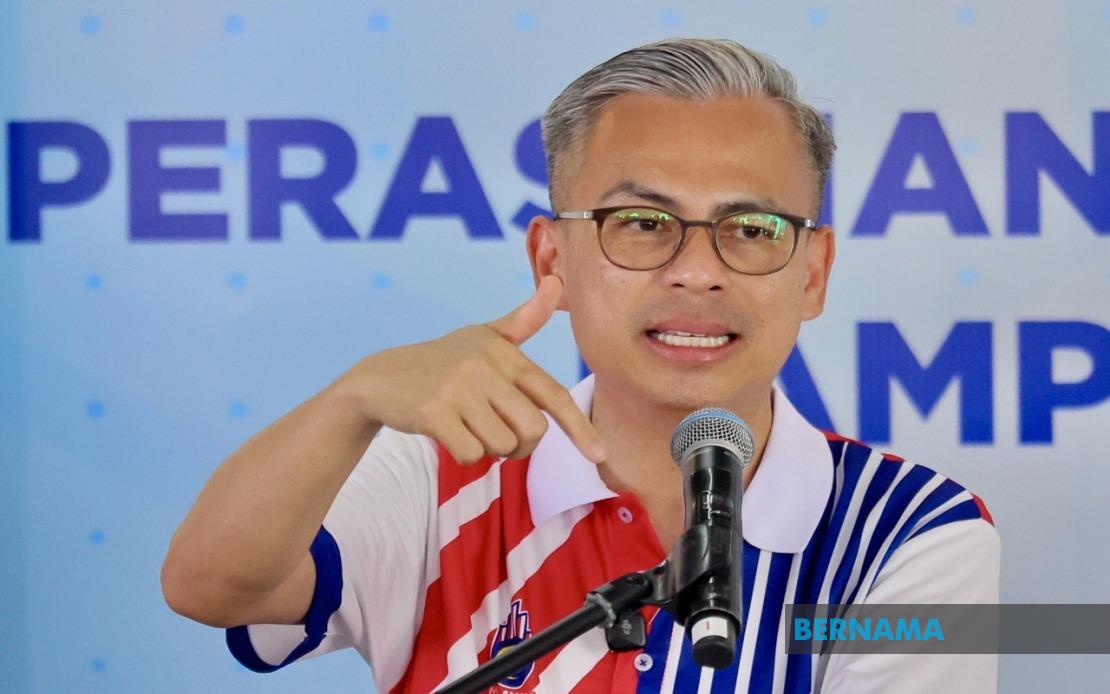
During the intensifying Johor state election campaign, Communications Minister Datuk Fahmi Fadzil has publicly rebuked actors behind a fraudulent WhatsApp account that falsely presents itself as belonging to Pakatan Harapan's Endau state seat aspirant Saiful Nizam Samat. In comments posted to the candidate's official Facebook page, Fahmi characterised the impersonation scheme as indicative of desperation, remarking that those orchestrating such deception would apparently pursue any method to secure electoral victory.
The emergence of this fake account underscores growing concerns about digital manipulation within Malaysian political contests. Saiful Nizam has categorically disowned the WhatsApp profile, which operated under his name and utilised his photograph, emphasising that neither he nor members of his campaign apparatus, collectively referred to as Team SS, had any involvement with the fraudulent channel. The imposter account reportedly engaged directly with voters under the guise of conducting election outreach, an approach that risks misleading the electorate and potentially violating electoral conduct standards.
In his response, Saiful Nizam released screenshots documenting the fake account's communications, which included a self-introduction claiming "I am Saiful Samad, the future Endau assemblyman." These artefacts serve as concrete evidence of the impersonation scheme and its attempt to capitalise on the candidate's name recognition and campaign momentum. The decision to publicly expose the fraudulent account and its tactics reflects a recognition that transparency and swift clarification are necessary to safeguard his electoral integrity and prevent voter confusion.
The incident highlights broader vulnerabilities in campaign communication during electoral periods. WhatsApp, with its encrypted messaging and direct reach to individual subscribers, has become an increasingly prevalent tool for political canvassing in Southeast Asia, including Malaysia. This accessibility, however, simultaneously creates opportunities for bad-faith actors to exploit the platform's personal nature, manufacturing false impressions of direct contact with candidates while evading easy detection or verification.
Saiful Nizam has issued a public advisory urging voters to exercise heightened caution when receiving unexpected political communications, particularly those soliciting personal information. His guidance directs constituents to verify the authenticity of campaign messages through official Team SS channels rather than relying on unsolicited contacts claiming to represent his candidacy. Such warnings have become routine in contemporary Malaysian elections as digital literacy among voters remains uneven across demographic groups.
The Endau constituency itself presents a notably fragmented electoral landscape, with candidates representing four distinct political groupings vying for the seat. Beyond Pakatan Harapan's Saiful Nizam, the race includes competitors from the Barisan Nasional coalition, the Perikatan Nasional alliance, and Parti Orang Asli Malaysia, which advocates specifically for indigenous Malaysian interests. This multi-cornered contest amplifies the stakes for each contender and potentially intensifies the temptation for campaigns to employ ethically questionable tactics to differentiate themselves in a crowded field.
The incident carries implications extending beyond the individual candidate. Fahmi's intervention as a senior cabinet minister signals that the national government views such digital impersonation schemes with gravity, positioning them as threats to electoral integrity. His public rebuke also serves notice to other political actors that flagrant violations of campaign ethics will attract ministerial attention and potential reputational consequences, even if legal remedies remain limited.
From a voter protection standpoint, the exposure of the fake account demonstrates the critical importance of voter education initiatives focused on digital literacy and authentication. Malaysian voters, particularly those less digitally sophisticated or older demographics reliant on WhatsApp as their primary news source, may struggle to distinguish between legitimate campaign outreach and fabricated contacts. The proliferation of such schemes risks eroding public confidence in digital political communication generally and creating confusion that undermines informed electoral participation.
The broader context of Malaysian electoral politics reveals a persistent pattern of campaigns testing the boundaries of acceptable conduct, particularly through digital channels where oversight proves more challenging than traditional media. State-level elections such as the Johor contest frequently become testing grounds for innovative campaign tactics, both legitimate and questionable, that subsequently inform federal-level strategies. The Endau impersonation incident thus offers a microcosm of contemporary Malaysian political competition's digital dimension.
For candidates and campaign teams, the incident reinforces the necessity of proactive reputation management and rapid-response protocols when encountering fraudulent representations. Saiful Nizam's swift public denial, accompanied by supporting evidence, represents a textbook approach to neutralising the potential damage from such schemes. Campaigns operating in environments where misinformation and impersonation pose genuine risks must invest in educating supporters about verification methods and empowering them to report suspected fraudulent activity.
Moving forward, the incident raises questions about platform accountability and the responsibility of social media companies to police impersonation. WhatsApp and comparable encrypted messaging applications have resisted extensive content moderation, citing privacy principles and the technical challenges of monitoring encrypted communications. Yet electoral integrity concerns may necessitate reconsideration of these positions, particularly in jurisdictions where digital platforms have become central to political discourse and where regulatory frameworks remain underdeveloped.

