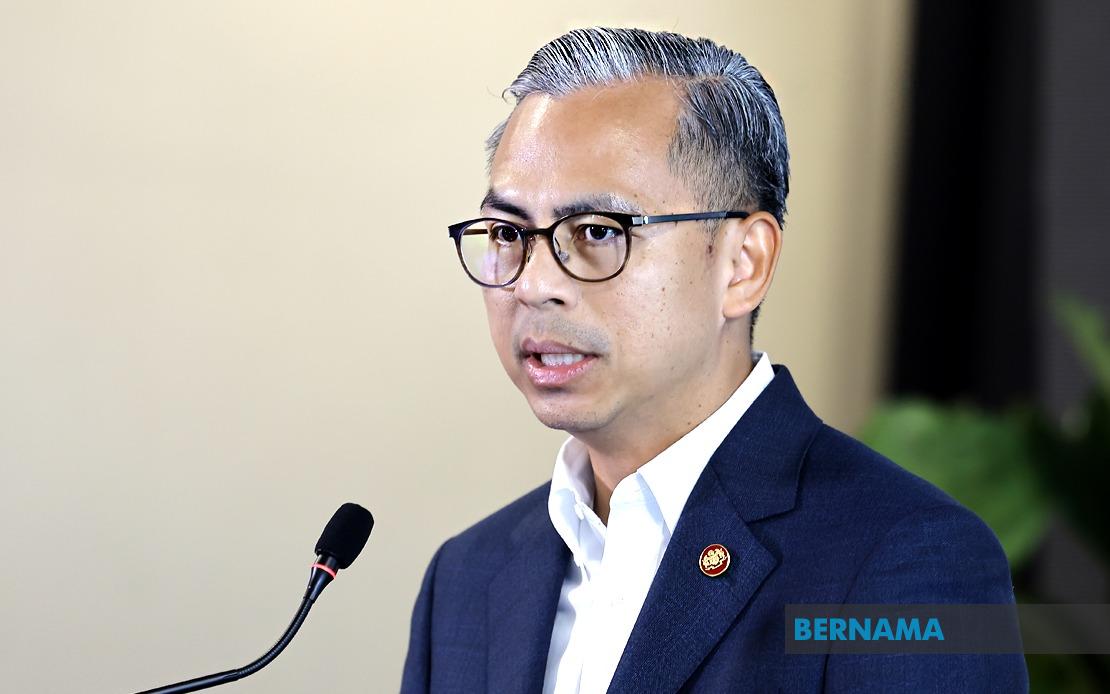
Communications Minister Datuk Fahmi Fadzil will be the most prominent recipient in a sweeping conferment of state honours by Penang, topping the roster of 1,221 individuals to be recognised in an investiture ceremony spanning four days beginning this week. The honours, granted to mark the 85th birthday of Penang Governor Tun Ramli Ngah Talib, represent one of the state's most comprehensive recognition ceremonies in recent years, reflecting the depth of public service and contribution across multiple sectors in Malaysia's northern peninsula.
Fahmi, who additionally serves as spokesperson for the Unity Government, will receive the Darjah Panglima Pangkuan Negeri (DPPN), conferring upon him the title Datuk Seri. His position as sole recipient of this particular honour underscores its prestige and the recognition afforded to his role in national communications and political coordination. The award places Fahmi alongside other senior figures whose contributions have been deemed exceptional by the Penang state administration.
Beyond Fahmi's singular recognition, the honours extend across a broader spectrum of Malaysian society and governance. Nineteen individuals will receive the Darjah Gemilang Pangkuan Negeri (DGPN), also carrying the Datuk Seri designation. This category encompasses a mix of judicial, governmental, and corporate leaders, including Chief Judge of Malaya Datuk Seri Hashim Hamzah, whose position places him at the apex of Malaysia's judicial hierarchy. MARA Incorporated Sdn Bhd chairman Datuk Abdul Halim Mohammad and Invest Penang chief executive officer Datuk Loo Lee Lian round out the DGPN recipients, reflecting recognition of economic development and investment promotion efforts.
The corporate sector features prominently among the DGPN honourees, with Pelita Samudra Pertama (M) Sdn Bhd managing director Tan Sri D. Murugan, Menara Rezeki Sdn Bhd managing director Datuk Saiful Nizam Mohd Yusoff and M Summit Group chairman Datuk Moh See Eng receiving recognition for their business leadership and presumed contributions to Penang's economic landscape. This inclusion demonstrates how state honours increasingly acknowledge the symbiotic relationship between government development objectives and private sector participation in regional growth.
The conferment structure reveals a hierarchical distribution of recognitions, with nine individuals receiving the Darjah Yang Mulia Pangkuan Negeri (DMPN) and 72 others receiving the Darjah Setia Pangkuan Negeri (DSPN), both conferring the Datuk title. Among the DMPN recipients are former Penang police chief Datuk Azizee Ismail and UEM Group Bhd managing director Datuk Amran Hafiz Affifudin, representing security and infrastructure sectors. The DSPN category encompasses a more diverse array of recipients, illustrating how recognition extends to cultural, governance and humanitarian spheres.
Notably, the DSPN honours include the late renowned film actor, director and scriptwriter associated with Cathay-Keris Film Productions, Nordin Ahmad, whose posthumous recognition acknowledges Malaysian cinema's heritage and cultural contributions. The inclusion of National Disaster Management Agency (NADMA) director-general Datuk Meor Ismail Meor Akim reflects growing acknowledgement of disaster preparedness as a critical national function, particularly relevant for Southeast Asian nations vulnerable to natural calamities. Bank Rakyat chairman Datuk Mohd Irwan Mohd Mubarak and Penang Development Corporation (PDC) CEO Abdul Latiff Abd Aziz similarly represent financial inclusion and infrastructure development priorities.
The broader honour categories encompass 92 recipients of the Darjah Johan Negeri, followed by 31 recipients of the Bintang Cemerlang Negeri. The base of the recognition pyramid comprises substantial numbers receiving service medals: 194 individuals receiving the Pingat Kelakuan Terpuji, 328 receiving the Pingat Jasa Kebaktian, 463 receiving the Pingat Jasa Masyarakat and 12 receiving the Pingat Bakti Setia. These lower categories collectively account for over 1,000 recipients, demonstrating how state honours systems recognise grassroots contributions and sustained civic engagement.
According to Penang State Legislative Assembly Speaker and State Government Official Ceremonies Committee chairman Datuk Seri Law Choo Kiang, the investiture ceremony will unfold across four days, commencing tomorrow and continuing through July 13 to 15. The structured approach allows for ceremonial dignity whilst accommodating the logistics of honouring over a thousand individuals. Of the total recipients, 101 will receive state honours whilst the remaining 1,120 will receive awards and medals of merit throughout the multi-day event.
The breadth of recipient categories reveals deliberate policy architecture. Civil service members at state and federal levels feature prominently, as do politicians whose governance contributions merit recognition. Corporate figures and entrepreneurs represent economic dynamism, whilst non-governmental organisations and voluntary bodies reflect civil society engagement. This comprehensive approach ensures that state honours capture contributions across the governance spectrum, from formal administrative structures to informal community organisations that sustain social cohesion.
For Malaysian and Southeast Asian observers, the Penang honours ceremony exemplifies how regional governments balance formal state recognition with practical acknowledgement of diverse contributions to development. The prominence given to economic actors alongside civil servants and cultural figures suggests a governance model integrating private enterprise, public administration and social capital. For those receiving recognition, particularly in the higher categories such as Fahmi's DPPN, the honours carry political and professional weight that may influence their standing in subsequent appointments or policy initiatives.
The timing of honours ceremonies relative to gubernatorial milestones remains common practice across Malaysian states, serving both ceremonial and political functions. They provide opportunity for reflection on developmental progress and for the appointing authority to consolidate relationships with key stakeholders across multiple sectors. In Penang's case, the 85th birthday of Governor Tun Ramli Ngah Talib provides the occasion, though the emphasis falls squarely on recognising recipients' contributions rather than on the Governor's personal celebration.
The conferment of honours to such diverse constituencies, from judges and corporate executives to cultural figures and disaster management officials, underscores how contemporary governance requires coordination across traditionally separate domains. The inclusion of figures from NADMA alongside financial sector leaders suggests recognition that national resilience depends on preparedness and economic stability working in tandem. For Malaysian policymakers observing the honours list, patterns of recognition may offer insights into regional development priorities and the types of contributions deemed worthy of formal state sanction.

