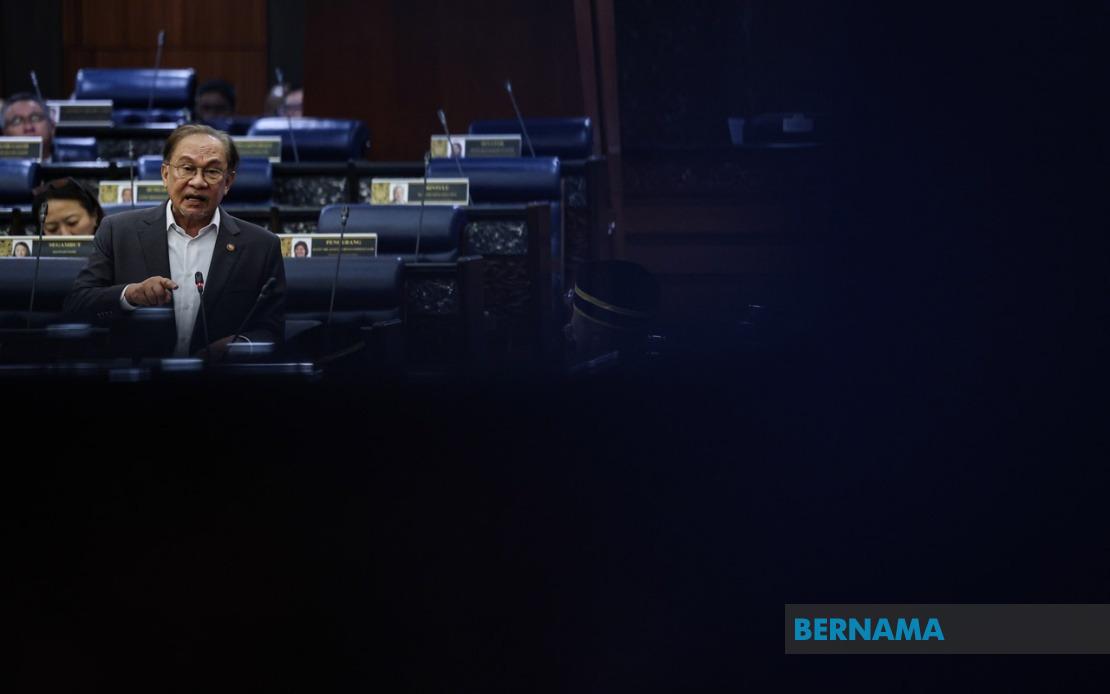
Prime Minister Datuk Seri Anwar Ibrahim has introduced a significant procedural safeguard for journalists in Malaysia, announcing that complaints lodged against media practitioners will no longer trigger automatic investigations or legal action. Instead, all grievances must first pass through the Malaysian Media Council (MMM) for independent assessment. This policy shift, announced during parliamentary Question Time on July 7, represents a deliberate attempt to balance governmental accountability concerns with protections against what the premier characterises as frivolous or politically motivated complaints.
The mechanism reflects Anwar's broader commitment to ensuring that journalists operate within a framework that is both fair and transparent. According to the Prime Minister, the MMM will function as a critical filtering body, examining whether complaints warrant further investigation before any formal proceedings commence. This approach seeks to prevent media practitioners from being ensnared in lengthy legal processes simply because a government department or official feels slighted by critical reporting. The establishment of this institutional buffer is intended to restore public confidence in Malaysia's handling of press-related grievances and demonstrate that media oversight is conducted independently rather than at the behest of executive power.
Anwar's clarification addresses longstanding concerns about Malaysia's legal architecture, particularly the Sedition Act 1948 and the Official Secrets Act 1972, both of which carry provisions that permit journalists to face prosecution. Critics have long argued that these statutes, even if theoretically neutral in language, create a chilling effect on press freedom because their broad wording enables authorities to prosecute journalists with relative ease. The Prime Minister acknowledged during his parliamentary response that while no democratic society grants absolute press freedom and that both journalists and government leaders remain bound by law, the system should not be weaponised against media organisations through hasty or vindictive enforcement.
The practical effect of this new policy is substantial. Previously, a complaint from any source could potentially initiate a formal investigation through police or prosecution authorities, placing the burden on journalists to defend themselves through the courts. Under the revised arrangement, the MMM will first evaluate whether the complaint contains merit and whether it raises genuine issues of misconduct or breaches of professional standards. This preliminary review stage introduces proportionality into the complaints mechanism, distinguishing between trivial grievances and substantive matters warranting further scrutiny. By filtering out unfounded complaints at the council level, the system aims to protect journalists from harassment while maintaining accountability for genuine ethical lapses.
Anwar's comments in the Dewan Rakyat were prompted by a question from Datuk Mohd Isam Mohd Isa, the BN representative for Tampin, concerning the government's position on legislation that permits journalist prosecutions. The response reflected an administration attempting to navigate the tension between maintaining law and order and respecting editorial independence. The Prime Minister articulated a vision in which journalists should not be "easily dragged into cases" simply because government departments feel criticised, underscoring that press scrutiny is an inherent feature of democratic governance rather than grounds for punitive action.
For Malaysian journalists and media organisations, this development offers meaningful protection against arbitrary prosecutions. The MMM's role as a prerequisite screening body provides institutional space for reasonable assessment before state machinery is deployed against media practitioners. This is particularly important in a Southeast Asian context where press freedom rankings have been a source of diplomatic friction and international concern. Malaysia's positioning on global press freedom indices has influenced perceptions of the country's commitment to democratic values, and procedures that demonstrate fair treatment of journalists contribute to improved international standing.
The establishment of the MMM as a first-level gatekeeper also acknowledges practical realities about complaints involving media. Many grievances arise from subjective disputes about fairness, accuracy, or tone rather than clear violations of law. The council can apply professional journalistic standards, consulting established codes of conduct and industry best practices, to assess whether formal legal investigation is warranted. This expertise-based filtering is more nuanced than a binary prosecutorial decision and better positioned to distinguish between legitimate complaints and those motivated by political antagonism.
However, the effectiveness of this system depends critically on the MMM's actual independence and the respect accorded to its determinations by enforcement agencies. If the council is perceived as partisan or if authorities ignore its recommendations, the protective mechanism becomes merely performative. The government must ensure that the MMM possesses genuine autonomy, with membership drawn from across the media landscape and civil society, and that its decisions carry sufficient weight that prosecutors and investigators treat them as binding rather than advisory.
Anwar's assurance that journalists will not be "penalised simply because a complaint has been lodged" represents a departure from historical practice in Malaysia, where aggressive use of sedition and official secrets charges against journalists created an atmosphere of legal jeopardy around critical reporting. The new arrangement signals an intent to depoliticise the complaints process and subject it to institutional review by peers within the media profession rather than leaving it entirely to government prosecutorial discretion. This shift acknowledges that media accountability should be enforceable through professional mechanisms and the marketplace of ideas before resorting to criminal law.
The broader implication for Malaysian governance is that Anwar's administration is attempting to recalibrate the relationship between state power and press independence. Rather than abolishing or significantly amending restrictive legislation—which would require parliamentary action—the government is introducing administrative procedures that constrain how those laws are applied. This represents a middle path between maintaining statutory frameworks that critics view as overly broad and wholesale legal reform that might face political obstacles.
Regionally, Malaysia's approach may influence how other Southeast Asian governments address similar tensions between governance and media freedom. Countries across the region face comparable challenges managing press criticism while maintaining public order, and institutional solutions like the MMM framework could offer models for balancing these competing interests. The extent to which Malaysia's system succeeds in protecting journalists while preventing genuine abuses will be watched closely by media freedom advocates and policymakers throughout the region.
Moving forward, the critical test will be implementation. The principles Anwar articulated must translate into consistent practice, with the MMM functioning as a genuine independent body rather than a rubber-stamping apparatus for government positions. Transparency regarding how complaints are handled, which are referred onward, and why will be essential to establishing the council's credibility. Should the system operate fairly and visibly, it could become a model for managing press-related grievances in a manner that respects both journalistic independence and legitimate public accountability.

