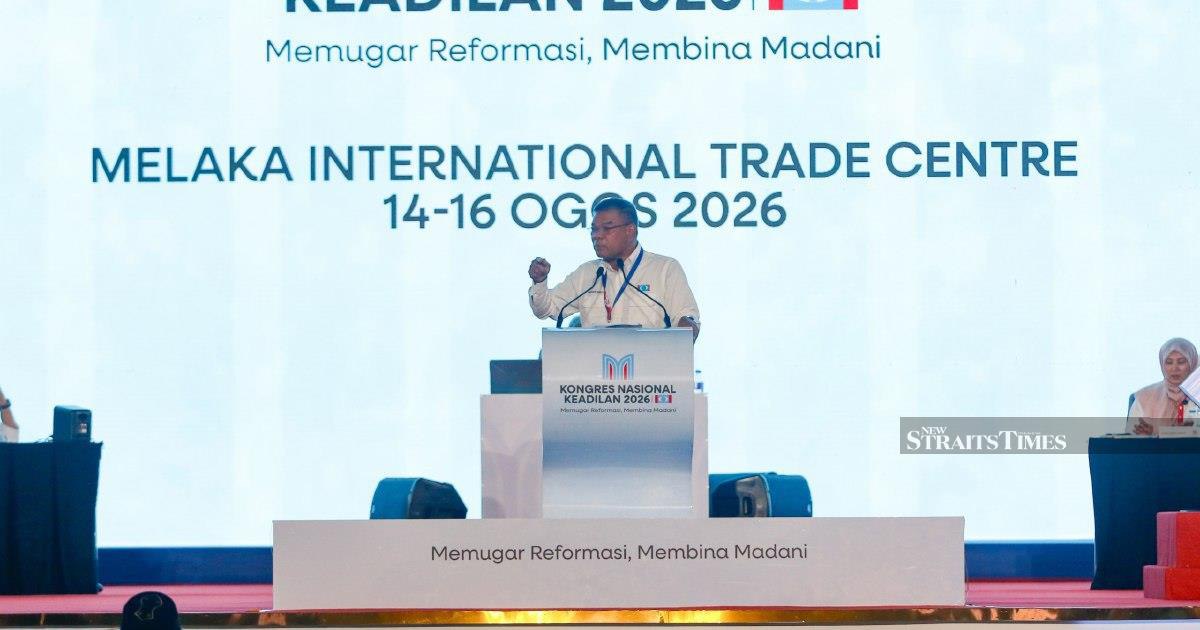
PKR vice-president Datuk Seri Saifuddin Nasution Ismail has warned that Malaysia's ongoing battle against corruption risks becoming distorted if allowed to veer into racial or religious territory, instead advocating for a unified, principles-based approach to tackling graft. Speaking at an event in Ayer Keroh, he stressed that the nation's anti-corruption agenda must be anchored firmly in questions of ethics, institutional integrity, and proper governance rather than weaponised as a tool for deepening social divisions.
The intervention comes at a critical moment in Malaysia's anti-corruption narrative. Despite significant institutional reforms and high-profile prosecutions over recent years, questions persist about whether enforcement mechanisms operate with consistent impartiality across all communities and political groups. By framing the conversation around universal principles of accountability and moral rectitude, Saifuddin appears to be signalling PKR's commitment to holding all wrongdoers to the same standard, regardless of background.
Malaysia's history demonstrates the dangers of politicising integrity issues. When anti-corruption becomes entangled with identity politics, it inevitably erodes public trust in enforcement institutions and divides the country along existing fault lines. The electorate becomes less interested in substantive governance questions and more preoccupied with perceptions of selective prosecution or preferential treatment. This fragmentation weakens the democratic accountability that underpins effective anti-corruption work.
Saifuddin's emphasis on the moral dimension of the fight against graft reflects a sophisticated understanding of how anti-corruption campaigns succeed or fail. When citizens view anti-corruption as a shared national project rooted in widely accepted ethical principles—honesty, transparency, accountability—rather than as one faction attacking another, institutional actors gain greater legitimacy and political space to operate. This legitimacy proves essential when pursuing cases that might otherwise be dismissed as partisan persecution.
The governance aspect carries particular weight in the Malaysian context. Institutional strength, rule of law, and procedural fairness are prerequisites for any credible anti-corruption regime. When these elements are weakened by political interference or selective application, corruption itself paradoxically becomes harder to combat, as institutions lose the autonomy and public confidence necessary to investigate and prosecute effectively. Saifuddin's framing implicitly acknowledges this challenge.
Regional observers note that Southeast Asia grapples with similar tensions between necessary anti-corruption work and the risk of politicisation. Countries across the region have experienced cycles where anti-graft campaigns initially enjoy public support but gradually lose credibility when perceived as targeting one group disproportionately. Malaysia's approach—whether individual politicians genuinely embrace it or merely give it rhetorical support—will likely influence how neighbouring nations calibrate their own anti-corruption strategies.
The business community and civil society organisations have long advocated for precisely this kind of depoliticised anti-corruption agenda. Investors, both domestic and foreign, require confidence that the regulatory environment operates according to transparent, consistently applied rules. When corruption cases become clouded by questions about political motivation, investor confidence inevitably suffers, with ripple effects throughout the economy. Malaysia's regional standing as a financial hub depends partly on perceptions that governance standards are applied impartially.
Yet translating Saifuddin's stated principles into consistent practice remains challenging. Political parties across the spectrum have historically adjusted their anti-corruption rhetoric depending on whether they held power. The test of sincerity lies in whether public statements like these translate into internal party discipline and unwavering support for institutions investigating wrongdoing by party members. Observers will watch whether PKR's actions match its words as anti-corruption cases evolve.
The international dimension also warrants consideration. Malaysia's commitments under the United Nations Convention Against Corruption and other multilateral frameworks obligate the nation to pursue anti-corruption with institutional independence and non-discrimination. International observers monitoring Malaysia's governance trajectory will assess whether local political elites are genuinely moving towards depoliticised enforcement or merely offering convenient rhetoric. The country's reputation for integrity contributes to its soft power and diplomatic standing in the region.
For ordinary Malaysians, the stakes are tangible. When public resources disappear through corruption, it affects everything from healthcare provision to education quality to infrastructure investment. Yet mobilising the political will to prosecute graft consistently becomes nearly impossible when citizens believe the system operates unfairly. Saifuddin's emphasis on universal moral principles and sound governance directly addresses this legitimacy challenge, framing anti-corruption as a cause that transcends factional interest.
Moving forward, the coherence of Malaysia's anti-corruption framework will depend on whether political figures across party lines genuinely embrace this non-partisan approach or treat it as temporary positioning. The institutions responsible for investigation and prosecution—including the Malaysian Anti-Corruption Commission—require sustained political protection and resource allocation to fulfil their mandates effectively. When that protection becomes contingent on results favoring particular factions, institutional capacity inevitably corrodes.
The path forward demands that Malaysia's political leadership, including voices like Saifuddin's within PKR, continue prioritising the principles he articulated. This requires resisting short-term temptations to weaponise investigations against rivals, maintaining consistent standards across all cases regardless of the accused's community or political affiliation, and building public messaging around governance excellence rather than factional advantage. Only sustained commitment to these principles will transform anti-corruption from a periodic political flashpoint into a permanent feature of Malaysia's governance culture.

