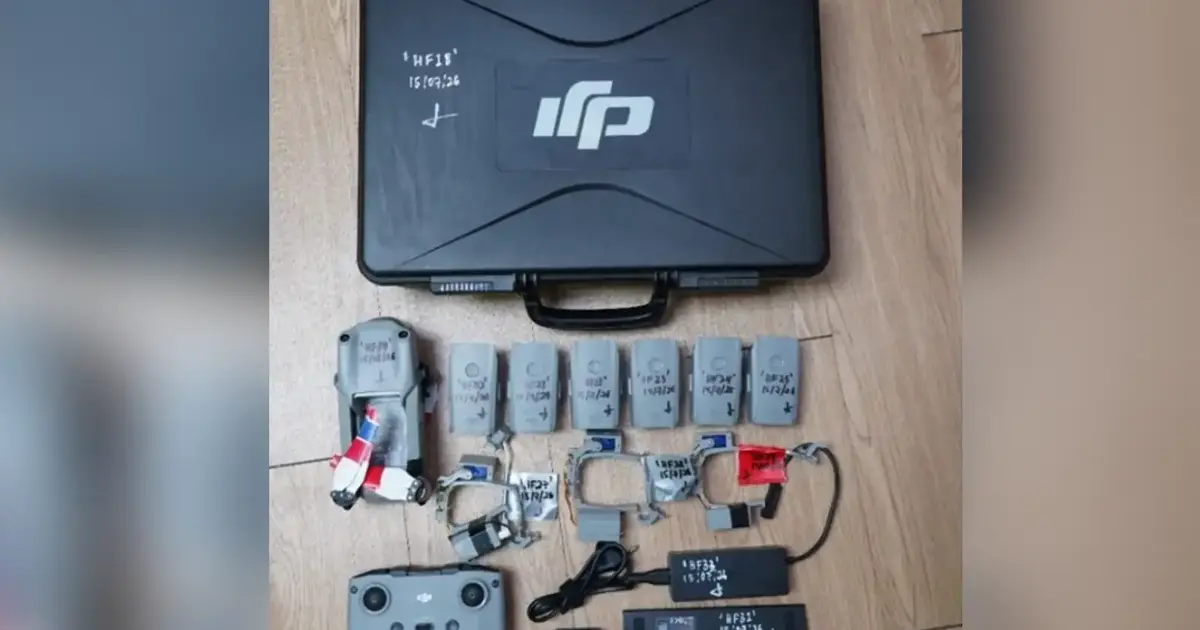
Police in Melaka have apprehended a couple suspected of attempting to deliver contraband tobacco into the state's prison facility through an unmanned aerial vehicle, marking another instance of creative smuggling attempts at Malaysian correctional institutions. The Melaka police chief has indicated that the operation appeared to involve coordination with a person currently held in custody at the prison, suggesting a more organised arrangement than a simple opportunistic smuggling effort.
Drone-based smuggling represents an evolving challenge for prison authorities across Southeast Asia. The technology's accessibility, relatively low cost, and ability to bypass traditional security perimeters have made it an attractive method for those seeking to introduce prohibited items into facilities. Unlike conventional approaches requiring contact with prison boundaries or collaboration with staff, unmanned aircraft can operate remotely and deposit payloads without direct physical presence, complicating detection and prevention efforts.
Tobacco remains one of the most frequently smuggled items into Malaysian prisons, driven by both addiction and its significant black-market value within correctional institutions. Incarcerated individuals facing restrictions on purchasing conventional cigarettes often pay premium prices for contraband tobacco products, creating financial incentives for external suppliers. The profitability of such operations frequently motivates criminal networks to develop increasingly sophisticated delivery methods.
The involvement of an alleged inmate collaborator points to the persistent challenge of maintaining communication and control channels within prison walls. Despite security protocols, individuals in custody frequently maintain contact with associates outside through various means, enabling them to coordinate smuggling operations and direct deliveries to specific locations within facilities. This internal-external coordination significantly increases the likelihood of successful contraband introduction compared to random smuggling attempts.
Malaysian correctional facilities have intensified scrutiny of technological vulnerabilities following previous incidents involving drones and other remote delivery systems. Prison authorities have implemented counter-drone measures at certain facilities, including detection systems and restricted airspace protocols. However, the persistent nature of smuggling attempts suggests that institutional countermeasures remain incomplete or that new methods continue to outpace security adaptations.
The specific circumstances surrounding this particular incident reveal the opportunistic nature of criminal activities targeting incarcerated populations. The deployment of a drone to deliver contraband demonstrates how ordinary commercial technology becomes weaponised by those seeking to circumvent security infrastructure. The relative simplicity of such operations, requiring only basic remote piloting skills and a modest financial investment, ensures continued attempts despite known risks of apprehension.
Investigations into such cases typically extend beyond the immediate participants to identify the broader network facilitating the smuggling operation. Authorities generally seek to determine whether the arrested couple operated independently or functioned as part of larger criminal enterprises specialising in prison contraband distribution. Understanding the organisational structure behind such attempts proves crucial for disrupting systematic smuggling networks rather than addressing isolated incidents.
The arrest and subsequent investigation also highlight the importance of vigilant observation by correctional staff and the broader security perimeter surrounding prisons. Ground-based surveillance, coupled with awareness training for officers regarding unusual aerial activity, contributes to early detection of smuggling attempts. However, the challenge intensifies as smugglers adapt their methods in response to known countermeasures, creating an ongoing technological arms race within the correctional system.
For Malaysian policymakers and prison administrators, incidents such as this underscore the necessity of contemporary security investments. Facilities require adequate funding for modern detection technology, staff training programmes, and personnel deployment to identify and prevent contraband introduction through emerging methods. The relatively low operational cost of drone smuggling compared to its potential disruption to facility order and security necessitates proportionate defensive investment.
Regionally, this incident reflects challenges faced by correctional systems across Southeast Asia as technology becomes democratised and criminal adaptability increases. Neighbouring countries experience similar issues, and information sharing regarding new smuggling methodologies and effective countermeasures strengthens collective capacity to address these problems. International cooperation in developing counter-drone protocols for correctional facilities represents an underexplored avenue for regional security enhancement.
The broader implications extend to resource allocation within Malaysia's criminal justice system. While substantial public attention focuses on crime investigation and prosecution, the operational demands of prison security receive comparatively limited discussion. Enhanced security measures require sustained funding commitments, yet budgetary pressures often result in deferred investments in correctional infrastructure and technology.
Moving forward, the effectiveness of response to drone-based smuggling will likely depend on balancing technological solutions with personnel training and intelligence gathering. Prison authorities must develop intelligence networks capable of identifying planned smuggling operations before execution, rather than reactively responding to apprehended smugglers. Cooperation with local law enforcement, intelligence agencies, and community informants strengthens preventive capacity.
Ultimately, this incident reinforces that maintaining secure and orderly correctional facilities requires continuous evolution of both security measures and investigative methodologies. The arrest of this couple provides investigators with opportunities to map networks and disrupt ongoing smuggling operations targeting Malaysian prisons, potentially yielding intelligence benefiting broader correctional security efforts.

