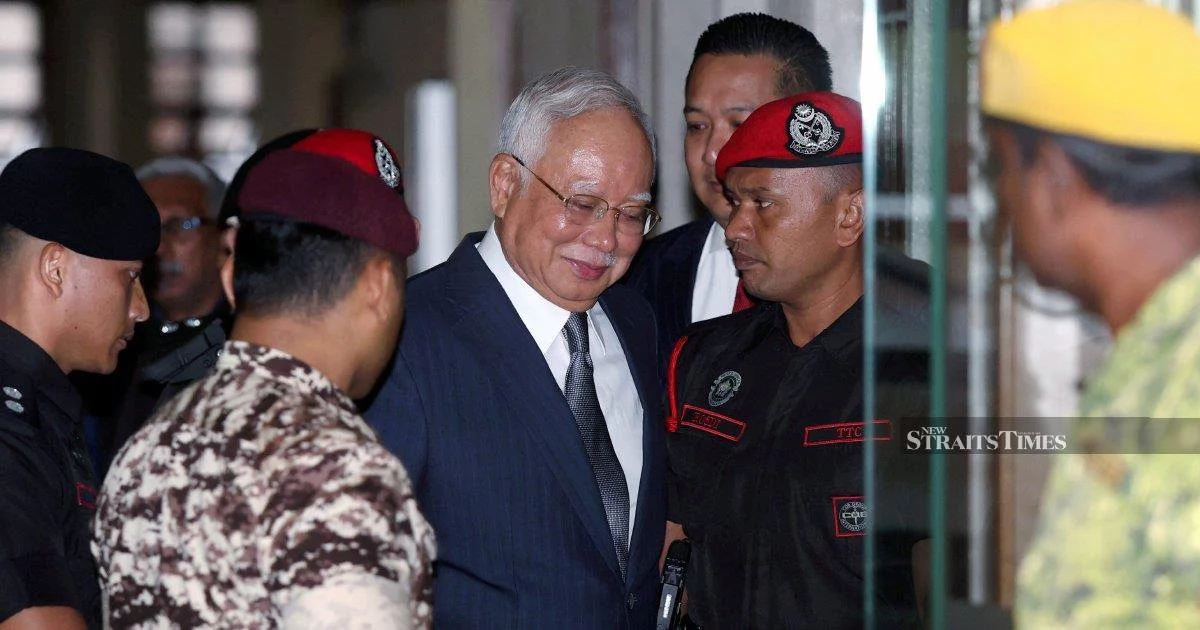
A Malaysian judge has determined that former Prime Minister Datuk Seri Najib Razak and fugitive businessman Low Taek Jho functioned as deliberate partners in orchestrating the massive theft of billions of ringgit from 1Malaysia Development Bhd, the state investment vehicle that became synonymous with one of the world's largest financial scandals. The court's finding represents a significant legal conclusion that ties the two central figures directly together through evidence of coordinated action rather than treating them as independent actors exploiting the same institution.
The judicial determination carries profound implications for understanding how the 1MDB scheme actually operated. Rather than portraying the fund's collapse as the result of separate opportunistic schemes, the court has established that Najib and Jho Low functioned as partners in a concerted enterprise to systematically divert state resources. This coordinated approach suggests a deliberate architecture designed to obscure the true beneficiaries of the siphoned funds and to shield the conspiracy from detection by creating layers of complexity across multiple jurisdictions and financial instruments.
For Malaysian observers, this ruling reinforces what many analysts have long suspected: that the 1MDB scandal represented not merely individual corruption or isolated fraud, but rather a carefully orchestrated conspiracy involving multiple layers of state machinery. The determination that Najib worked hand-in-hand with Jho Low means that the fund's governance structures, approval processes, and oversight mechanisms were compromised at the highest levels, creating a permissive environment for theft at an unprecedented scale.
The significance of establishing Jho Low's role as a coordinated partner rather than a subordinate actor cannot be overstated. Jho Low, though operating largely in the background without official position, wielded sufficient influence over state resources to influence decisions affecting billions of ringgit. This dynamic raises fundamental questions about how a businessman without formal government authority managed to exert such decisive power over a sovereign wealth fund, and what mechanisms of access and leverage he possessed within the Malaysian state apparatus.
The court's findings also illuminate the international dimensions of the conspiracy. The siphoning operation required movement of funds across multiple countries, coordination with financial institutions in various jurisdictions, and the establishment of shell companies and offshore structures in places like the United States and elsewhere. By establishing that Najib and Jho Low worked in concert, the court has effectively demonstrated that the conspiracy required sustained coordination across transnational networks, implicating not just individual greed but systematic abuse of Malaysia's international financial relationships and reputation.
For regional observers across Southeast Asia, the judgment carries cautionary implications about the vulnerabilities of sovereign wealth funds and state investment vehicles generally. The 1MDB model was ostensibly designed to channel national resources toward productive economic development and strategic investments. Instead, it became an instrument through which state authority was weaponised for private enrichment. Similar institutional arrangements exist across other regional economies, and the Malaysian case demonstrates the catastrophic consequences when adequate checks and balances fail to constrain those wielding executive authority.
The practical consequences of the court's determination extend beyond mere accountability for past crimes. Finding that Najib and Jho Low worked in deliberate coordination strengthens the legal foundations for asset recovery efforts. International authorities pursuing stolen funds can leverage the finding that the conspiracy was orchestrated at the highest levels of Malaysian governance, potentially facilitating the recognition and return of seized assets that might otherwise be contested on technical grounds. Several countries have already recovered funds traced to 1MDB, and this judicial determination may facilitate further recovery operations.
The ruling also shapes the narrative about institutional failure within Malaysia's governance structures. When a sitting Prime Minister coordinates with a private businessman to systematically drain state resources, the failure extends across multiple institutional layers: the board of directors of 1MDB, the Finance Ministry's oversight responsibilities, parliamentary scrutiny mechanisms, and the financial intelligence units tasked with detecting unusual transactions. Understanding Najib and Jho Low as coordinated rather than independent actors underscores the comprehensive penetration of the conspiracy through Malaysian institutions.
The international response to this judgment warrants attention. Western governments and their law enforcement agencies have been engaged in tracking 1MDB proceeds and disrupting the networks through which stolen funds were laundered. The court's determination that the conspiracy was orchestrated by Malaysia's highest-ranking official provides international partners with clearer evidentiary foundations for pursuing financial networks, prosecuting intermediaries, and demanding accountability from financial institutions that facilitated the scheme.
For Malaysian civil society and reform advocates, the judgment validates years of investigative journalism and public pressure that kept the 1MDB scandal in the political consciousness. The court has essentially affirmed that what many Malaysians suspected was true: their country's resources were systematically looted through an arrangement that united the state's chief executive with a businessman operating from the shadows. This finding underscores the necessity for institutional reforms ensuring greater transparency in sovereign wealth fund operations, enhanced parliamentary oversight, and more robust independent auditing mechanisms.
The implications extend to Malaysia's international standing and the broader question of institutional credibility. A finding that the Prime Minister coordinated in stealing billions of ringgit from a state fund inflicts lasting damage to confidence in Malaysian governance. Rebuilding that confidence requires not just legal accountability for past misconduct but demonstrable reform of the institutional structures that proved so vulnerable to abuse at the highest levels.