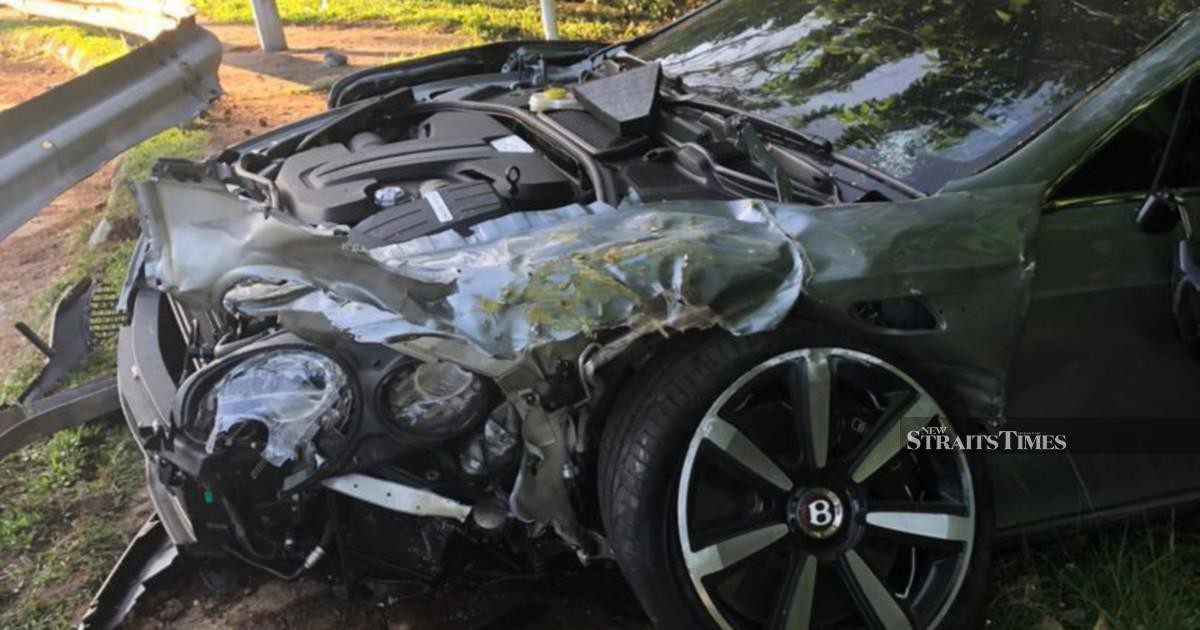
The Court of Appeal in Putrajaya handed down a decision today backing the High Court's earlier judgment, which had mandated that an insurance company reimburse a local businessman RM900,000 for indemnity claims arising from damage sustained by his Bentley Continental GTS V6 MDS in an accident that occurred six years ago. This affirmation marks a significant victory for the claimant and reinforces important legal precedents regarding insurance coverage obligations and the valuation of high-end motor vehicle damage in Malaysia.
The case, which had wound through Malaysia's judicial system over multiple years, centred on the insurer's responsibility to honour the compensation claim following the incident. The businessman's pursuit of the RM900,000 amount reflects both the significant repair costs associated with luxury European vehicles and the standard of proof required by courts to validate such substantial claims. The decision demonstrates the judiciary's willingness to enforce contractual obligations between insurers and policyholders, even when the sums involved are considerable.
Bentley Continental models, particularly the GTS V6 variant, represent the upper echelon of luxury automotive purchases, with purchase prices and maintenance costs substantially exceeding typical Malaysian passenger vehicles. Repair costs for vehicles of this calibre can escalate dramatically following accident damage, as specialized parts, expert technicians, and bespoke restoration work command premium pricing. The RM900,000 payout therefore reflects not merely the cost of materials and labour, but the comprehensive nature of restoration required to return such a sophisticated machine to pre-accident condition.
The extended timeframe between the original accident and today's Court of Appeal decision—spanning six years—illustrates the complexities and procedural stages involved in high-value insurance disputes in Malaysia. Multiple court hearings, evidence presentations, and legal arguments across different judicial levels consume significant time and resources. For the businessman involved, this protracted legal journey underscores the challenges that luxury car owners sometimes encounter when navigating insurance claims for substantial damage, despite having apparently valid policy coverage.
Insurance regulation in Malaysia typically requires companies to demonstrate clear grounds for denying or reducing claims, including policy exclusions, misrepresentation by the policyholder, or breach of policy conditions. The fact that the High Court initially ruled in the businessman's favour, and the Court of Appeal subsequently upheld this decision, suggests the insurance company's defences were found wanting under judicial scrutiny. This reinforces the principle that insurers cannot arbitrarily reject legitimate claims, particularly when policyholders have fulfilled their contractual obligations.
The ruling carries implications beyond this single dispute, as it establishes or reinforces legal benchmarks for how Malaysian courts evaluate insurance obligations in motor vehicle damage cases. Other policyholders and insurers monitoring the decision may adjust their approaches to claims handling, settlements, and dispute resolution accordingly. The precedent emphasises that courts will examine the factual basis of claims rigorously, but will ultimately enforce insurers' payment obligations when evidence supports the claimant's position.
From a broader consumer protection perspective, this decision demonstrates that Malaysia's judicial system provides recourse for individuals facing resistance from insurance providers over legitimate claims. However, the six-year timeline also highlights how prolonged and costly such disputes can become, potentially encouraging both parties to pursue earlier settlement negotiations to avoid lengthy litigation. For Malaysian consumers holding comprehensive or special coverage policies for high-value vehicles, the decision offers some assurance that courts will uphold their rights when disputes arise.
Luxury vehicle ownership in Malaysia, while concentrated among higher-income individuals and business owners, represents a distinct market segment with particular insurance and liability considerations. Premium vehicles often attract greater insurance costs and scrutiny, yet buyers reasonably expect their insurers to honour legitimate claims. This decision reinforces that expectation, establishing that even substantial payouts for damage to expensive automobiles will be enforced when courts determine claims to be valid.
The Court of Appeal's decision reflects Malaysia's continuing development of nuanced case law governing insurance contracts and dispute resolution. As Malaysia's automotive market includes an increasing number of luxury imports and locally-registered premium vehicles, clarifying the responsibilities of insurers and the rights of policyholders becomes increasingly important. This judgment contributes to that evolving legal landscape, providing clarity for future disputes of similar nature and complexity.
Looking forward, the decision may prompt insurance companies to refine their claims assessment procedures, ensuring that decisions to reject or reduce payouts are firmly grounded in policy terms and defensible evidence. Similarly, policyholders contemplating disputes with insurers may draw confidence from this ruling that Malaysian courts will thoroughly examine such cases and enforce valid claims. The RM900,000 payout represents not merely compensation for one businessman's accident, but an affirmation of contractual principles and consumer protections within Malaysia's insurance industry.

