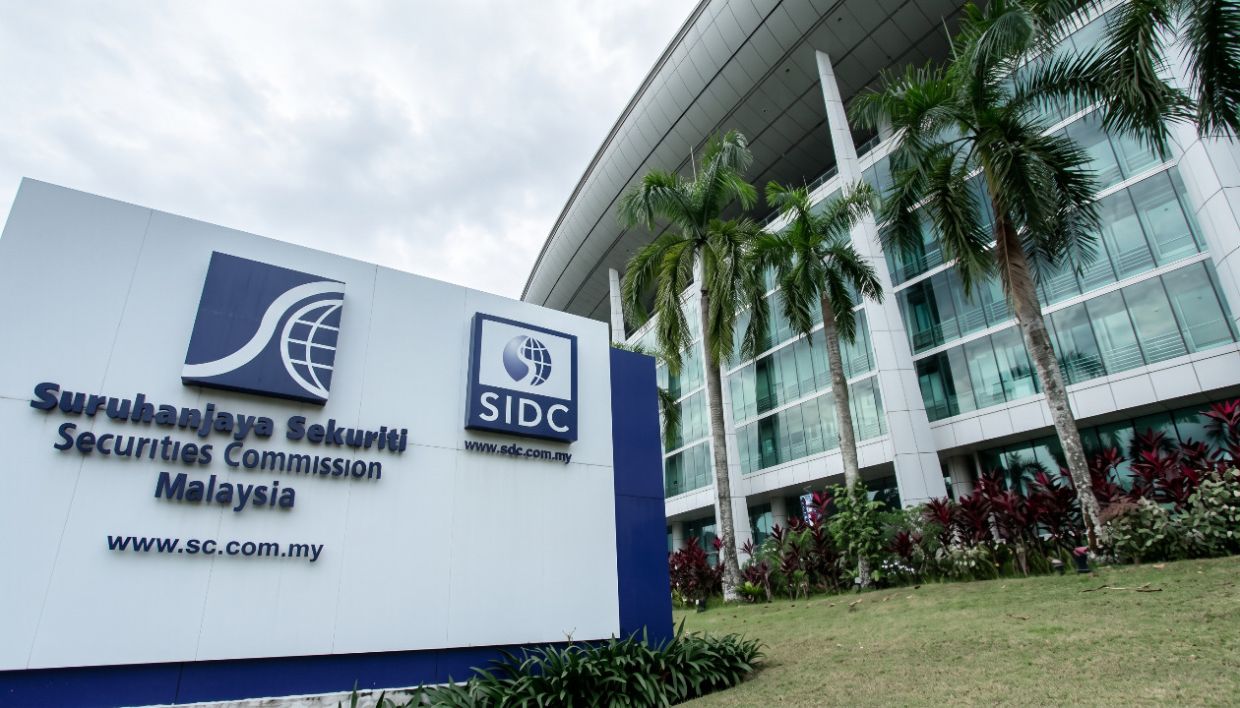
A three-judge bench at Malaysia's Court of Appeal has delivered a significant victory for the Securities Commission by rejecting Ricky Wong's attempt to overturn a sweeping asset freeze affecting him, his associate Teh Sew Wan, and their corporate vehicle Wong SK Holdings Sdn Bhd. The appellate court's Monday ruling maintained the High Court's injunction, which had previously frozen up to RM169.2 million in combined assets and properties belonging to the defendants pending resolution of civil fraud allegations. The decision represents a decisive legal setback for Wong and reinforces the regulator's enforcement powers in pursuing suspected securities violations.
The Securities Commission's legal victory extends back nearly six years, tracing to an ex parte injunction first granted by the High Court in May 2020. This initial freezing order was subsequently reinforced on April 28, 2022, when the court issued a broader inter partes injunction formalising the asset restrictions. The appellate bench, comprising Justices Datuk Ravinthran N. Paramaguru, Datuk Dr Choo Kah Sing, and Datuk Leonard David Shim, found no grounds to overturn either decision. The court also dismissed the appellants' request to have the original May 2020 ex parte order set aside, effectively closing multiple avenues for the defendants to challenge the asset restrictions.
Wong and his associates now face a costly legal aftermath beyond the frozen assets themselves. The Court of Appeal ordered them to pay RM200,000 in legal costs to the Securities Commission, a financial penalty imposed alongside the ongoing asset freeze. This cost award reflects the judiciary's assessment that the appeal lacked sufficient merit and may have been pursued without adequate legal justification. For defendants facing protracted civil litigation, such cost orders amplify the financial burden of defending their case through multiple court levels.
The underlying civil dispute centres on allegations that Wong and his entities violated Section 179 of the Capital Markets and Services Act 2007, which addresses securities fraud and related market misconduct. The Securities Commission initiated legal proceedings in 2020, alleging contraventions within Malaysia's tightly regulated securities sector. The specifics of these alleged breaches—whether involving false disclosures, market manipulation, or unauthorised dealing—form the contested factual foundation that the High Court will continue examining as the case progresses through trial.
The litigation timeline underscores the prolonged nature of complex securities enforcement actions. With the trial currently scheduled to resume on September 1, 2026, the case faces at least another two years of judicial proceedings before any final determination. This extended timeframe reflects both the technical complexity of securities fraud allegations and the burden of judicial calendars in Malaysian courts. Throughout this extended process, the RM169.2 million in frozen assets remains inaccessible to the defendants, creating significant operational constraints for their business activities.
Beyond civil remedies, Wong's legal troubles extend into the criminal sphere. The Securities Commission has flagged that Wong remains at large and is simultaneously wanted in connection with criminal charges under the Anti-Money Laundering, Anti-Terrorism Financing and Proceeds of Unlawful Activities Act 2001, as well as separate offences under the Capital Markets and Services Act. This dual civil-criminal approach represents an increasingly common enforcement strategy deployed by Malaysian regulators, combining immediate asset seizure through civil injunctions with parallel criminal investigations. The criminal dimension introduces additional jeopardy, potentially exposing Wong to imprisonment if convicted.
The asset freeze mechanism itself carries significant practical implications beyond the frozen amount. The injunction order prohibits any person from knowingly assisting or facilitating transactions involving the appellants' assets and properties. This expansive language effectively criminalises third-party participation in any dealings, creating a compliance burden for financial institutions, property professionals, and other service providers who might otherwise transact with the frozen assets. Such provisions serve to enhance the practical effectiveness of asset freezes by eliminating workarounds through intermediaries.
The Securities Commission's enforcement action reflects broader regulatory concerns about securities market integrity in Malaysia. The regulator's willingness to pursue multi-year litigation and seek criminal referrals signals heightened vigilance against market misconduct. For Malaysian investors and financial market participants, the aggressive pursuit of this case demonstrates that the Securities Commission possesses both the institutional will and legal tools to pursue suspected violators across multiple jurisdictional pathways, from civil asset freezes to criminal prosecution under money laundering legislation.
Wong's absence from Malaysia adds another layer to the enforcement challenge. With the defendant at large, the Securities Commission has appealed to the public for information regarding his whereabouts, suggesting his location remains unknown to authorities. This fugitive status complicates enforcement of the asset freeze and creates obstacles for serving legal documents or securing his appearance at trial. International cooperation mechanisms may eventually become necessary if Wong is determined to have fled to another jurisdiction, potentially triggering requests through Interpol or bilateral extradition frameworks.
The legal representation involved in this high-stakes litigation reflects Malaysia's complex commercial law practice. The Securities Commission deployed a substantial legal team comprising in-house counsel Mohd Hafiz Mohd Yusoff and Loo Kit Ming Keith, alongside external counsel Datuk Lim Chee Wee and Kwan Will Sen from the specialist partnership Messrs Lim Chee Wee Partnership. Conversely, Wong retained the prominent criminal and commercial specialist Tan Sri Muhammad Shafee Abdullah, while Teh Sew Wan engaged Tan Sri Cecil W. M. Abraham. The deployment of senior silks and distinguished counsel on both sides underscores the case's significance within Malaysia's legal and financial communities.
For Southeast Asian observers, the Court of Appeal's decision illustrates Malaysia's commitment to enforcing securities regulations through determined civil and criminal action. The case demonstrates that regulators will pursue substantial asset freezes and pursue appellate challenges to protect enforcement outcomes. As regional capital markets become increasingly interconnected, the Securities Commission's assertive posture in this case may influence regulatory approaches across the region. Investors and market participants operating in Malaysia should recognise that the regulator possesses sophisticated enforcement capabilities extending beyond immediate market supervision into civil asset recovery and criminal prosecution under financial crime legislation. The ongoing trial and Wong's continued absence underscore that this enforcement action remains unresolved, with potentially significant implications for market confidence in regulatory effectiveness.

