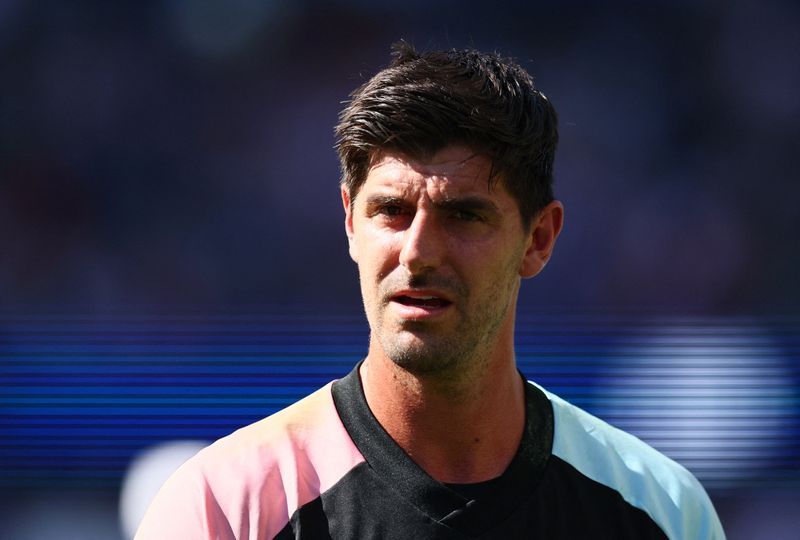
Thibaut Courtois has thrown his backing behind Mark van Bommel's appointment as Belgium's head coach, signalling qualified optimism about the new era following the nation's disappointing World Cup exit. Speaking at a sponsorship engagement in Brussels on July 26, the Real Madrid goalkeeper acknowledged that van Bommel's candidacy had been widely anticipated in football circles for some time, yet maintained that the former Dutch international represented a sensible choice to restore stability to a squad in transition.
The appointment follows Belgium's quarter-final elimination at the World Cup, a result that effectively sealed the fate of predecessor Rudi Garcia, whose contract was mutually terminated by the Belgian federation. Van Bommel's swift installation as Garcia's successor reflects the governing body's desire for continuity and demonstrated tactical acumen. Courtois emphasised that van Bommel's track record at Antwerp, where he earned considerable credibility as a pragmatic and respected operator, had generated genuine enthusiasm among the playing contingent.
Central to Courtois' assessment is van Bommel's personal pedigree as a former elite-level competitor. The goalkeeper highlighted that having experienced international football at its peak grants van Bommel an invaluable perspective on the psychological and technical demands placed on players in high-stakes matches. This accumulated wisdom, Courtois suggested, would naturally foster respect within a dressing room that had endured considerable turbulence under Garcia's direction. The 34-year-old stressed that such credibility, earned through decades of professional experience, cannot be replicated through tactical instruction alone and constitutes a tangible asset during periods of institutional rebuilding.
However, Courtois' own participation in the Van Bommel era remains a point of negotiation rather than settled fact. His continued involvement hinges on securing agreement regarding rest and recovery protocols, particularly around the forthcoming Nations League fixtures. After the World Cup, Courtois publicly articulated a desire to persist with the national team, albeit with caveats attached to his availability and workload management. This conditional approach reflects not disengagement from international duty but rather a pragmatic assessment of his physical demands as an ageing goalkeeper managing recovery at one of Europe's elite clubs.
The goalkeeper acknowledged that substantive discussions with van Bommel will determine whether their professional relationship materialises. He expressed hope that the new coach would accommodate his request to miss Nations League matches, viewing this period as an opportunity for recuperation rather than participation. Only following such conversations and the establishment of clear parameters around his international schedule would Courtois commit definitively to continuing his career with Belgium. This measured stance underscores the changing dynamics of athlete management in modern football, where even experienced internationals negotiate terms rather than unquestioningly accepting all call-ups.
Courtois also reflected candidly on Belgium's World Cup campaign, particularly the circumstances surrounding his premature exit from the Spain quarter-final in Los Angeles on July 10. Sustaining a significant injury during the knockout tie, Courtois found himself sidelined in favour of Senne Lammens, whose subsequent error contributed materially to Spain's 2-1 victory and elimination of the Belgian outfit. While accepting his removal from the pitch as consistent with Garcia's stated preference for full fitness, Courtois maintained that alternative solutions might have been available, particularly given the nuances of his specific injury.
He articulated a detailed analysis of his condition in the post-match period, noting that whilst goal kicks became untenable, his ability to distribute laterally during open play remained largely intact. This technical distinction between different facets of goalkeeping performance suggests that a modified role, with a teammate assuming dead-ball responsibilities, could theoretically have preserved his presence in a critical fixture. Nevertheless, Courtois accepted Garcia's decision without rancour, framing it as an adherence to established principles about player selection rather than a source of enduring friction within the squad.
Remarkably, Courtois emphasised the absence of any substantive disagreement with Garcia, despite widespread criticism of the French coach's tactical decisions throughout the tournament. He reiterated that team interests superseded individual preferences and that his primary concern remained the collective objective rather than his personal involvement. This gracious positioning stands in contrast to the considerable opprobrium directed at Garcia by media commentators and sections of the Belgian support, who questioned numerous aspects of his management and team selection throughout Qatar.
The goalkeeper's measured defence of Garcia, combined with his enthusiasm for Van Bommel's arrival, suggests an underlying institutional maturity within the Belgian national team structure. Rather than exploiting managerial transitions to settle grudges or amplify controversies, senior players like Courtois appear focused on facilitating smooth transitions and establishing productive working relationships with incoming coaches. This constructive approach may prove instrumental in Belgium's efforts to revitalise a squad featuring aging stars whose championship window is rapidly closing.
Looking forward, van Bommel's management will likely be shaped considerably by conversations with Courtois and other influential figures within the squad. The new coach's willingness to accommodate experienced players' needs around rest and recovery, particularly given Belgium's crowded fixture schedule in the Nations League and World Cup qualifiers, may represent a philosophical departure from Garcia's approach. Such flexibility could enhance morale and retention of senior talent at a moment when the Belgian federation seeks to bridge current underperformance with future regeneration.
The appointment ultimately represents a transitional moment for Belgian football as it contemplates life beyond its golden generation. Van Bommel's mandate extends beyond the immediate Nations League campaign to longer-term qualification for the 2026 World Cup, demanding both sensitivity to aging stars' circumstances and strategic planning around player development. Courtois' conditional endorsement suggests the veteran goalkeeper remains invested in the national project, provided management structures accommodate his remaining years at the elite level.

