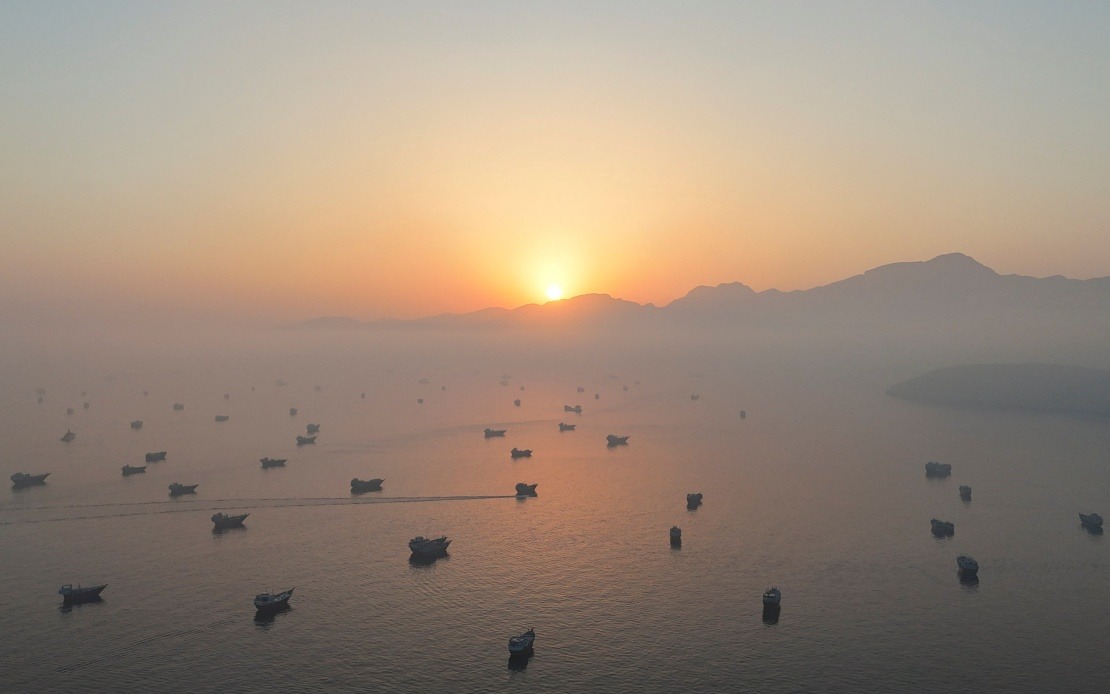
Twelve member nations of the Comprehensive and Progressive Agreement for Trans-Pacific Partnership have thrown their collective weight behind the recent accord between the United States and Iran, signalling that trade-dependent economies across the Asia-Pacific region view unimpeded shipping through the Strait of Hormuz as essential to their economic stability. The joint ministerial statement, released following a virtual gathering on Friday, reflects growing apprehension that geopolitical tensions could further destabilise already fragile supply chains and energy markets that developing nations throughout the region depend upon.
The statement underscores the bloc's unified position that freedom of navigation through strategic waterways remains fundamental to international commerce. The Strait of Hormuz, one of the world's most critical chokepoints for energy shipments, carries roughly one-third of all globally traded seaborne petroleum, making its security a matter of direct concern for economies ranging from Japan to Chile. By welcoming steps towards reopening the strait and normalising transit arrangements, the CPTPP members are essentially acknowledging that even minor disruptions to this passage can trigger cascading effects throughout their own domestic markets and economies.
The emphasis on crude oil, diesel, natural gas, petrochemical goods, and fertilisers in the ministerial statement reflects the real vulnerabilities facing CPTPP nations. Malaysia and other Southeast Asian signatories, while not major producers of fossil fuels, remain heavily reliant on stable energy prices and uninterrupted supplies to maintain manufacturing competitiveness and support agricultural sectors. A prolonged blockade or significant supply interruption could rapidly inflate costs for industries already grappling with inflation and logistics challenges.
Remarkably, the statement explicitly references the United Nations Convention on the Law of the Sea as the governing framework for maritime conduct, signalling that CPTPP members intend to anchor their position in international law rather than unilateral action. This approach carries significance for the broader regional architecture, particularly as tensions in the Indo-Pacific have prompted discussions about maintaining rule-based orders that protect smaller nations from coercion by larger powers.
The bloc's reiteration of its commitment to open markets and rules-based trade represents a deliberate counterpoint to rising protectionism globally. By reaffirming that members will not impose unjustified trade restrictions and calling upon others to follow suit, the CPTPP is attempting to preserve the relatively liberal trading environment that has underpinned its members' prosperity. The statement's explicit request for other nations to refrain from trade-restrictive measures carries particular weight given current geopolitical tensions and discussions about economic decoupling between major powers.
Significantly, the ministerial statement acknowledges the special vulnerabilities of small-island developing nations in the Pacific, recognising that geography leaves them exposed to energy supply shocks and price volatility. This inclusive language demonstrates the CPTPP's awareness that trade agreements must account for the particular circumstances of smaller and more vulnerable economies if they are to remain cohesive and legitimate.
The bloc's endorsement of the Partnership On Wide Energy and Resources Resilience Asia, known as POWERR Asia, represents a proactive effort to build redundancy into energy supply chains. Rather than relying solely on traditional shipping routes and suppliers, CPTPP members are signalling support for initiatives that encourage closer coordination between energy-producing and energy-consuming nations within the region. This approach could eventually reduce the extent to which regional economies are held hostage by disruptions in distant waterways.
For Malaysia and Vietnam, two CPTPP signatories with substantial manufacturing sectors, the statement carries particular relevance. Both nations have invested heavily in becoming regional manufacturing hubs, relying on predictable energy costs and supply certainty to attract foreign investment and maintain export competitiveness. The ministerial affirmation of open sea lanes and uninterrupted energy trade directly supports the economic strategies both countries have pursued.
The timing of this statement, coming amid ongoing global supply chain disruptions and energy market volatility, underscores the urgency with which CPTPP members view the situation. The bloc is essentially placing diplomatic weight behind efforts to normalise relations between Washington and Tehran, betting that reduced regional tensions will ultimately benefit all member economies through lower energy costs and more reliable supplies.
The virtual participation of representatives from Australia, Brunei, Canada, Chile, Japan, Malaysia, Mexico, New Zealand, Peru, Singapore, the United Kingdom, and Vietnam demonstrates broad alignment on this issue, even though these nations span different continents and regional interests. This unity suggests that concerns about energy security and supply chain resilience transcend traditional political divisions within the CPTPP framework.
Looking forward, the CPTPP's collective stance may provide diplomatic cover for countries seeking to ease tensions with Iran without appearing to capitulate to any particular major power. By framing the issue as fundamentally about international commerce and rules-based order rather than taking sides in geopolitical disputes, member nations can support normalisation efforts while maintaining their strategic autonomies and hedging relationships with other partners.
The statement's commitment to addressing supply chain disruptions through collective action and resilience-building measures suggests the CPTPP will increasingly focus on shared economic vulnerabilities rather than narrower trade concessions. In an era of heightened geopolitical competition, this pivot towards supply chain security and market access for critical goods may prove more consequential than traditional tariff negotiations, particularly for Southeast Asian nations that depend disproportionately on stable input costs and reliable international shipping.

