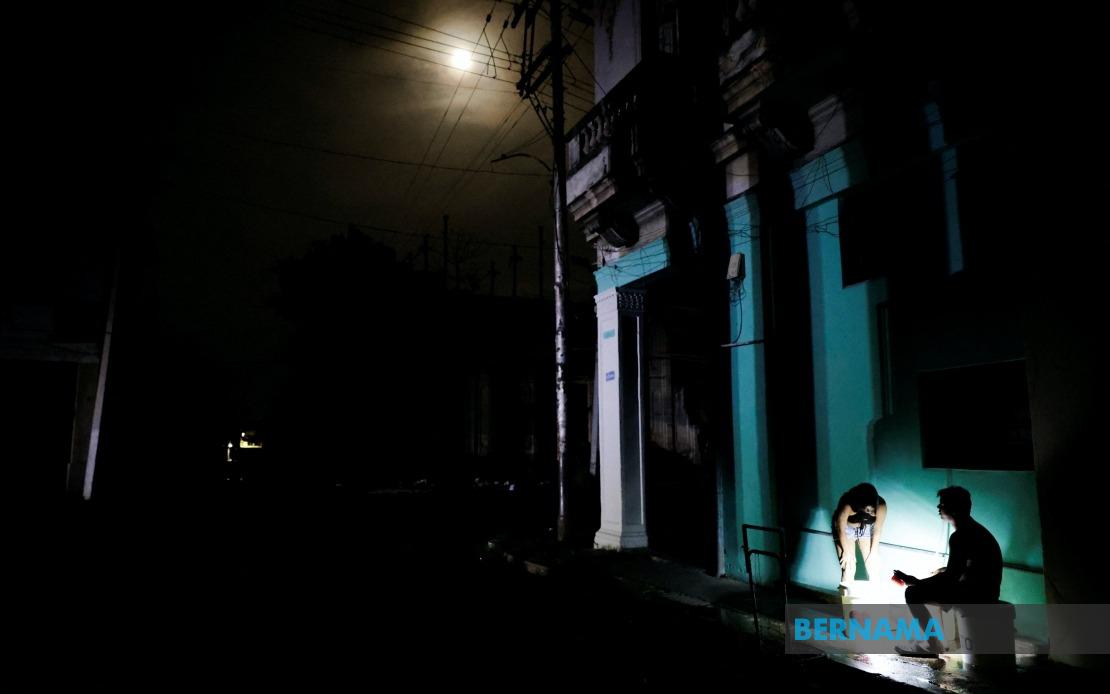
Cuba's energy crisis deepened on Sunday when the state-owned electricity utility announced a complete failure of the national power grid, plunging the entire Caribbean nation into darkness. The blackout represents an escalating pattern of infrastructure failure that has become increasingly frequent and disruptive to daily life across the island. Though authorities did not immediately disclose the specific trigger for the grid collapse, the incident underscores the fragility of Cuba's aging electrical system, which has struggled to meet demand as the country grapples with broader economic constraints and fuel shortages.
The outage marked a grim milestone as the first recorded blackout of August, following three separate nationwide power failures in July alone. This accelerating frequency reflects a deteriorating situation that extends beyond temporary inconvenience, representing a structural vulnerability in infrastructure that underpins modern life. The cascading blackouts have moved from anomaly to routine occurrence, suggesting that underlying problems within Cuba's electrical grid remain unresolved despite government acknowledgment of the crisis.
For ordinary Cubans, these repeated outages have fundamentally altered how they navigate basic daily activities. Residents have adapted to an unpredictable existence where access to electricity cannot be taken for granted, forcing families to perform essential tasks—cooking meals, washing clothes, accessing information and communications through the internet—during narrow windows when power happens to be available. The summer heat compounds these hardships, as people cannot reliably cool their homes during periods of intense temperature, creating public health concerns alongside the immediate discomfort of sweating through nights in darkened residences.
The government has responded to mounting pressure through a series of economic reforms designed to inject foreign capital and private initiative into energy supply chains. Prime Minister Manuel Marrero Cruz announced in July that authorities had greenlit the country's inaugural foreign investment partnership focused on fuel importation and retail sales, a significant policy shift in a nation long characterized by state control over critical sectors. This represents an acknowledgement that Cuba's state apparatus alone cannot solve the energy crisis through traditional mechanisms.
Beyond fuel supply diversification, the government has dramatically expanded the private sector's role in energy distribution. Nearly 200 businesses have received authorization to operate in wholesale fuel distribution, indicating a substantial restructuring of how energy reaches consumers. These wholesale entities theoretically should create competition and efficiency that the monopolistic state utility has failed to deliver in recent years. The scale of this authorization suggests authorities recognize that conventional centralized management has reached its limits.
Reform efforts extend into tourism, another potential revenue generator that could finance energy infrastructure improvements. Lawmakers have approved legislation permitting private investment in the tourism sector, recognizing that foreign exchange earnings from visitors could help fund fuel purchases and grid modernization. Tourism historically represented a vital economic pillar for Cuba, and reopening this sector to private capital signals desperation to generate hard currency through any available means.
Yet Marrero himself injected a note of caution into expectations surrounding these reforms, stating that improvements would materialize only gradually over extended periods. His acknowledgement that authorities had entered the most difficult phase of implementation reveals awareness that administrative changes alone cannot quickly resolve deep infrastructure deficits. The government has implicitly admitted that transforming Cuba's energy situation demands patience and sustained commitment rather than quick fixes.
The prime minister's candid assessment reflects a broader governmental recognition that reforms represent long-term investments requiring years before yielding tangible benefits. This honest framing contrasts with the urgent desperation felt by millions of Cubans currently enduring repeated blackouts, creating a temporal mismatch between government timelines and public suffering. The gap between when people need relief and when reforms might deliver it remains uncomfortably wide.
For Southeast Asian observers, Cuba's energy crisis offers cautionary lessons about the perils of infrastructure underinvestment and the limitations of centralized state management in maintaining critical systems. The accumulation of deferred maintenance, aging equipment, and insufficient capital for modernization creates cascading failures once thresholds are breached. Malaysia and regional neighbours dependent on aging electrical grids face similar vulnerabilities if investment and maintenance standards slip.
Cuba's pivot toward foreign investment and private sector participation, while necessary, also illustrates how crisis forces ideological compromise. A government that long resisted market mechanisms now accepts them as salvage operations, demonstrating that even committed state-centric systems must eventually accommodate private capital when public resources fail. This pragmatic shift, born from desperation, may offer templates for other developing economies grappling with infrastructure deficits.
The ongoing blackouts carry immediate humanitarian costs alongside broader implications for Cuba's economic trajectory. Without reliable electricity, businesses cannot operate effectively, investment becomes riskier, and quality of life metrics deteriorate. The government's reforms, whatever their eventual merit, cannot address current suffering experienced by people enduring sweltering nights without air conditioning or ability to refrigerate food safely.

