Europe's leading innovation showcase brought together dozens of emerging technologies this week, with startups demonstrating how artificial intelligence, advanced materials science, and engineering breakthroughs are beginning to address some of the world's most pressing challenges. From Berlin to Hong Kong, founders and entrepreneurs displayed solutions that could fundamentally alter how we approach medical treatment, mobility, and digital security in an era increasingly threatened by sophisticated fraud.
Berlin-based Blueprint Biomed is tackling a problem affecting millions of patients annually: the limitations of bone grafts. The company has engineered an artificial replacement that could eliminate the need for surgeons to harvest bone from patients' own bodies—a procedure that often leads to complications or requires additional surgery when grafts fail. The startup's approach relies on three-dimensional printing technology to construct biodegradable scaffolds from polycaprolactone, a polyester-based material that naturally dissolves within two years. These structures support a collagen framework, which breaks down even faster at three months, leaving behind new bone tissue that integrates with the patient's existing skeleton. The artificial grafts can be manufactured in virtually unlimited shapes, offering surgeons unprecedented flexibility in reconstruction surgery. Chief executive Aaron Herrera told journalists the company is seeking US$2.5 million in funding to progress toward human trials, with aspirations to implant the technology into patients by 2028.
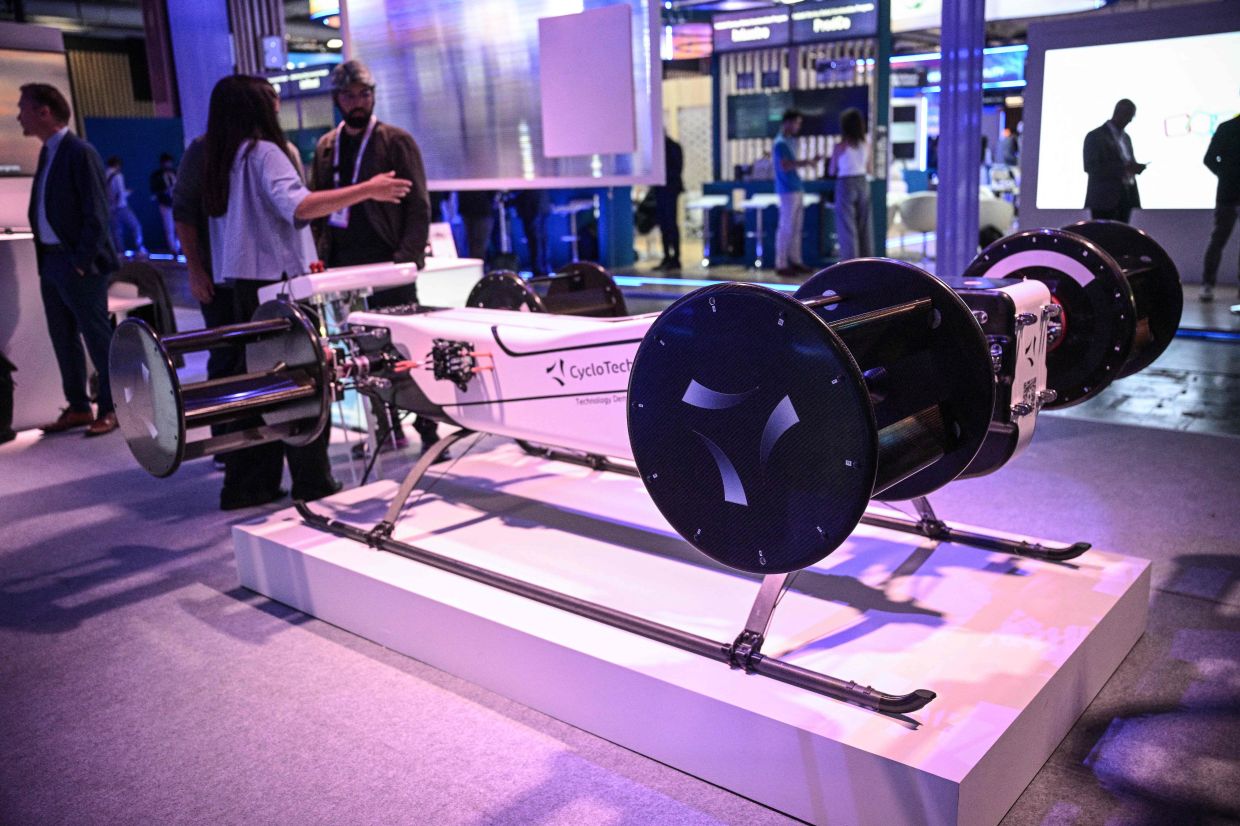
In the aerospace sector, Austrian startup CycloTech is pursuing a radically different approach to improving drone mobility. Rather than relying on conventional propeller designs, the company has engineered motors shaped like open cylinders with blade-like sides that dramatically expand what these aircraft can accomplish. According to marketing chief Andrea Marchsteiner, the innovation enables machines to perform manoeuvres previously impossible—hovering vertically like helicopters, transitioning to forward flight like traditional aircraft, executing instantaneous aerial braking, or reversing direction mid-flight. This unprecedented agility opens applications ranging from parcel delivery in congested urban environments to urban air mobility for passenger transport, whilst also attracting military interest. The 65-person company has already secured €40 million in capital and is now hunting for additional investment and partnerships with established aviation manufacturers eager to integrate this motor technology into their platforms.
Cybersecurity has emerged as perhaps the most urgent concern facing financial institutions and telecommunications operators worldwide. French firm Whispeak initially developed voice recognition software to verify customer identity during banking transactions, but the technology has acquired new relevance as artificial intelligence tools have made it trivial for anyone to generate convincing audio deepfakes. Recent developments in generative artificial intelligence mean that within seconds of hearing someone's voice—often freely available online—malicious actors can create synthetic recordings indistinguishable from genuine calls. Recognising this threat, Whispeak pivoted its research toward identifying fraudulent audio conversations. Chief executive Florent Van Calster claims the company has developed what may be the world's most effective deepfake audio detector, following three years of intensive development. The technology has achieved top rankings in multiple international competitions and maintains an error rate below one percent. Whispeak is now collaborating with French telecommunications giant Bouygues to filter incoming calls and alert users when deepfakes are detected, providing a critical layer of protection as criminal enterprises grow more sophisticated.
The challenge of monitoring athlete performance has traditionally required invasive blood tests or expensive wearable technology that nonetheless fails to capture the full picture of physical condition. Hong Kong-based startup PointFit has developed an alternative approach using adhesive patches containing miniaturised sensors that analyse biomarkers—including glucose and cortisol levels—extracted from sweat without breaking the skin. Founder Kenny Oktavius conceived the technology whilst still a student in 2019, driven by recognition that conventional heart-rate monitoring provides incomplete information about bodily systems under stress. The system employs artificial intelligence to calculate a personalised "sweat index" that accounts for individual demographic factors and environmental conditions like temperature, yielding results calibrated to each user's baseline. Oktavius points to professional marathon runners as evidence of the inadequacy of existing technology: elite athletes wearing sophisticated sensors continue to experience sudden physical collapse despite real-time heart-rate data appearing normal. PointFit has progressed beyond research partnerships with Red Bull's Athlete Performance Centre and Puma's innovation division, now targeting mainstream consumer availability through potential collaborations with major sports retailers and eyewear manufacturers.
These diverse innovations reflect a broader pattern emerging across global entrepreneurship: startups are increasingly applying computational power, novel materials, and engineering sophistication to problems that large incumbent industries have either ignored or approached incrementally. For Southeast Asia, these developments carry particular significance. The region's growing healthcare infrastructure increasingly faces the burden of orthopaedic surgery and bone repair, making artificial grafting technologies immediately relevant to hospitals throughout Malaysia, Singapore, Indonesia, and beyond. Similarly, the deepening integration of Southeast Asian financial systems into global networks has made the region vulnerable to sophisticated fraud; voice-spoofing technology represents an urgent concern for the region's banking sector. Urban air mobility and advanced drone applications align with Southeast Asia's rapid urbanisation and logistical challenges, whilst performance monitoring technology holds potential in a region producing growing numbers of elite athletes.
What unites these innovations is their reliance on artificial intelligence, biotechnology, and advanced manufacturing as foundational tools rather than peripheral enhancements. Blueprint Biomed, CycloTech, Whispeak, and PointFit all leverage computational power or novel materials science as their core competitive advantage. This technological convergence suggests that future competitive advantage in nearly every industry will depend on mastery of these overlapping domains—a challenge that should prompt policymakers across Southeast Asia to examine how their educational institutions and research funding mechanisms can cultivate the necessary talent pipeline and intellectual infrastructure.
%22%2F%3E%3C%2Fpattern%3E%3C%2Fdefs%3E%3Crect%20width%3D%22100%25%22%20height%3D%22100%25%22%20fill%3D%22url(%23phb2gtg)%22%2F%3E%3Crect%20width%3D%22100%25%22%20height%3D%22100%25%22%20fill%3D%22url(%23phb2gtp)%22%2F%3E%3Ctext%20x%3D%2250%25%22%20y%3D%2250%25%22%20text-anchor%3D%22middle%22%20dominant-baseline%3D%22central%22%20fill%3D%22rgba(255%2C255%2C255%2C0.95)%22%20font-family%3D%22Georgia%2C%20'Times%20New%20Roman'%2C%20serif%22%20font-weight%3D%22700%22%20font-size%3D%22272%22%20letter-spacing%3D%22-0.02em%22%3EPerak%3C%2Ftext%3E%3C%2Fsvg%3E)