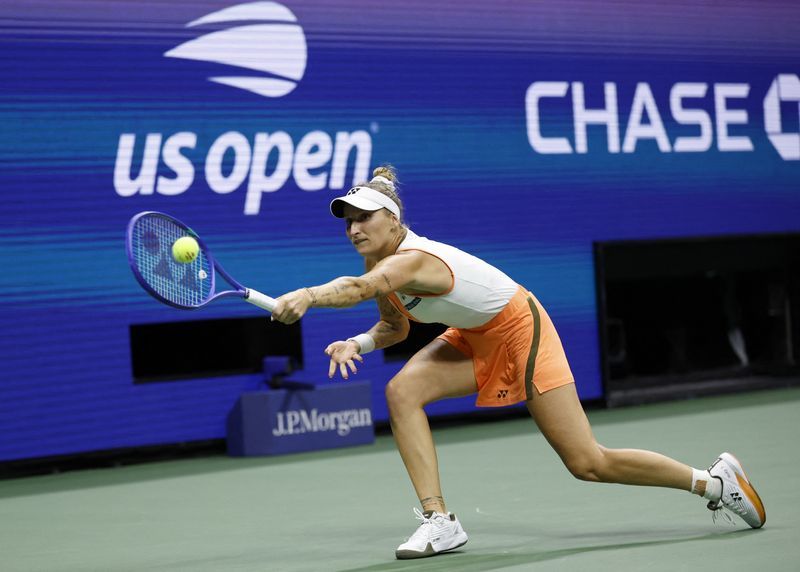
Former Wimbledon champion Marketa Vondrousova has formally appealed against a four-year doping suspension to the Court of Arbitration for Sport, marking the latest development in a dispute that has effectively ended her competitive career mid-way through her professional prime. The Court of Arbitration for Sport confirmed receipt of the Czech player's challenge this week, though no hearing date has yet been scheduled. The ban will keep Vondrousova sidelined until June 21, 2030, when she will be 30 years old.
Vondrousova was handed the suspension in June following an investigation by the International Tennis Integrity Agency into her refusal to provide a sample during an out-of-competition doping control test at her home in December last year. According to the agency's findings, she declined to submit to testing when a doping control officer arrived unannounced and demanded an immediate sample, an act that constitutes a violation under tennis anti-doping rules regardless of whether any prohibited substance is subsequently detected.
The player's response to the charges revealed the deep personal toll the testing protocol took on her mental wellbeing. In a statement released in April, Vondrousova disclosed that she had "reached a breaking point after months of physical and mental stress" stemming from the incident and its aftermath. She characterised the surprise visit on December 3, when an officer arrived at 8:15 p.m. demanding immediate testing, as an invasive disruption to her privacy that contributed to her deteriorating psychological state during an already challenging period in her career.
Crucially, Vondrousova has consistently maintained her innocence regarding any actual doping violations. Three days after the disputed December incident, she underwent a doping test that came back entirely negative, providing objective evidence that no banned substances were present in her system at that time. This clean result forms a central plank of her defence, though under international anti-doping regulations, the act of refusing or failing to submit to a test itself constitutes a separate and distinct violation, independent of whether any actual cheating can be proved.
The case touches on a broader tension within elite sports governance regarding the balance between rigorous anti-doping enforcement and individual privacy rights. Out-of-competition testing is designed to catch athletes who might otherwise avoid detection by manipulating their training schedules around competition periods, but the unannounced nature of such tests has long been controversial among players who view surprise home visits as an excessive intrusion into their personal lives. Vondrousova's case exemplifies this friction, with her legal team likely arguing that the timing, manner, and circumstances of the test attempt violated proportionality principles.
The impact on Vondrousova's career has been dramatic and immediate. She has not competed since withdrawing from the Adelaide International in January, ostensibly due to a shoulder injury that predated the doping controversy. During her absence from professional tennis, her world ranking has plummeted from number six to number 153, a fall that underscores how quickly elite athletes lose competitive standing and sponsorship opportunities without active tournament participation. Even if her appeal succeeds in reducing the ban length, the damage to her physical conditioning, ranking points, and commercial value represents an enormous cost.
Vondrousova's achievements before this suspension demonstrated considerable promise and accomplishment on the world stage. She claimed the prestigious Wimbledon title in 2023, capping a trajectory that had already included a French Open final appearance in 2019 and a silver medal at the Tokyo Olympics in 2021. At 27 years old when the ban was imposed, she was still in what should have been her prime competitive years, making the four-year suspension particularly costly in terms of lost opportunities and potential titles.
For Malaysian and Southeast Asian tennis observers, the case raises important questions about how international sports governance affects regional players aspiring to elite status. Tennis operates under unified global anti-doping rules administered through bodies like the International Tennis Integrity Agency, meaning any Southeast Asian player competing internationally would face identical testing protocols and penalties. The Vondrousova matter demonstrates both the rigour of these enforcement mechanisms and the potential for disputes over their application and proportionality.
The appeal process at the Court of Arbitration for Sport represents Vondrousova's formal opportunity to argue that either the ban should be rescinded entirely or substantially reduced based on arguments about the circumstances of her case, her mental health considerations, or potential procedural irregularities. The court has significant discretion in reviewing such cases and can modify or even overturn sanctions if it determines they were disproportionate or improperly applied.
As the appeal proceeds through the international sports judiciary system, Vondrousova remains in competitive limbo, unable to compete professionally but with her legal status and ban duration still contested. The eventual outcome will have implications beyond her individual situation, potentially influencing how tennis authorities balance anti-doping priorities against player welfare considerations in future cases. Given the prominence of the case and the sympathy generated by her mental health disclosures, the Court of Arbitration for Sport faces a decision that will set important precedent within the sport.

