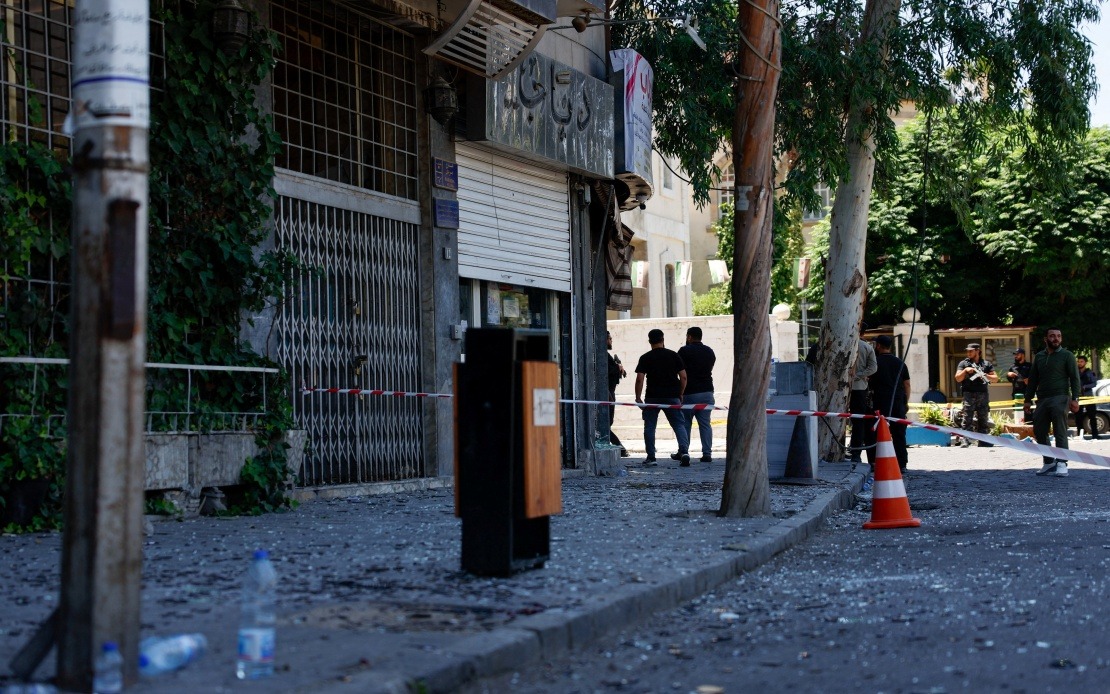
Two improvised explosive devices detonated in Damascus on Tuesday, leaving at least 18 people injured, including four police officers, according to Syria's Interior Ministry. The blasts struck near the hotel where French President Emmanuel Macron was staying during his groundbreaking visit to the country, causing considerable alarm throughout the Syrian capital. The Élysée Palace in Paris swiftly confirmed that Macron remained unharmed during the incident, with the French leader continuing his engagements as scheduled.
The Syrian Observatory for Human Rights, the London-based conflict monitoring organisation, characterised the attacks as a rapid succession of explosions. An initial detonation was followed within seconds by a more powerful blast in close proximity to Macron's accommodation. Emergency response personnel and ambulance services mobilised immediately to the scene, with security forces establishing cordons around the affected areas to prevent further incidents and facilitate investigation efforts.
Macron's presence in Damascus carries particular significance as his arrival on Monday evening marked the first visit by an EU leader to Syria since 2010, representing a potential shift in Western engagement with the Assad government. The French president had been scheduled for bilateral negotiations with Syrian officials at the presidential palace, where delegations from both nations were engaged in substantive discussions when the explosions occurred. This timing underscores the volatile security environment that persists in Syria even as international diplomatic engagement gradually resumes.
The attack during such a high-profile visit highlights the ongoing security challenges facing Damascus despite recent years of relative stability in the capital following the decline of armed insurgencies. The presence of an EU leader conducting official talks had raised expectations for normalisation between Syria and Western nations, yet the bombing demonstrates that security threats remain a persistent concern for those planning or undertaking official business in the country.
For Malaysian observers and regional analysts, the incident illustrates how security incidents can swiftly complicate international diplomatic initiatives, particularly in the Middle Eastern context. The willingness of Macron to proceed with his visit despite known risks reflects broader European strategic calculations regarding Syria's reintegration into the international community following years of isolation. Such diplomatic overtures have implications for regional stability and the broader Middle Eastern geopolitical landscape that Southeast Asian nations monitor closely given their own strategic interests.
The nature of improvised explosive devices used in the attack underscores persistent technological threats within Syria's urban centres. Although insurgent groups have diminished significantly, cells capable of manufacturing and deploying such weapons apparently retain operational capacity. Intelligence services and security agencies across the region have long recognised that countries recovering from extended conflict often struggle with lingering weapons proliferation and terrorist networks.
The response from French authorities emphasised continuity and resolve, with Macron continuing his official programme despite the security incident. This approach signalled that France views engagement with Syria as strategically important enough to justify accepting residual security risks. Such calculated diplomatic risk-taking contrasts sharply with broader Western caution towards Syria during the preceding years of civil conflict.
For Southeast Asian governments and observers, this incident provides a case study in how diplomatic engagement amid ongoing security challenges requires sophisticated security coordination between host and visiting nations. The protection of visiting dignitaries in volatile environments demands intelligence sharing, threat assessment, and rapid emergency response capabilities that many regional security services continue developing.
The explosion's timing raises questions about whether opposition to normalisation of relations with Damascus prompted the attack, or whether it represented opportunistic violence by criminal or militant elements exploiting the publicity surrounding Macron's visit. Syrian security services will likely conduct thorough investigations to determine responsibility and motives behind the operation.
As Western nations gradually contemplate closer engagement with Syria following the country's military victory in its civil conflict, security incidents such as this underscore the complexities of managing diplomatic normalisation in post-conflict environments. The balance between re-engaging diplomatically and acknowledging legitimate security concerns remains delicate, and Tuesday's explosions demonstrate how fragile that equilibrium can be.

