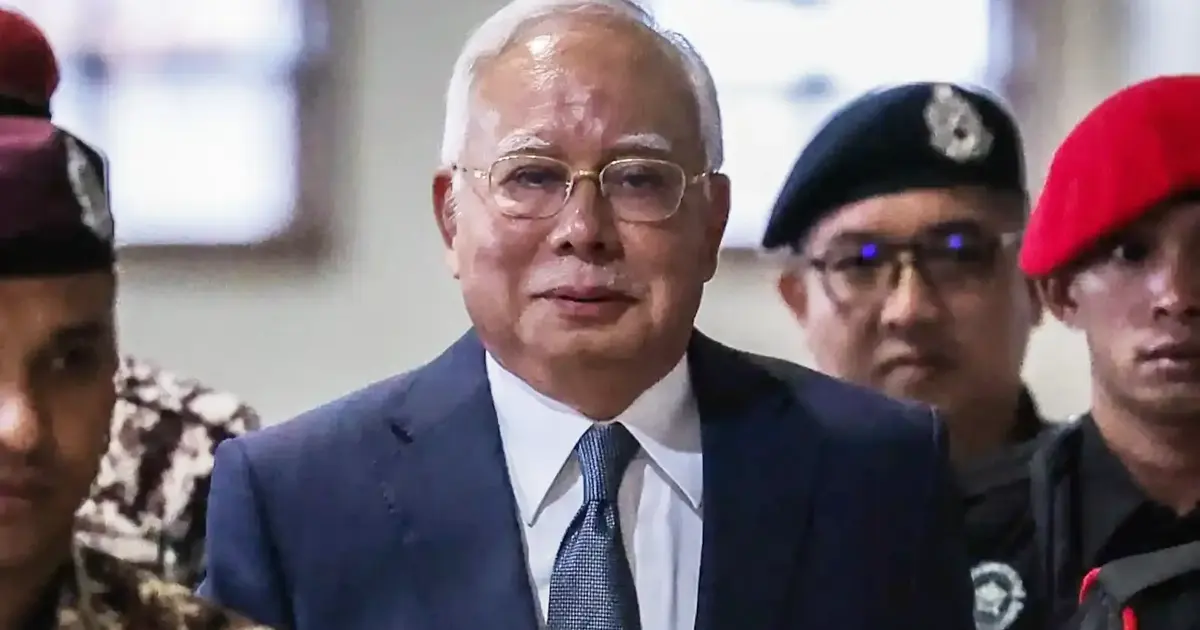
The escalating debate over whether to grant a presidential pardon to former Prime Minister Najib Razak has taken a new turn, with a DAP politician publicly questioning the Malaysian Chinese Association's silence on the contentious issue. Ong Hui Xue has called on MCA to openly declare its position as senior Umno figures continue their coordinated campaign for the ex-premier's release, raising questions about the coalition's internal consensus on a matter that remains deeply divisive within Malaysian politics.
The demand reflects growing tension within the ruling Pakatan Harapan-led coalition and its Barisan Nasional partners regarding Najib's fate. While Umno has consistently pushed for clemency for the man who led Malaysia until 2018, the broader political landscape remains fragmented on whether such a move would serve the interests of justice or national reconciliation. Ong's intervention suggests that partner parties cannot remain neutral on an issue that commands significant public attention and carries implications for the coalition's credibility.
Najib was convicted in 2023 of abuse of power related to the 1MDB scandal, one of the most significant financial crimes in Malaysian history. His subsequent sentence and ongoing legal battles have made him a lightning rod for political debate. While Umno leaders have mounted a sustained effort to secure his release through executive clemency, other coalition members have either remained cautious or expressed reservations about appearing to undermine judicial proceedings. The silence from parties like MCA has itself become noteworthy, as their refusal to comment is interpreted by critics as tacit acceptance of Umno's position.
The situation highlights a persistent challenge for Malaysia's multi-party coalition government: how to balance competing interests and principles while maintaining public confidence in the administration of justice. For MCA specifically, the dilemma is particularly acute. As a Chinese-based party in a coalition with the Malay-dominated Umno, it occupies a delicate political position where any statement carries implications for inter-communal relations and the health of the broader political partnership.
Umno's sustained pressure on this issue reflects the party's complex relationship with its former leader. Despite public denials of factionalism, many within Umno view Najib's conviction as a matter that transcends individual responsibility, becoming instead a test of party loyalty and internal strength. This perspective has driven persistent calls for intervention at the highest levels of government, with various party leaders articulating different justifications for why a pardon would be appropriate or necessary.
The broader context involves significant shifts in Malaysian politics since the 2022 general election, which produced a hung parliament and ultimately led to the formation of a government dependent on support from multiple parties with divergent ideological orientations. This fragmentation means that issues like Najib's pardon cannot be resolved through simple party-line discipline, but instead require delicate negotiations among coalition partners with competing interests and constituencies.
Public opinion on the matter remains sharply divided along political lines. Umno supporters and much of Malay-Muslim public discourse has increasingly framed the Najib question as one of political persecution or selective justice, particularly when compared with legal proceedings against opposition figures. Conversely, segments of the population that prioritize institutional integrity and the rule of law view any pardon as a dangerous precedent that would undermine judicial independence and encourage corruption.
MCA's position is further complicated by its role as a champion of Chinese commercial interests and rule of law principles. Historically, the party has positioned itself as a voice for stability and institutional rectitude within Barisan Nasional, making its approach to the Najib question particularly significant. Any explicit support for a pardon could alienate middle-class Chinese voters who view the matter as fundamentally one of accountability, while remaining silent effectively cedes initiative to Umno on a defining political question.
Ong's challenge also reflects broader DAP strategy within the current coalition. As the dominant partner in Pakatan Harapan and a significant voice in the current government despite complex coalition dynamics, DAP has consistently maintained that the judiciary's decisions must be respected and that political interventions to overturn convictions are fundamentally problematic. From this perspective, pressing coalition partners like MCA to take explicit stances serves both to maintain political pressure and to clarify lines of responsibility should any pardon ultimately be granted.
The timing of these renewed questions is significant, as government ministries continue normal operations and various economic and social challenges demand attention. The persistent nature of the Najib pardon debate suggests that it remains a critical item in informal coalition negotiations, with different parties seeking advantage or protection depending on how the matter ultimately resolves. For MCA, being forced to choose between explicit support for Umno positions and maintaining independent credibility represents a genuine political dilemma with no obviously risk-free resolution.
Moving forward, the pressure from DAP and other quarters for public clarity from MCA appears likely to intensify, particularly if Umno continues escalating its campaign for a pardon. Whether MCA ultimately decides to publicly back such calls, explicitly oppose them, or maintain strategic ambiguity will reveal much about current power dynamics within Malaysia's coalition government and the degree to which Umno can maintain unity among its partners on questions central to its political identity and future.

