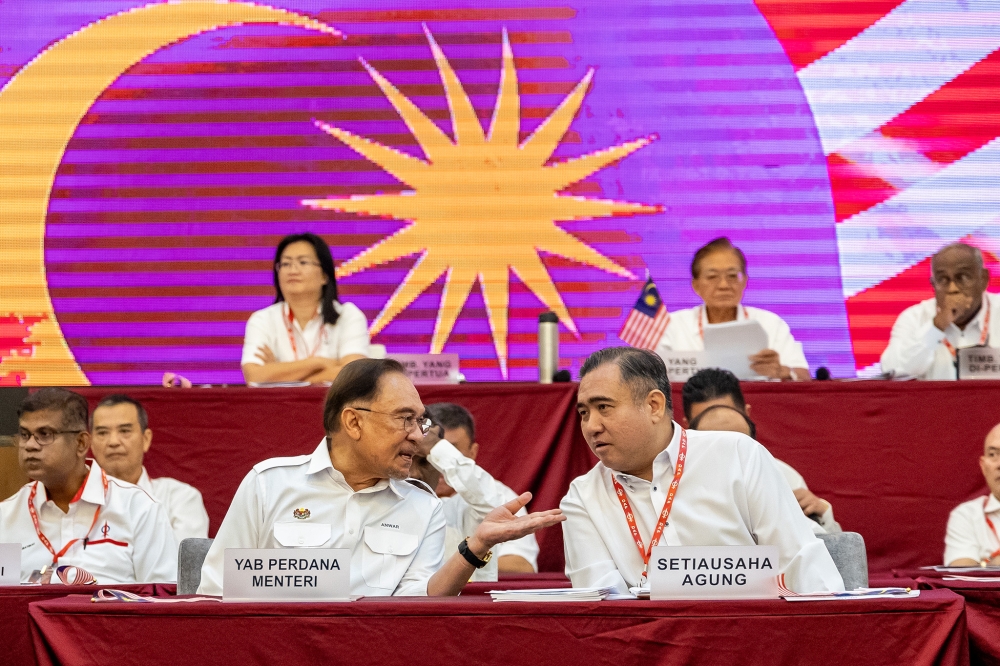
Transport Minister Lim Guan Eng has firmly shut down suggestions that DAP might abandon its partnership within Datuk Seri Anwar Ibrahim's ruling coalition, stressing instead that the party recognises the inherent trade-offs between ideological ambition and practical governance. Speaking in Kuala Lumpur, Loke indicated that DAP understands that participation in a multi-party coalition necessarily demands patience with incremental progress, even when reformist objectives face resistance from coalition partners or administrative obstacles.
The minister's statement arrives at a moment when supporters of the Pakatan Harapan government have grown increasingly vocal about frustration with the pace of institutional change since the coalition's election in 2022. DAP, as the second-largest component party within the coalition, has historically championed transparency, anti-corruption measures, and democratic renewal. The gap between these aspirations and actual policy delivery has become a source of tension within the broader reform movement that swept Anwar to power.
Loke's positioning reflects a pragmatic calculation that DAP's interests are better served through sustained participation in government than through protest or withdrawal. By remaining inside the coalition structure, the party maintains leverage over the direction of economic policy, transport infrastructure decisions, and anti-corruption initiatives. Departure would eliminate whatever influence DAP currently exerts, relegating it to opposition benches where its voice would carry diminished weight in shaping Malaysia's trajectory. This calculus appears to weigh heavily on the leadership's decision to weather current discontent within the coalition framework.
The coalition dynamics at play illustrate the fundamental challenge facing any multi-party governing arrangement in Malaysia's political context. Pakatan Harapan comprises parties with distinct bases, historical perspectives, and policy priorities. PKR brings Anwar's reformist credentials and relative centrality to power; PAS, until recently part of the coalition, represented Islamic constituencies; and DAP commands significant support among urban, younger, and minority communities advocating for secular governance and institutional modernisation. Bridging these constituencies requires constant negotiation, occasionally resulting in compromised outcomes that satisfy no faction completely.
Reform delays carry tangible costs for DAP's standing with its core electorate. Urban voters, particularly in Kuala Lumpur, Penang, and Selangor, elected DAP representatives expecting accelerated progress on specific issues including judicial independence, legislative transparency, and reduced political patronage in public administration. When such reforms stall, whether due to parliamentary arithmetic, bureaucratic resistance, or coalition pressure, DAP faces accusations that it has sacrificed principles for ministerial positions. Loke's candid acknowledgement of this trade-off suggests the party leadership recognises this perception and is attempting to reset expectations rather than deny the constraints.
The timing of Loke's comments also signals consideration of internal DAP dynamics. The party holds its own succession processes and periodic reviews of strategic direction. By publicly endorsing continued coalition participation, senior leadership demonstrates confidence in the partnership's viability to rank-and-file members who might otherwise grow restless. This addresses potential calls from activist wings within DAP for more confrontational stances toward coalition partners perceived as obstructing reforms.
Regionally, Malaysia's coalition experiment carries significance for Southeast Asian democracy. Thailand, Indonesia, and the Philippines have all grappled with similar governance puzzles involving multi-party coalitions, and observers across the region watch Malaysia's experience closely. Should Pakatan Harapan collapse due to internal contradictions, the implications would resonate throughout Southeast Asia, potentially emboldening authoritarian alternatives. Conversely, demonstrating that ideologically diverse parties can sustain productive partnerships while pursuing gradual reform provides an important counternarrative.
The question of reform velocity reflects deeper questions about democratic change in established systems. Revolutionary transformation proves elusive within constitutional frameworks that distribute power across multiple institutions, require legislative supermajorities for major constitutional changes, and include entrenched interests resistant to disruption. DAP's acceptance of incremental progress, while rhetorically less satisfying than grand proclamations of systemic overhaul, may represent mature acknowledgement of these structural realities.
Looking forward, the coalition's sustainability depends partly on whether tangible progress, even if gradual, becomes visible to frustrated constituencies. Transport infrastructure improvements, judicial appointments advancing merit-based selection, or documented reductions in corruption cases could demonstrate that coalition participation yields real benefits. Conversely, continued stagnation risks eroding the fragile consensus that keeps Pakatan Harapan intact. The stakes for both DAP and Malaysian democracy rest substantially on this equilibrium between patience and demonstrable progress.

