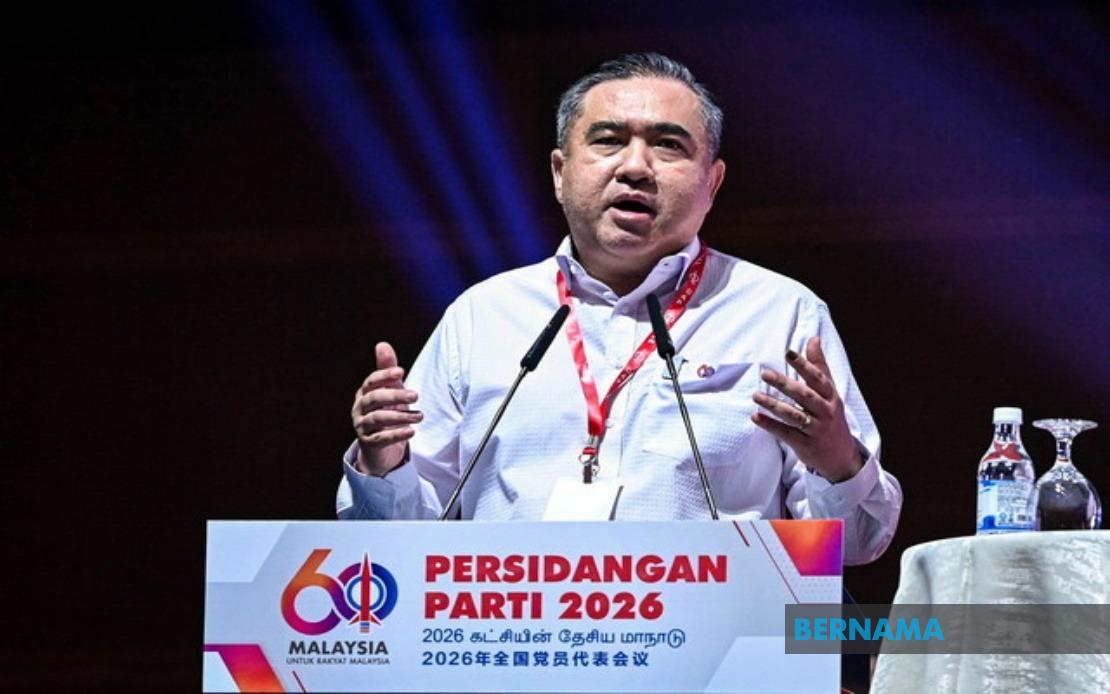
The Democratic Action Party has locked in its participation in Malaysia's federal government for the remainder of the current parliamentary cycle, following a decisive mandate from party delegates at its 2026 conference in Putrajaya. The decision signals DAP's intention to see through the unity coalition arrangement established in recent years, providing continuity to the administration's policy agenda during a critical period of economic and political governance. The timing of the commitment, announced through a specially convened motion at the party's triennial gathering, underscores DAP's strategic positioning as a stabilising force within a multi-party governmental framework that has fundamentally reshaped Malaysian politics since its formation.
The party leadership, led by Transport Minister Anthony Loke who tabled the motion, secured an emphatic endorsement from the broader party membership. Of the 2,106 ballot papers distributed, 1,857 delegates voted to remain within the government, while 242 opposed continued participation. The result represents an 88.2 per cent affirmation among those physically present at the Putrajaya International Convention Centre, a threshold that provides DAP's leadership with unambiguous authority to navigate coalition negotiations and policy compromises through the remainder of the parliamentary term. Seven ballots were spoilt, reflecting the procedural rigour of the voting process. The party's decision to employ secret ballot voting rather than conventional voice voting or hand-raising mechanisms demonstrates deliberate institutional design aimed at ensuring both transparency and the authentic expression of delegate preferences without social pressure or hierarchical influence.
DAP's current ministerial presence reflects its status as a significant partner within the coalition architecture. The party holds five Cabinet positions spanning critical portfolios: Loke chairs the Ministry of Transport, while Steven Sim oversees Entrepreneur and Cooperatives Development, Gobind Singh Deo manages Digital Affairs, Nga Kor Ming leads Housing and Local Government responsibilities, and Hannah Yeoh holds a senior role within the Prime Minister's Department overseeing Federal Territories. This distribution across diverse ministerial jurisdictions positions DAP to influence policy implementation across economic development, infrastructure, and technology sectors central to Malaysia's modernisation agenda.
Beyond Cabinet ranks, DAP's influence extends through seven deputy ministerial appointments that provide additional leverage in legislative processes and policy formulation. These positions span Communications under Teo Nie Ching, Agriculture and Food Security under Datuk Chan Foong Hin, Education under Wong Kah Woh, and Finance under Liew Chin Tong. Three further deputy ministers serve in the Prime Minister's Department's Law and Institutional Reform division, the Ministry of Women, Family and Community Development, and the Ministry of Youth and Sports, reflecting DAP's presence across social policy, institutional reform, and youth-oriented initiatives.
The conference attendance validated the legitimacy of the mandate secured by party leadership. Preliminary data indicated that 4,264 delegates representing 1,704 branches nationwide were eligible to participate in the voting process, demonstrating broad geographical representation across Malaysia's urban and developed constituencies where DAP maintains organisational strength. Conference Speaker Cha Kee Chin officially announced the voting results, with the 1,857 affirmative votes representing substantive support transcending simple procedural approval. This composition suggests DAP delegates largely view continued government participation as strategically beneficial to the party's medium-term political objectives and constituent service delivery responsibilities.
For Malaysian readers and regional observers, DAP's decision carries implications extending beyond internal party management. The party's commitment to governmental stability through the parliamentary term's conclusion provides assurance to both domestic investors and international stakeholders that the coalition maintains sufficient cohesion to implement long-term policy initiatives. Malaysia's evolving political landscape has witnessed multiple coalition reconfigurements over recent years; DAP's explicit recommitment reduces uncertainty regarding potential sudden governmental realignments that could disrupt fiscal planning, infrastructure projects, or regulatory consistency. This stability proves particularly relevant for sectors where DAP holds direct ministerial responsibility, including transport infrastructure development and digital economy initiatives.
The delegate vote also reflects internal DAP calculus regarding the benefits and costs of continued participation. While coalition membership imposes constraints on the party's ideological messaging and requires compromise on policy positions, membership provides platform access, resource distribution capacity, and policy influence that opposition status would foreclose. The overwhelming vote margin suggests that DAP's organisational rank-and-file endorses this strategic assessment, viewing governmental participation as preferable to reasserting oppositional identity and corresponding loss of institutional leverage. For party members working in ministerial apparatus, the decision provides employment continuity and operational predictability through the current parliamentary cycle.
The motion's specific framing as a commitment through the end of the 15th Parliament's term provides technical precision regarding DAP's timeframe for governmental participation. Rather than committing indefinitely to the coalition, the party has bounded its commitment to a defined constitutional period, potentially preserving flexibility for strategic repositioning once the current parliamentary term concludes and general elections become necessary. This temporal specificity reflects sophisticated political management, allowing DAP to demonstrate stability and reliability while maintaining future strategic autonomy. The 2028 general elections will represent the next major inflection point where coalition participants may recalculate their political positioning and partnership arrangements.
Southeast Asian observers will note that DAP's decision reflects broader regional trends toward coalition governance in established democracies. Malaysia, alongside countries like Singapore with its dominant-party system and Thailand's recent coalition governments, demonstrates how multi-party arrangements attempt to broker competing interests through proportional ministerial distribution and policy negotiation frameworks. DAP's participation exemplifies how Chinese Malaysian political representation integrates into broader governmental structures, particularly relevant given historical tensions regarding minority representation in Malaysian governance. The party's delegation maintains meaningful Cabinet representation despite constituting a minority coalition participant, suggesting institutional mechanisms that respect minority party contributions.
The conference decision also illuminates generational and ideological evolution within DAP itself. Contemporary DAP delegates, voting overwhelmingly to maintain governmental participation, reflect a pragmatic turn toward institutional participation and incremental change mechanisms rather than oppositional populism that historically characterised the party. This shift mirrors broader global trends among left-leaning or reform-oriented political movements that increasingly operate within governmental structures rather than exclusively through oppositional frameworks. DAP's transformation from perpetual opposition presence to consistent governmental participant demonstrates how Malaysian political dynamics have fundamentally restructured since 2018's political transition.
Looking forward, DAP's recommitment through the parliamentary term's end provides the coalition government with renewed confidence regarding legislative stability and policy implementation. The party's significant representation in economic and social portfolios means continued DAP participation facilitates programmes in transport modernisation, digital infrastructure, and cooperative enterprise development that require multi-year investment cycles. Malaysian businesses and constituencies dependent on these sectors now possess assurance that policy continuity and ministerial attention will persist through the current parliamentary term, supporting long-term planning horizons for infrastructure development and regulatory frameworks that ministerial leadership shapes.
The overwhelming delegate approval margin ultimately reflects DAP's assessment that governmental participation advances party interests better than opposition status would achieve. With 88.2 per cent supporting continued government membership, DAP's leadership obtained unambiguous organisational backing for navigating coalition politics through subsequent parliamentary sessions and negotiations. The secret ballot process ensured that this result represented authentic delegate preferences rather than hierarchical conformity, lending legitimacy to the mandate that DAP leadership now holds for coalition engagement through the parliamentary term's conclusion. This decision positions DAP as a reliable coalition partner while maintaining strategic flexibility for the political landscape's subsequent evolution.

